The Lion, The Witch, and The Legend: A Deep Dive Into Greta Gerwig’s Revolutionary ‘Narnia’

The cinematic landscape is currently vibrating with anticipation as the shroud of mystery surrounding Greta Gerwig’s The Chronicles of Narnia: The Magician’s Nephew finally begins to lift. For years, Netflix’s ambitious foray into C.S. Lewis’s beloved literary universe has been a subject of intense speculation. Today, however, the veil has been pierced. Thanks to an exclusive cover feature in Empire Magazine, audiences have received their first official look at the film’s most pivotal character: the Great Lion, Aslan.
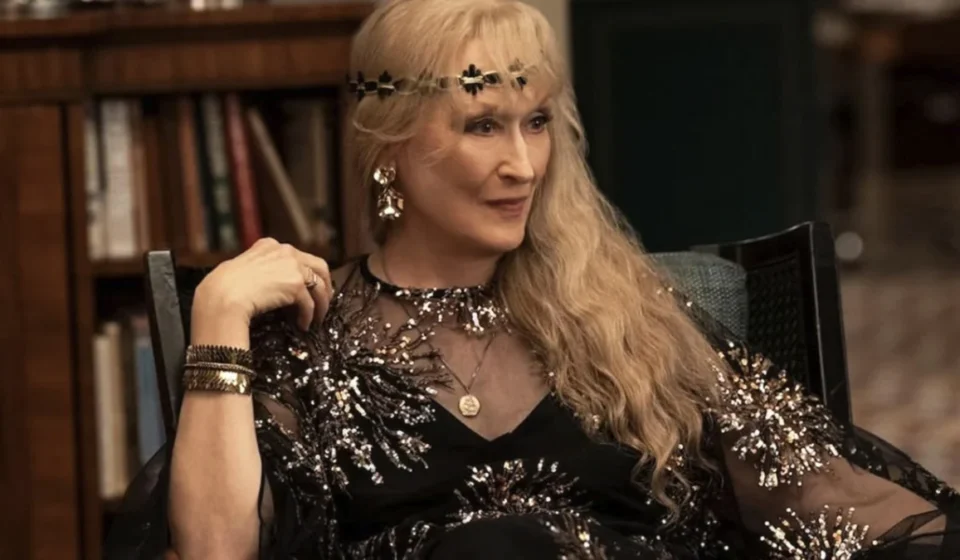
In a bold creative choice that has already ignited fervent discussion across social media, the iconic deity-like figure of Narnia will be voiced by none other than Meryl Streep. This casting marks a historic departure from tradition, as the role has exclusively been held by male performers in previous adaptations. As Gerwig prepares to bring her "revolutionary rock’n’roll" vision to the screen, the reveal of a visually reimagined, female-voiced Aslan signals that this is far from a standard reboot.
The Evolution of a Legend: From Neeson to Streep
To understand the weight of this casting, one must look at the history of Aslan on screen. In C.S. Lewis’s allegorical texts, Aslan is the foundational figure of the Narnian cosmos—a king, a redeemer, and a guide. Historically, the character has been voiced by actors whose vocal gravitas matches the weight of the character’s religious and moral authority: Bernard Kay, Stephen Thorne, Ronald Pickup, David Suchet, and most notably, Liam Neeson, whose resonant, velvet-toned performance defined the 2005-2010 Disney-Walden Media film series.
By selecting Meryl Streep, Gerwig is not merely casting a voice; she is shifting the thematic register of the entire franchise. In her interview with Empire, Gerwig addressed the necessity of finding an actor capable of balancing immense wisdom with an infectious, childlike capacity for wonder. "I wanted someone who was profound but not pretentious," Gerwig stated. "I wanted someone who had gravitas but not morose self-seriousness… That list is not a long one."
The visual design of this Aslan also serves as a stark departure from the photorealistic, traditional lions of the past. The first look reveals a creature with distinct, stylized markings, including a bold red stripe across the face—a deliberate aesthetic nod by Gerwig to the legendary David Bowie. This juxtaposition of the ancient, mythic lion with the avant-garde aesthetic of a glam-rock icon suggests that Gerwig is leaning into the surreal, dreamlike quality of The Magician’s Nephew rather than attempting to replicate the high-fantasy aesthetic of the previous films.
A Chronology of the Project: From Development Hell to Netflix’s Tentpole
The journey to bring The Magician’s Nephew to the screen has been a saga of its own. While the book serves as the prequel to the entire Narnia cycle—chronicling the creation of the world, the birth of Aslan, and the origin of the White Witch—it has been notoriously difficult to adapt.
2011: The Initial Spark
Following the success of The Voyage of the Dawn Treader, plans were tentatively drafted to adapt The Magician’s Nephew. However, those efforts stalled, leaving the origin story of Narnia in developmental limbo for over a decade.
2018-2023: The Netflix Acquisition
Netflix secured the rights to the entire Chronicles of Narnia library in a landmark deal, signaling their intent to build a cinematic universe that could rival the scale of their competitors. The project remained largely quiet until Greta Gerwig, fresh off the billion-dollar cultural phenomenon of Barbie, was announced as the creative lead.
2024-2025: The Creative Friction
The production was not without its internal challenges. Reports emerged of significant clashes between Gerwig’s vision and Netflix’s corporate strategy. Gerwig, a staunch advocate for the theatrical experience, famously pushed for a wide-scale cinema release—a strategy that contradicts the streamer’s usual "day-and-date" digital-first model.
2026-2027: The Current Status
After extensive negotiations, Netflix capitulated to Gerwig’s demands for a premium theatrical run. Originally slated for a Thanksgiving debut, the film was pushed to Valentine’s Day 2027 to ensure a more robust IMAX release schedule. This date serves as a pivotal moment for the industry, testing whether a streaming-backed intellectual property can truly thrive as a "must-see" theatrical event.
Why The Magician’s Nephew?
Choosing The Magician’s Nephew as the starting point for this new series is a masterstroke of narrative structure. Unlike The Lion, the Witch and the Wardrobe, which focuses on the Pevensie children discovering a world already in decay, The Magician’s Nephew is a story of genesis. It features the accidental traveler Digory Kirke and his friend Polly Plummer, whose curiosity leads them through the wood between the worlds.
By starting at the beginning, Gerwig avoids the direct comparison to the 2005 blockbuster series, allowing her to establish the "rules" of Narnia on her own terms. The inclusion of Aslan in this film—his first appearance in the timeline—is crucial. By introducing him through the voice of Meryl Streep, the film frames Aslan as a force of nature that transcends gender, emphasizing the spiritual, non-binary, and omnipotent aspects of the character over the patriarchal archetypes of traditional fantasy.
The Implications: A New Era for Franchise Filmmaking
The implications of this casting and the film’s production model are far-reaching. First, there is the question of the audience response. In an era of "culture wars," the decision to cast a woman as a character historically portrayed as male is sure to trigger intense debate. However, Gerwig’s track record suggests that this is not a cynical attempt to court controversy, but a calculated artistic choice. By working with Streep, she is aligning herself with one of the most respected performers in history to anchor a project that seeks to bridge the gap between high-art filmmaking and mainstream blockbuster entertainment.
Second, the shift in release strategy is a victory for proponents of the theatrical experience. If The Magician’s Nephew achieves critical and financial success during its IMAX run, it may force Netflix to reconsider its long-term distribution strategies. It signals that even for a global streamer, the prestige associated with a wide theatrical opening is a commodity that cannot be ignored.
Finally, the visual aesthetic—the "Bowie-esque" Aslan—suggests that Gerwig is not interested in recreating the nostalgia of the 2000s. She is crafting a version of Narnia that feels singular, tactile, and perhaps slightly more surreal than the Lewis adaptations that came before.
Conclusion: Waiting for the Roar
As we look toward February 2027, the anticipation surrounding The Magician’s Nephew is at an all-time high. Greta Gerwig has managed to take a property that was widely considered "exhausted" and turn it into the most talked-about project in Hollywood.
Whether the public will embrace a version of Aslan that challenges the long-standing status quo remains to be seen. But one thing is certain: with Meryl Streep at the helm of the character and Gerwig directing, this will not be the Narnia we remember from our childhoods. It will be something new, something bold, and—if the history of their collaboration on Little Women is any indication—something truly extraordinary. The doors to the wood between the worlds are opening, and for the first time in years, it feels as though the magic of Narnia is truly alive again.