
In the landscape of modern independent cinema, few figures cast a shadow as long or as welcoming as Kevin Smith. From his humble, low-budget beginnings in the aisles of a New Jersey convenience store to his evolution into a multifaceted storyteller, podcaster, and advocate for the creative spirit, Smith has become an unlikely architect of the "DIY" dream.
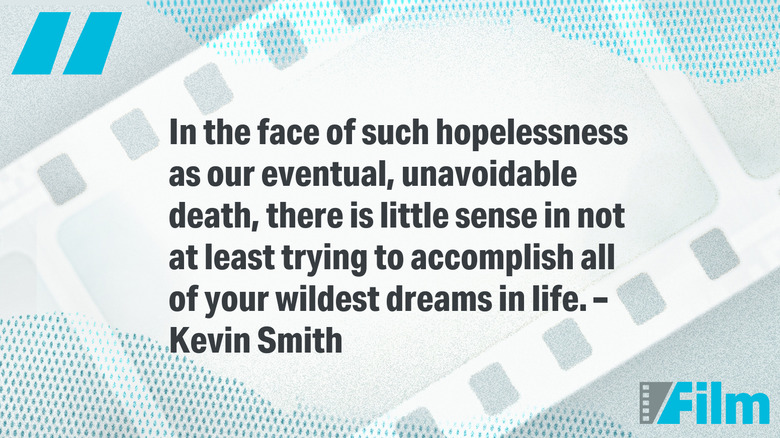
Central to his public persona is a mantra that serves as both a rebuke to lethargy and an invitation to ambition. As Smith famously articulated in his 2012 memoir Tough Sht: Life Advice from a Fat, Lazy Slob Who Did Good*: "In the face of such hopelessness as our eventual, unavoidable death, there is little sense in not at least trying to accomplish all of your wildest dreams in life."
This philosophy is not merely a pithy observation; it is the cornerstone of a career built on the belief that the only true barrier between an aspiring artist and their goal is the decision to begin.
The Genesis of an Indie Icon: From Red Bank to Sundance
To understand the weight of Smith’s words, one must look at the chronology of his ascent. Born in Red Bank, New Jersey, Smith did not arrive in Hollywood via a traditional studio pipeline. Instead, his career was born out of sheer necessity and a refusal to wait for permission.
In 1994, Clerks—a black-and-white, dialogue-heavy comedy filmed on a shoestring budget—hit the Sundance Film Festival like a lightning bolt. Shot for roughly $27,000, much of which was financed through maxed-out credit cards and the sale of his personal comic book collection, the film was a testament to the idea that authenticity outweighs production value.
Clerks did more than launch a career; it became the Velvet Underground album of the independent film movement. Just as Brian Eno famously remarked that everyone who bought the Velvet Underground’s debut album went on to form a band, Clerks served as a blueprint for a generation of filmmakers. It proved that if you had a vision, a camera, and the audacity to film in your own workplace after hours, you could force your way into the conversation.
Chronology of a Creative Evolution
Smith’s trajectory since the mid-90s has been marked by a willingness to pivot and reinvent. His filmography reflects a restless creative spirit:
- 1994–1997: The "New Jersey Trilogy" (Clerks, Mallrats, Chasing Amy) cemented his voice as a master of rapid-fire, pop-culture-infused dialogue.
- 1999–2001: He challenged his own boundaries with the theological satire Dogma and expanded his universe through the Jay and Silent Bob franchise.
- 2011–2014: A period of radical independence, highlighted by the distribution of Red State via a self-owned auction at Sundance, signaling a break from traditional studio dependency.
- 2018–Present: A post-health-crisis era. After surviving a massive, near-fatal heart attack in 2018, Smith’s public demeanor underwent a visible transformation. He moved away from the "prickly" persona of his youth, trading cynicism for a philosophy of radical positivity and support for fellow creators.
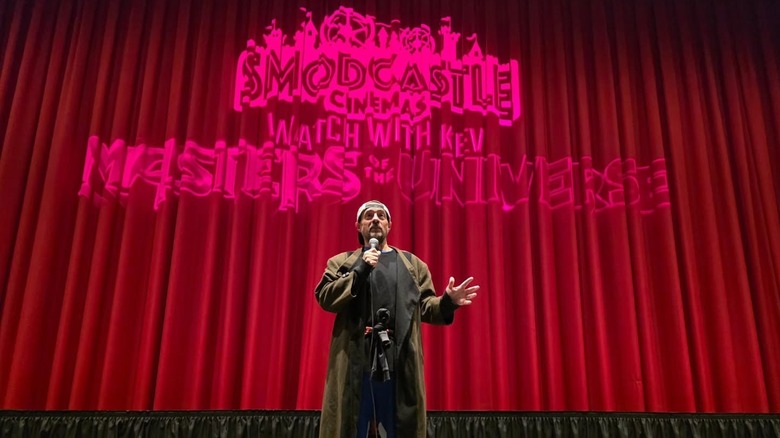
Today, Smith operates as a podcaster, the proprietor of Smodcastle Cinemas, and a mentor who consistently champions voices that might otherwise be stifled by the gatekeepers of the entertainment industry.
Supporting Data: The Practicality of the "Why Not"
The impact of Smith’s "wildest dreams" philosophy is quantifiable not just in box office receipts, but in the community he has fostered. His podcasts, which reach millions, are frequently dedicated to deconstructing the "myth" of the Hollywood genius. Smith goes to great lengths to demystify his success, constantly reminding his audience that he is "not special."
This ethos is backed by the accessibility of modern technology. When Smith started, filmmaking required expensive film stock and specialized equipment. Today, the barrier to entry has arguably never been lower. Smith’s influence can be seen in the rise of the digital creator economy, where thousands of individuals produce high-quality narrative content without the backing of a major studio.
By framing his advice around the inevitability of death, Smith adds a layer of existential urgency. It is a logic of subtraction: If we are all headed toward the same conclusion, why spend the time in between conforming to the expectations of others? It is a call to action that prioritizes individual fulfillment over societal safety nets.
Official Responses and Cultural Impact
While Smith has faced his share of critics over the decades, his shift toward a "support-first" model has earned him a rare level of goodwill in an industry often defined by competition. Even those who have been critical of his filmic output often concede that his influence as an ambassador for independent art is undeniable.
Industry peers frequently cite his "open-door" policy as a rarity in show business. Whether he is hosting aspiring filmmakers at his theater or providing platform space on his networks, Smith’s "walk the walk" approach has solidified his reputation as an anti-gatekeeper. In an era where "imposter syndrome" is a buzzword for the modern workforce, Smith’s transparency regarding his own insecurities and his path to success serves as a psychological safety net for others.
The Deeper Implications: A Philosophy for Everyone
The beauty of Smith’s quote is that it is not exclusive to the film industry. It is a universal mandate for anyone feeling trapped by the mundane.
Why "The Dream" Matters
The implication of Smith’s philosophy is that the act of trying is a victory in itself. Many people stall in their careers or personal passions because they fear the stigma of failure. Smith argues that death is the ultimate equalizer; if failure is inevitable in the grand scope of history, then the only variable that matters is the experience of the attempt.
Overcoming the "Gatekeeper" Mindset
For many, the biggest obstacle is the belief that they need permission to pursue a craft. Smith’s career serves as a historical record that permission is a social construct. He didn’t wait for a studio to sign off on his vision; he sold his belongings, shot his movie, and brought it to the world.
The Post-Heart Attack Perspective
Since his health crisis, Smith has leaned into a role that is increasingly spiritual and humanistic. He has become a "love what you do" advocate. He encourages people to find their "tribes" and prioritize joy. This is a profound pivot from the man who once famously sparred with film critics; he has learned that the time afforded to us is too precious to spend it in conflict or self-doubt.
Conclusion: Living the "Wildest Dream"
Kevin Smith’s career is a reminder that the "wildest dreams" one might harbor are often within reach if the fear of the outcome is removed. Whether you are an aspiring filmmaker looking to emulate the Clerks model, a writer looking to quit the 9-to-5, or simply someone trying to find meaning in a world that often feels indifferent, Smith’s advice is a clarion call.
"There is little sense in not at least trying." It is a simple sentence, yet it carries the weight of a life well-lived. Smith has shown us that the path to fulfillment is rarely a straight line, and it is rarely paved by others. It is, by definition, a path you must carve for yourself. In the end, the most daring act isn’t succeeding—it is the decision to pick up the camera, the pen, or the tools of your trade, and simply starting.
As we look at the legacy of Kevin Smith, we aren’t just looking at a director; we are looking at a living testament to the fact that, in the face of the infinite, the only thing that makes sense is to chase exactly what you love.