Fairway to Nowhere: Deconstructing Will Ferrell’s Ambiguous Netflix Comedy, ‘The Hawk’

In the pantheon of Will Ferrell’s career, the comedian has carved a singular niche: the loud, obnoxious, yet strangely magnetic man-child who refuses to acknowledge his own incompetence. From the high-octane absurdity of Talladega Nights to the ego-driven antics of Blades of Glory, Ferrell has mastered the art of the athletic underdog. However, his latest venture for Netflix, The Hawk—a 10-episode series arriving on the platform this July—attempts to pivot from pure slapstick into something far more morally gray.
While the show is marketed as a boisterous sports comedy, the result is a bifurcated experience. It is a show that seems caught between the urge to be a lightweight, "cheeseburger-style" streaming hit and a dark, cautionary character study about addiction, generational trauma, and the hollow pursuit of legacy.
The Main Facts: A Familiar Setup With a Vulgarly Modern Twist
The premise of The Hawk is, at its core, a classic sports trope. Lonnie Hawkins (Ferrell) is a former three-time major champion currently languishing on the Korn Ferry Tour. His glory days are in the rearview mirror, his game is erratic, and his personal life is a disaster. His son, Lance (Jimmy Tatro), is a rising star on the professional circuit, creating a dynamic of professional jealousy and latent father-son resentment.
The inciting incident is as abrupt as it is symbolic: Lonnie’s longtime caddie, Old Hank (played with weary grace by Keith David), suffers a fatal collapse in a sand trap. This loss forces Lonnie to recruit a replacement, leading him to Sam (Fortune Feimster), a stranger he encounters in a parking lot. Their shared affinity for mid-tier chain restaurants forms the unlikely backbone of their partnership—a relationship that serves as one of the show’s few consistent comedic bright spots.
However, the series is punctuated by moments that feel jarringly dissonant. In a mid-season scene, Lonnie finally attempts to bridge the emotional chasm between himself and his son. He begins a heartfelt speech about fatherhood, only to pivot mid-sentence to offer a scathing, misogynistic insult regarding Lance’s mother. It is a joke that defines the show’s erratic tone: is this a redemption arc, or is this a portrait of a man fundamentally incapable of change?

Chronology of a Career (and Character) Decline
To understand The Hawk, one must look at the trajectory of Lonnie’s professional life. We meet him as a man who has been all but written off by the PGA. The narrative follows his desperate, often unearned, attempt to qualify for the U.S. Open—the only major trophy that has eluded his cabinet.
- The Early Episodes: The series establishes the status quo. Lonnie is an outcast, shunned for his gaudy, John Daly-esque wardrobe and his refusal to adhere to the hushed etiquette of professional golf. He is a spectacle, a man who screams at the gallery and treats the tee box like a comedy club stage.
- The Mid-Season Pivot: Following the death of his caddie, the tone shifts. We see Lonnie struggling to balance his professional ambition with his decaying personal relationships. He misses a funeral to make a tee time and handles a eulogy via text message between holes.
- The Climax: As the season progresses, the stakes of the U.S. Open loom, but the series focuses increasingly on the "sickness" of Lonnie’s obsession. The lines between his love for golf and his son’s gambling addiction begin to blur, suggesting that the "Hawkins" trait isn’t athleticism, but a compulsion to pursue high-stakes thrills at the expense of all else.
Supporting Data: The Anatomy of an Antihero
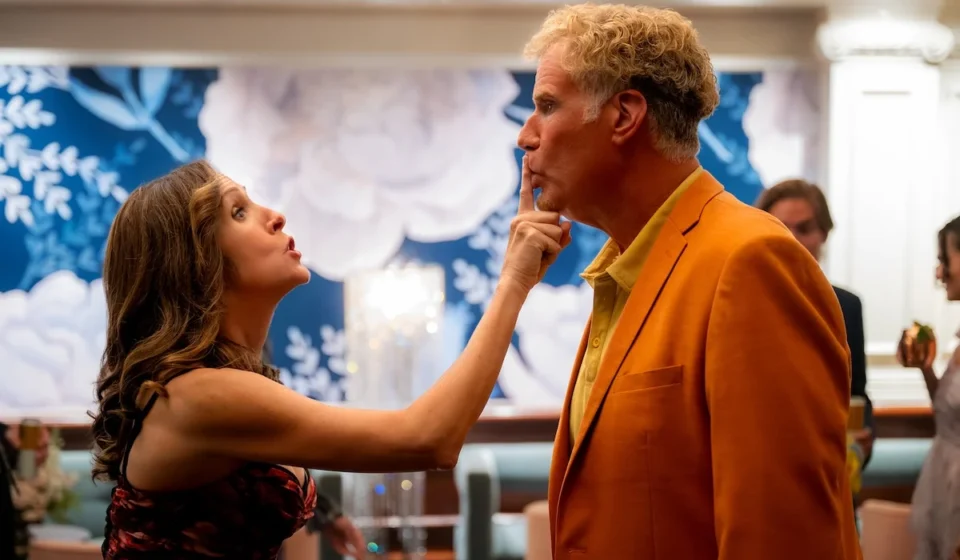
The show’s supporting cast serves as a mirror to Lonnie’s selfishness. Molly Shannon, portraying Lonnie’s estranged ex-wife, Stacy, provides the show’s most biting commentary. In a pivotal scene where she attempts to "comfort" the wife of another golfer, she doesn’t offer platitudes. Instead, she celebrates the woman’s sudden divorce, calling golfers "full-blown shits" who treat their families like an afterthought.
This characterization elevates the series from a standard sports comedy to something approaching a dark character study. If we view the show through Stacy’s eyes, Lonnie is not a protagonist we are rooting for; he is a cautionary tale of a man who has "shut the door" on his life to obsess over a game.
The inclusion of Lance’s gambling addiction—which the show treats with frustrating inconsistency, allowing it to surface only when plot convenience demands—further complicates the narrative. When the characters engage in crude, locker-room banter about their "genetics," it forces the audience to consider whether Lonnie’s addiction to golf is any different from his son’s addiction to the sportsbook.
Official Responses and Industry Context
Netflix has invested heavily in the "sports-comedy" space, buoyed by the massive success of projects like Happy Gilmore 2. The Hawk clearly aims to capture that same lightning in a bottle. However, industry critics have noted that the show’s tonal shifts—moving from slapstick golf mishaps to meditations on terminal loneliness—may struggle to find a coherent audience.

Will Ferrell remains an immensely affable presence, and his ability to hold the screen even when the material falters is undeniable. However, early screenings suggest that the show’s writing team, perhaps over-relying on Ferrell’s established brand, failed to provide a cohesive thesis for the character of Lonnie. The humor is "balls-out," as one might expect, but it feels like a relic of a different era of comedy, struggling to find relevance in a landscape that now demands more emotional intelligence from its leads.
Implications: A Mirror to the Sport?
The most compelling aspect of The Hawk—and perhaps its only truly subversive quality—is its commentary on the demographic of professional golf. It depicts the sport as a sanctuary for "white, willfully delusional men with disposable income."
When the show is at its best, it is questioning the sanity of its own protagonist. Is Lonnie a hero for chasing his dreams, or is he a parasite who consumes the happiness of those around him to fuel his own vanity? By the final episode, the show offers no clear answer. It concludes on an ambiguous note that forces the viewer to decide: has Lonnie grown, or has he simply gotten lucky enough to deceive everyone around him into believing he has?
If the viewer chooses to see The Hawk as a straightforward, lighthearted comedy, they may find the ending "happy." But if they view it as a tragedy, it becomes a biting indictment of the "win at all costs" mentality that defines modern sports culture.
Final Verdict
Ultimately, The Hawk is a show that feels unsure of its own identity. It is a series that wants to be both a broad, mindless comedy and a prestige-style drama about the costs of ambition. By attempting to straddle this fence, it fails to fully commit to either, resulting in a fractured experience that leaves the audience wanting more depth and less repetition.

As a summer binge, it is passable—it has enough of the classic Ferrell charm to keep the viewer engaged through the 10 episodes. But as a narrative work, it lacks the precision of the very game it attempts to lampoon.
Grade: D+
The Hawk premieres on Netflix on July 16. All 10 episodes will be available for streaming at launch.