The Ghost in the Machine: Inside Luca Guadagnino’s ‘Artificial,’ the Definitive Portrait of the AI Era

By Editorial Staff
September 8, 2026
In the annals of modern cinema, few filmmakers have demonstrated the restless, shape-shifting versatility of Luca Guadagnino. From the sun-drenched, tactile intimacy of Call Me By Your Name to the visceral, stylistic terror of Suspiria and the propulsive, modern-day kineticism of Challengers, Guadagnino has consistently sought to capture the human condition in states of flux. Now, with his latest project, Artificial, the Italian auteur has turned his lens toward the most transformative—and volatile—force of the 21st century: the rise of Artificial Intelligence.
Neon has officially unveiled the first teaser trailer for Artificial, a film described by industry insiders as the "Social Network of our generation." Set for a high-profile premiere at the 2026 New York Film Festival, the film promises to be a rigorous, fast-paced, and morally complex examination of the origins of OpenAI and the meteoric rise of its CEO, Sam Altman.
A Chronicle of Silicon Valley’s Great Shift
Artificial does not merely aim to be a biopic; it is a sweeping historical drama that spans two decades of feverish technological development. The narrative arc traces the trajectory of machine learning from academic obscurity to the center of global geopolitical anxiety.

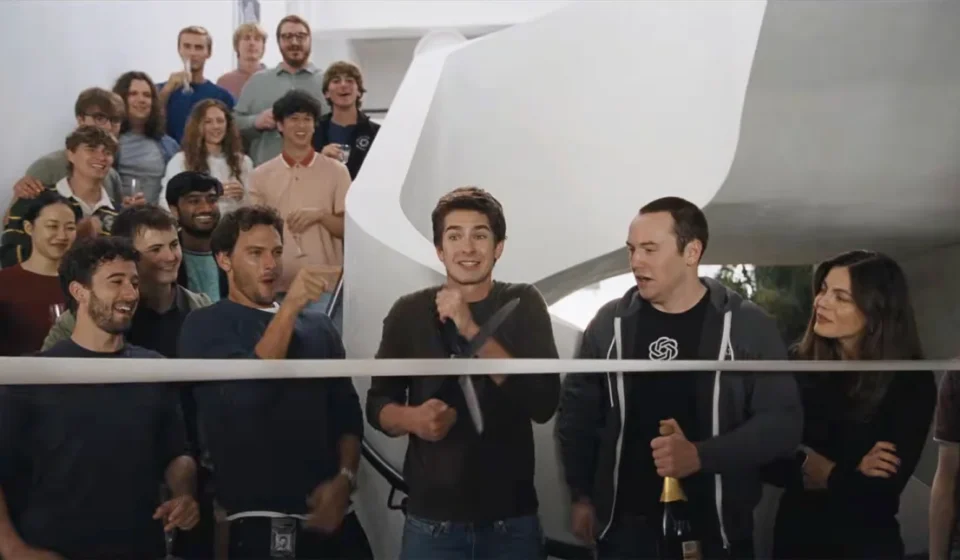
The story finds its genesis in 2003, focusing on a young, Soviet-born computer scientist named Ilya Sutskever—portrayed with intense, cerebral precision by Yura Borisov (Anora). Sutskever’s journey begins under the tutelage of Geoffrey Hinton, the "Godfather of AI," played by the incomparable Mark Rylance. As the narrative progresses, the film navigates the precarious intersection of academia and capital, documenting the fateful moment in the early 2010s when Sutskever’s research into neural networks collided with the ambitious, disruptive vision of Sam Altman (Andrew Garfield).
The film’s script, penned by Simon Rich, is reported to be as sharp and relentless as the subject matter it covers. According to early reports from the New York Film Festival (NYFF) selection committee, the film is "a drama of immense moral urgency that propels the viewer through two decades of machine learning research and technocratic recklessness that have brought us to our current crisis point."
The Cast: A Who’s Who of Modern Innovators
The production has assembled an ensemble cast that reflects the weight and gravity of the real-world figures they portray. Andrew Garfield’s transformation into Sam Altman is already being cited as a potential awards-season powerhouse, capturing both the charismatic veneer of the tech visionary and the underlying coldness of a man reshaping reality.
The supporting cast is equally formidable:

- Yura Borisov as Ilya Sutskever: A performance that anchors the film’s early, more intellectual chapters.
- Monica Barbaro as Mira Murati: Providing a crucial perspective on the internal friction within OpenAI during its most turbulent periods.
- Ike Barinholtz as Elon Musk: A casting choice that promises to inject the film with the chaotic, combustible energy associated with the early days of OpenAI’s board and funding structure.
- Jason Schwartzman and Cooper Hoffman: Rounding out the ensemble as key figures within the Silicon Valley ecosystem, bringing levity and tension to the boardroom scenes.
Chronology: Two Decades of Disruption
The film is structured as a historical procedural, meticulously tracking the timeline of the "AI Revolution." By breaking the narrative into distinct eras, Guadagnino creates a sense of "unstoppable, constant motion," mimicking the exponential growth of the very technology he depicts.
- 2003–2010 (The Academic Foundation): The era of Geoffrey Hinton’s pioneering work at the University of Toronto. This segment focuses on the pure, theoretical potential of neural networks.
- 2010–2015 (The Transition to Industry): The period of Sutskever’s transition from academia to Google, highlighting the shift from open-source research to the proprietary hunger of tech giants.
- 2015–2020 (The Birth of OpenAI): The formation of the non-profit mission to develop "safe" AGI, contrasted against the realities of funding and corporate ego.
- 2020–2026 (The Current Crisis): The release of ChatGPT and the subsequent scramble for global dominance, regulatory panic, and the integration of AI into every facet of human existence.
The Aesthetic of the Algorithm
Guadagnino’s collaboration with his long-time production team and screenwriter Simon Rich suggests a film that is visually and aurally distinct from typical Silicon Valley dramas. While films like The Social Network relied on rapid-fire dialogue and a brooding, industrial score, Artificial appears to favor a more fragmented, "machine-like" aesthetic.
The teaser trailer hints at a style that is both claustrophobic and expansive—moving from the dimly lit, whiteboard-cluttered labs of the early 2000s to the sterile, glass-walled conference rooms of the current AI hegemony. The cinematography promises to be as cold and precise as a circuit board, yet the performances remain deeply human, grounding the abstract mathematics of machine learning in the messy, flawed impulses of its creators.
Official Responses and Industry Anticipation
Neon’s marketing campaign, which kicked off with a minimalist but chilling teaser, suggests that the studio is positioning Artificial as both a prestige drama and a cultural event.

"Guadagnino’s film moves like a machine in unstoppable, constant motion," notes the NYFF press release. "It is a history being written as we’re watching it."
The industry reaction has been one of intense curiosity. In an era where AI discourse is dominated by headlines about job loss, deepfakes, and alignment problems, Artificial arrives as the first major cinematic attempt to synthesize the last twenty years of progress into a cohesive narrative. It is expected to draw comparisons to Oppenheimer—not in terms of scale, but in terms of its focus on the "architects of the apocalypse" who genuinely believed they were building a paradise.
Implications: The Moral Urgency of AI
The central tension of Artificial lies in its portrayal of the shift from a collaborative, academic mindset to one of competitive, "technocratic recklessness." By highlighting the internal conflicts between founders like Sutskever and Altman, the film challenges the audience to consider the human cost of speed.
The film poses a haunting question: What is the image of the future that you see?

As society grapples with the existential implications of Large Language Models and automated systems, Guadagnino’s film arrives at a critical juncture. It invites us to look back at the decisions made in back-offices a decade ago and understand how they paved the road to our current, precarious reality. It does not offer easy answers, nor does it lionize its subjects. Instead, it places the burden of history on the audience, asking us to judge whether the advancement of the "machine" was worth the erosion of the human element.
Release Strategy
Following its world premiere at the 2026 New York Film Festival, Artificial will move to the London Film Festival, a strategic choice that highlights the film’s global appeal. Neon has set a Christmas Day, December 25th, 2026, release date for select U.S. theaters.
This release window is deliberate, positioning the film as the premier intellectual choice for the holiday season—a time often reserved for family-friendly blockbusters, now challenged by a film that interrogates the very definition of humanity. A wider release is slated for January 2027, ensuring that the film remains part of the cultural conversation well into the awards season.
As we await the film’s arrival, one thing is clear: Luca Guadagnino has once again found a subject that demands our attention. Whether Artificial is remembered as a warning, a eulogy, or a prophecy, it is undoubtedly the most anticipated film of the 2026 calendar. In the machine-learning era, the most important story to tell is the one about the humans who built the mirror in which we now see ourselves.