The Miraculous Longevity of Ellen Burstyn: A Venice Triumph and the Pigeon-Infused Charms of ‘Place to Be’

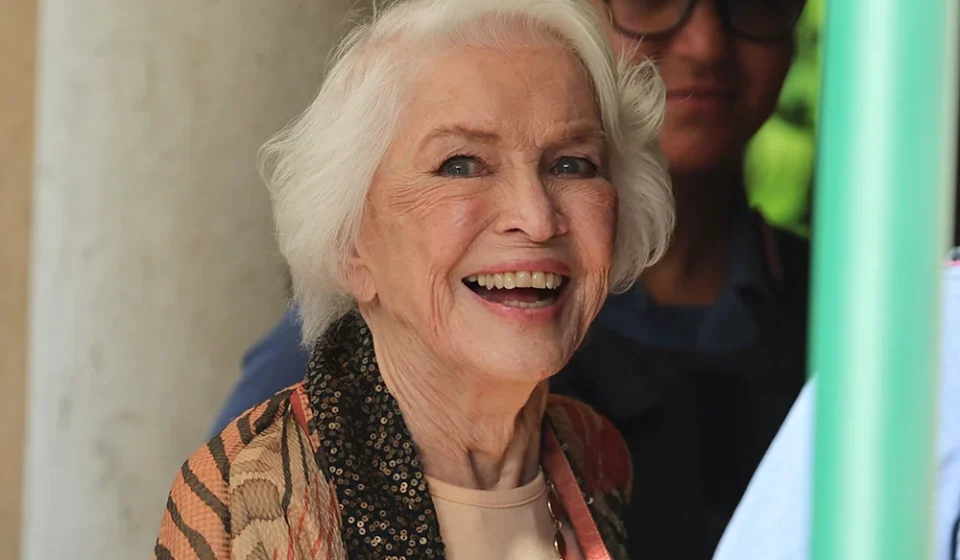
At 93 years old, Ellen Burstyn is not merely defying the conventions of the entertainment industry; she is actively rewriting them. The legendary actress, whose career has spanned over seven decades and earned her the coveted "Triple Crown of Acting"—an Oscar, a Tony, and an Emmy—arrived at the 81st Venice Film Festival this week with a grace that underscored her status as a titan of American cinema.
Burstyn’s presence in Venice served as a dual celebration: the debut of her quirky, heartfelt new drama Place to Be and her receipt of the prestigious Golden Lion for Lifetime Achievement. As she navigated the festival circuit, often relying on a walker following a recent fall, her resilience remained the defining narrative of the event.
A Legacy of Excellence: The Career of an Icon
Ellen Burstyn’s journey from a young hopeful to a nonagenarian powerhouse is a study in perseverance. With seminal performances in Alice Doesn’t Live Here Anymore, Same Time, Next Year, and Political Animals, she has long been regarded as one of the most versatile and emotionally resonant actors of the 20th and 21st centuries.
However, Burstyn herself remains humbled by the sheer duration of her success. During a candid press conference for Place to Be, she reflected on the limitations she once envisioned for herself. "When I was in my 30s and I thought about how long my career would last, I was sure I’d be finished by 40," Burstyn admitted. "I didn’t think it would go on much longer than that. The fact that I’m 93 and still working is a miracle of some kind that I’ve attracted into my life. I’m totally amazed, and at the same time, deeply grateful."
The Genesis of ‘Place to Be’
Directed by the visionary Hungarian filmmaker Kornél Mundruczó, Place to Be is a project born from intentionality and deep admiration. Mundruczó revealed that he developed the role of Brooke—a no-nonsense elderly woman—specifically with Burstyn in mind.
"It was very beautiful to create a love story for her," Mundruczó noted, referencing the platonic, evolving bond between Burstyn’s character and a divorced, somewhat arrogant man played by Taika Waititi. To capture the essence of the character, Mundruczó spent months rewatching Burstyn’s extensive filmography, aiming to weave the DNA of her previous iconic roles into the tapestry of Brooke.
The narrative follows a poignant journey: an unlikely road trip from New York to Chicago, sparked by the necessity of returning a lost racing pigeon to its rightful owner. The supporting cast features Pamela Anderson and Murray Bartlett as Brooke’s concerned children, with brief but impactful cameos from Edgar Ramirez and Lena Waithe.
The Pigeon Paradox: Behind the Scenes of a Feathered Production
One of the most peculiar elements of Place to Be is the central role played by pigeons. Director Kornél Mundruczó expressed a desire to rehabilitate the reputation of the birds, which he feels have been unfairly maligned by history.
"Pigeons are the losers of history," Mundruczó explained. "At the beginning, they were so important as messenger birds during war, and they delivered a ton of love stories. And then they became city rats. I found something very touching in these little birds."
However, the reality of working with 30 live pigeons proved to be less poetic and more chaotic. Taika Waititi, who shared the stage with Burstyn and Mundruczó at the press event, offered a humorous, if blunt, assessment of his avian co-stars.
"They shit a lot. Every minute. And that’s a scientific fact," Waititi joked. "Physiologically, there’s something not right with them."
The production team even considered the logistics of avian hygiene. Producer Jomon Thomas revealed that there was a serious discussion regarding the use of custom-made diapers for the pigeon troupe. Ultimately, the idea was abandoned. As Waititi dryly observed, "Nobody wants to take off a pigeon’s diaper." Furthermore, the post-production team determined that digitally removing diapers in visual effects would have been an unnecessarily complex hurdle.
A Renaissance for Pamela Anderson
The film also serves as a pivotal chapter in the ongoing career resurgence of Pamela Anderson. Once defined by her tabloid presence and her role in Baywatch, Anderson has transitioned into a respected character actress, earning some of the best critical notices of her life for Gia Coppola’s The Last Showgirl.
Following a successful Broadway debut as Roxie Hart in Chicago, Anderson has secured roles in high-profile projects like The Naked Gun reboot and Rosebush Pruning. Burstyn confessed that her initial reaction to learning Anderson was cast as her daughter was one of skepticism, but that vanished upon their first meeting.
"And then I met her and thought, ‘Oh, for sure, she could be my daughter.’ I felt immediately loving toward her," Burstyn said. "She’s a wonderful person."
A Venice Tribute: The Golden Lion
The climax of Burstyn’s Venice experience occurred during the ceremony for her Golden Lion for Lifetime Achievement. As she stood before a standing-room-only crowd of industry peers, the usually composed actress was visibly moved, breaking down in tears as the audience erupted into a sustained ovation.
"You can’t imagine how meaningful this is to me," she said during her acceptance speech on Monday. "It’s one thing to win an Oscar, a Tony, or an Emmy—all of which I’ve won. But this… it’s a lot."
Her presence at the festival was not limited to Place to Be. She also participated in Maggie Gyllenhaal’s short film Flesh Impact, a Marilyn Monroe-inspired project that further demonstrates her commitment to challenging, high-art cinema even in her tenth decade of life.
Implications for the Industry
The career of Ellen Burstyn represents a significant shift in how the film industry views aging performers. For decades, the "expiration date" for actresses was a well-documented tragedy of Hollywood. By continuing to headline major films, collaborate with contemporary auteurs like Mundruczó and Gyllenhaal, and command the respect of younger stars like Waititi, Burstyn is shattering the glass ceiling of ageism.
The success of Place to Be at the festival, despite its unconventional premise and the logistical headaches of its feathered cast, suggests that audiences and critics are eager for stories that center on the wisdom, vulnerability, and continued vitality of the elderly.
As Burstyn continues to balance her physical recovery—using a walker with elegance and being assisted by her co-stars—she serves as a living testament to the idea that an artistic life does not have to conclude when society says it should. Her story is no longer just about the past; it is about the ongoing, miraculous possibility of the present.
As she prepares to share Place to Be with global audiences, Burstyn remains a beacon of professional endurance. Whether she is navigating the red carpet or delivering a nuanced performance, she proves that at 93, the best parts of her career may still be unfolding.