
By Editorial Staff | August 31, 2026
The Venice Film Festival has long served as the grand stage for auteur cinema, a place where the visceral and the intellectual collide. As the 83rd edition of the festival approaches, all eyes are turned toward one of the most anticipated entries in the Main Competition: The Echo Chamber. Directed by the critically acclaimed Italian filmmaker Andrea Pallaoro, the film promises to be a haunting exploration of the complexities of human attachment. With the recent release of the official teaser trailer, audiences have received their first glimpse into a world where romance, control, and memory coalesce in a delicate, shifting dance.
The Core Narrative: A Modern Reimagining of a Bertolucci Classic
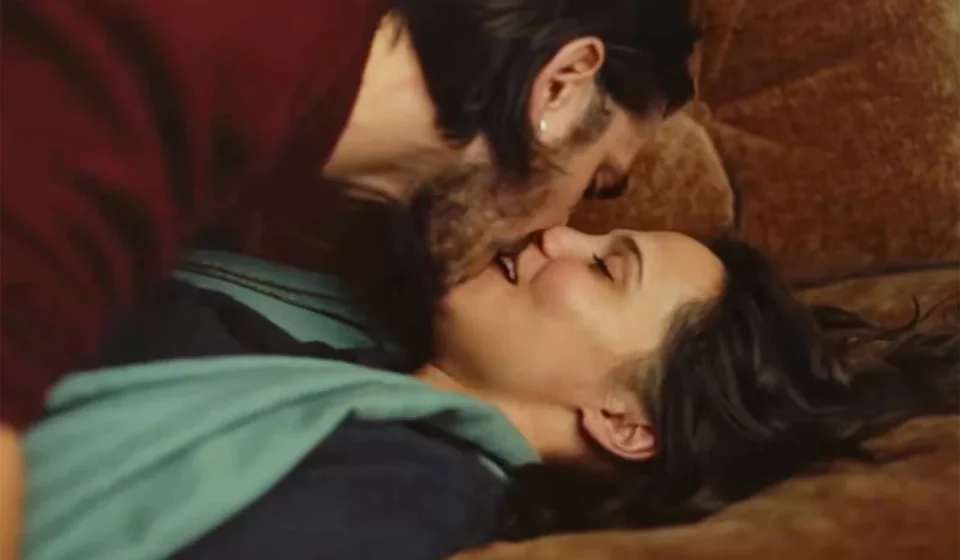
At its heart, The Echo Chamber is a deeply intimate love story. The plot centers on the volatile and profound connection between two central figures: Leo, played by the magnetic Luca Marinelli, and Anne, portrayed by the Oscar-winning Alicia Vikander. The narrative explores the shifting boundaries of their relationship, where the line between presence and absence—and care and dependence—begins to erode.
The film is not entirely an original invention; it is a creative resurrection. The Echo Chamber finds its foundation in an archival screenplay penned by the legendary Bernardo Bertolucci. Pallaoro, known for his ability to excavate the quiet traumas of the human condition in films like Medeas (2013), Hannah (2017), and Monica (2022), has taken Bertolucci’s foundational work and filtered it through his own distinct, minimalist lens. By updating the script with the assistance of writers Ilaria Bernardini and Ludovica Rampoldi, Pallaoro has crafted a narrative that feels both timeless and urgently contemporary.
The film is further elevated by the ethereal presence of Susan Sarandon, who voices the character of Ava. Her performance is described as a spectral force that "echoes across time," acting as a narrative thread that connects the characters to the weight of their pasts.

Chronology: From Bertolucci’s Desk to the Lido
The journey of The Echo Chamber is one of artistic inheritance. The project began as a script left behind by the late, great Bernardo Bertolucci, an icon of Italian cinema. For years, the screenplay sat as a dormant artifact until it found its way into the hands of Pallaoro.
- Pre-Production: Pallaoro identified themes in the original Bertolucci script that mirrored his own long-standing fascinations: the fragility of identity and the claustrophobia of emotional dependency. The decision was made to modernize the setting while preserving the foundational tension of the original story.
- Casting and Development: With the backing of producers Carlotta Calori, Francesca Cima, Nicola Giuliano, and Viola Prestieri, the project gained momentum in 2025. The pairing of Marinelli and Vikander was seen as a coup, bringing together two of Europe’s most versatile actors.
- Principal Photography: The production moved through various locations, aiming to capture a sense of domestic isolation that would serve as a crucible for the characters’ volatile emotions.
- August 31, 2026: The global debut of the official teaser trailer via 01 Distribution, confirming the film’s selection for the Venice Main Competition.
- September 2026 (Upcoming): The film is slated for its world premiere at the 83rd Venice Film Festival, followed by an immediate wide release in Italian cinemas on September 10, 2026.
Supporting Data: The Anatomy of a Masterpiece
To understand the weight of The Echo Chamber, one must look at the pedigree of those involved. Andrea Pallaoro has established himself as a master of the "slow cinema" movement, often prioritizing character psychology over traditional plot mechanics. His previous film, Monica, was lauded at the 2022 Venice Film Festival for its empathy and visual restraint. By returning to the Lido, Pallaoro is cementing his status as a festival favorite.
The production team, spearheaded by the powerhouse trio of Indigo Film (Calori, Cima, and Giuliano), has a track record of supporting visionary directors. Their involvement suggests a high-quality aesthetic, likely favoring deep color palettes and long, uninterrupted takes—a signature of Pallaoro’s work.
The inclusion of Bertolucci’s name in the credits is not merely a marketing tactic; it represents a bridge between the golden age of Italian cinema and the modern era. By integrating an older script, the film naturally leans into themes of "the echo," where the past is never truly gone but rather reverberates in the choices of the present.
Official Responses and Artistic Vision
In statements provided to the Biennale, the creative team has emphasized that the film is not a "biographical" look at Bertolucci, but rather an evolution of his ideas. Pallaoro notes that he took the screenplay as a "point of departure."

"Leo and Anne circle each other in an endless cycle of longing and separation," the official synopsis notes. "They cannot let go, nor break free." This cycle is the crux of the viewing experience. The trailer reinforces this with haunting imagery: wide, empty corridors, close-ups of Vikander’s emotive expressions, and the somber, rhythmic cadence of Sarandon’s voiceover.
Critics who have had early access to production stills and clips suggest that the chemistry between Marinelli and Vikander is starkly different from the typical romantic drama. It is reported to be less about the "spark" of new love and more about the "gravity" of long-term entrenchment.
Thematic Implications: Dependency in the Modern Age
What does The Echo Chamber say about the human condition in 2026? By focusing on "emotional dependency," Pallaoro is addressing a topic that has become increasingly relevant in an era of digital isolation and physical proximity.
1. The Blurring of Autonomy
The film explores how much of one’s identity is surrendered when we enter a "chamber" of shared existence. When boundaries between "care" and "control" dissolve, the film forces the audience to ask: At what point does love become a cage?
2. The Persistence of the Past
The use of Ava’s voice as an auditory anchor implies that our pasts act as architects for our present relationships. The characters are not just dealing with each other; they are dealing with the ghosts of their history, represented by the legacy of the script itself.

3. The Cinematic Language of Silence
Pallaoro is a director who trusts his audience. By utilizing the medium of film to convey what words cannot, The Echo Chamber relies heavily on the "echoes" of silence. The production design, which utilizes domestic space as a psychological map, implies that the rooms these characters inhabit are characters themselves.
The Road Ahead: Global Anticipation
As the September 10th release date approaches, the film industry is watching closely to see if The Echo Chamber can replicate the success of Pallaoro’s previous works. While no international release dates have been confirmed outside of Italy, the prestige of the Venice Main Competition selection virtually guarantees that the film will be picked up for global distribution in the coming months.
The film stands as a testament to the power of collaboration. It is a dialogue between a master of the past (Bertolucci) and a master of the present (Pallaoro), played out by two of the finest performers working today. Whether the film will be remembered as a triumphant homage or a challenging departure remains to be seen, but one thing is certain: the conversation it provokes will be as profound as the silence within the chambers it portrays.
As we await the first reviews from the Lido, audiences are left with the lingering, haunting words of the film’s synopsis: "What endures—and what can no longer be held back." The Echo Chamber is not just a film to be watched; it is an experience to be felt, a mirror held up to the complexities of love that we so often try to ignore. Stay tuned for further updates as the 83rd Venice Film Festival commences.