The Art of the Infinite Yaw: Inside Mariano Llinás’ Monumental "The Life of Jorge Luis Borges"

To call a film "boring" is often dismissed by critics as a failure of imagination—a lazy shorthand for cinema that refuses to cater to the frantic pacing of contemporary blockbusters. Yet, in the case of Mariano Llinás’ latest magnum opus, The Life of Jorge Luis Borges, boredom is not merely a byproduct; it is the primary aesthetic strategy. Spanning five-and-a-half hours across three distinct parts, this exhaustive, sprawling, and deliberately obtuse documentary about the iconic 20th-century Argentine writer demands that its audience embrace a state of active ambivalence. It is a film that wants you to be distracted, to fidget, and to lose your way in the labyrinthine margins of literary history.
The Architecture of a Non-Biography
On its surface, the film functions as a chronological trek through the life and intellectual practice of Jorge Luis Borges. However, to expect a traditional biographical portrait is to fundamentally misunderstand Llinás’ project. Despite being granted unprecedented access to archival materials, rare locations, and the world’s foremost Borges scholars, Llinás remains playfully—and at times maddeningly—uninterested in the "obligatory" beats of a standard documentary.
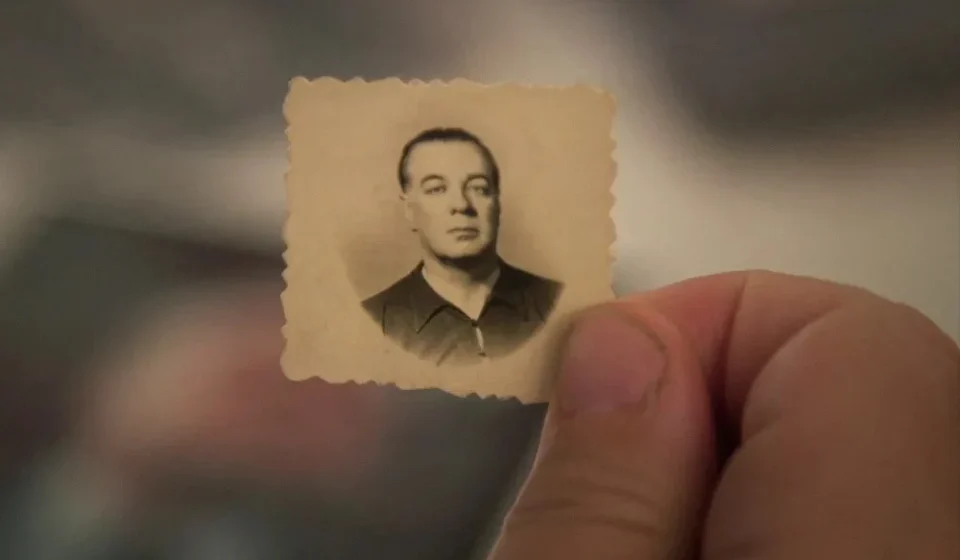
The filmmaker treats the man himself as a MacGuffin. While he dives deep into the minutiae of a single, hand-written footnote in an obscure edition of a Borges volume, he entirely skips over the author’s formative years in Spain. This is not an oversight; it is a declaration of intent. Llinás is not interested in the "who" of Borges, but in the "how" of his influence—the way his presence haunts the architecture of Argentina, the texture of its streets, and the glitchy, low-resolution scans of his private papers.
Chronology: Searching for the "Beginning"
The first act of this epic centers on a singular, almost philosophical problem: When does a life actually begin? Is it at birth? Does it begin with the loss of innocence, or the moment a writer first edits a sentence fragment? Llinás doesn’t provide a tidy answer. Instead, he offers a sequence that captures the essence of the film: a protracted, meditative attempt to balance a light meter against the blue-green cover of an old SUR magazine.
As the camera shifts between monitors, screens, and physical copies, the viewer realizes that the image is impossible to capture perfectly. That failure—the struggle to see clearly through the mediation of technology—is the film’s true subject.
The Methodology of the Marginal
The film’s narrative structure is built on a series of "meta-textual" interjections. Llinás and his crew, including researcher Ernesto Montequín and archivist Nicolás Helft, treat their investigation like a picaresque comedy. They travel to an unremarkable Hilton in search of a single column mentioned in a passing Borges anecdote. They wander through Austin, Texas, chasing a romanticized, ghostly version of the past that Borges once mourned.

These sequences are defined by their failures. When the crew is denied access to a building, or when a location turns out to be too pedestrian to hold the weight of their projections, the camera lingers on their frustration. At one point, Llinás is disappointed to find a house that perfectly matches a description in Borges’ work—only to discover its name is "La Buena Suerte" (Good Luck). He dismisses the find, arguing that the name is too perfect, too "literary" for Borges to have ignored; it is a joke on the nature of narrative artifice, as Llinás himself is currently curating this exact "perfect" detail for his own film.
Supporting Data: The Cast of Shadows
Llinás, the mastermind behind the 14-hour marathon La Flor, brings the same independent, experimental spirit of his collective, El Pampero Cine, to this project. He is not a dispassionate narrator; he is a participant. He mocks his own process, reveals that the film’s score is partially performed on a toy xylophone, and highlights the absurdity of his search.
The figures appearing alongside him—such as actress Laura Peredas and editor Ignacio Codino—serve as scale models. They are the human presence in a landscape too vast to map, functioning much like an action figure placed next to a skyscraper to convey its sheer size. Even the "ghosts" of the film carry weight: the presence of the late filmmaker Hugo Santiago, Llinás’ mentor, looms over the second act. By recreating shots from Santiago’s interviews, Llinás bridges the gap between the past and the present, turning the National Library into a site of temporal collapse where the 2020s and the mid-century become indistinguishable.
Official Responses and The Critical Divide
The Life of Jorge Luis Borges is, by its own design, an insular project. It is a work for those already deeply invested in the fixations of the El Pampero collective. The film avoids the "great man" theory of biography, opting instead to present Borges in relief—carved from the negative space of blue-prints, architectural landscapes, and petty editorial disputes.
While the film touches upon Borges’ late-life political controversies and his flirtations with fascist sympathies, it does so with a detached, workmanlike brevity. These moments feel compulsory, a brief nod to historical duty before the film returns to its true love: the footnotes, the sketches, and the ephemeral song melodies that Borges once mentioned in passing. It is, as the critic Lucy Ives might describe it, a "minor work"—not in quality, but in focus—that finds its strength in the imperfection of its inquiry.
Implications: The End is the Beginning
Perhaps the most telling moment of the entire five-hour odyssey occurs just fifteen minutes in, when Llinás voice-over announces, "The earlier you put the ending, the better." It is a taunt, a wink to the audience that the linear progression of time is a social construct the film has no intention of respecting.

By the time the actual conclusion arrives, the film has dissolved any pretense of academic rigor. It ends not with a revelation, but with a staged, fictionalized stroll that transitions, almost imperceptibly, into something "real." It leaves the viewer in a state of suspended animation.
Why the "Boring" Works
The experience of watching The Life of Jorge Luis Borges is undeniably grueling. It requires a stamina rarely asked of modern cinema-goers. It is, at times, ambiently excruciating, mirroring the sensation of waiting at a bus stop on a sweltering afternoon. However, the brilliance of the film lies in its aftermath. It is a project that gains power in retrospect. The frustration felt during the screening is replaced by a haunting, retroactive affection for its audacity.
Llinás has crafted a film that functions like a Borges story itself: a recursive loop of research, failure, and aesthetic beauty. It is a film that refuses to be summarized, refuses to be efficient, and ultimately refuses to be anything other than exactly what it is—a monumental, self-indulgent, and utterly singular act of devotion.
For those willing to endure the yawn, the rewards are found in the very things the filmmaker leaves on the cutting room floor, and the strange, quiet magic of the things he chooses to keep. As it seeks U.S. distribution, it remains a testament to the power of the "minor work"—a film that matters not because it solves the mystery of a genius, but because it invites us to wander through the mystery alongside him.
Grade: B-
The Life of Jorge Luis Borges premiered at the 2026 Toronto International Film Festival.