
In the crowded landscape of 2013 summer blockbusters—a season dominated by the sheer scale of superhero spectacles and the waning influence of traditional action stars—Universal Pictures quietly released 2 Guns. Based on the BOOM! Studios graphic novel by Steven Grant and Mateus Santolouco, the film arrived with a pedigree of heavy-hitting talent, headlined by the dual powerhouses of Denzel Washington and Mark Wahlberg. Yet, despite a solid box office return and a charismatic ensemble cast, the film has largely drifted into the periphery of pop culture memory.
Directed by Baltasar Kormákur, 2 Guns serves as a fascinating case study in the mid-budget, R-rated crime caper—a genre that was once the bedrock of Hollywood but has since been largely subsumed by the demands of franchise building. As we look back, the film remains a sharp, if occasionally overstuffed, reminder of a time when movie stars were enough to sell a premise, even if that premise involved a convoluted web of double-crosses and a legendary turn by the late Bill Paxton.
The Premise: A Collision of Undercover Worlds
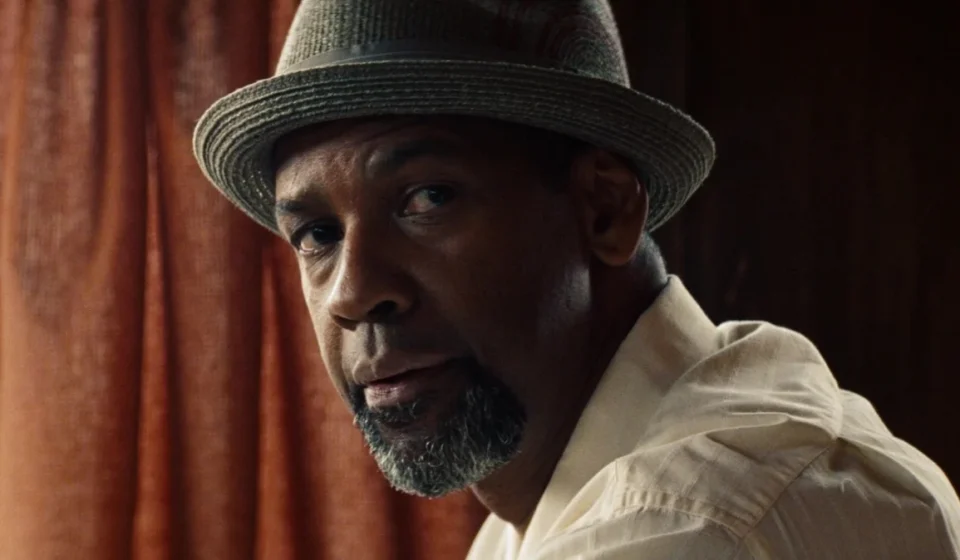
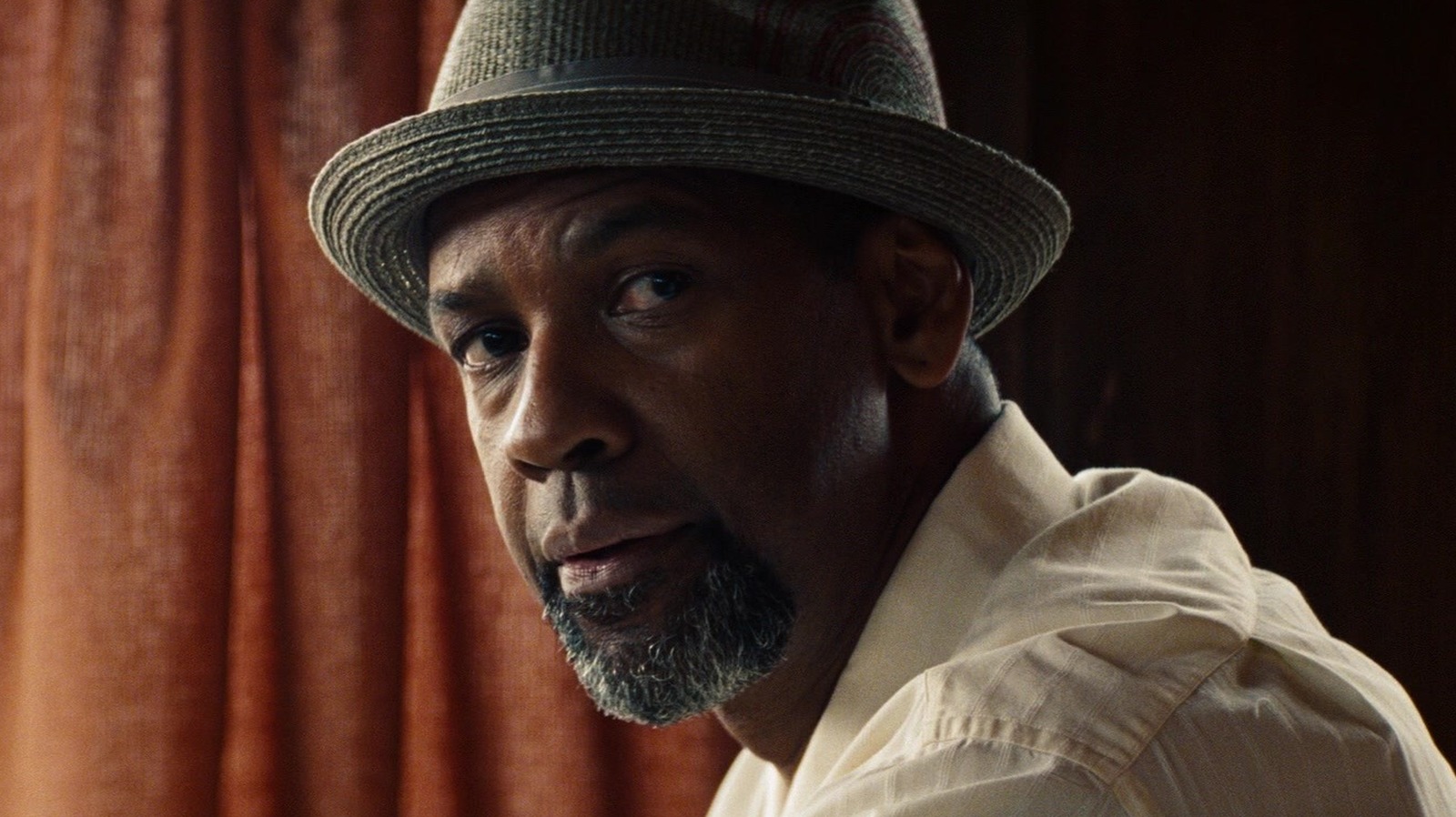
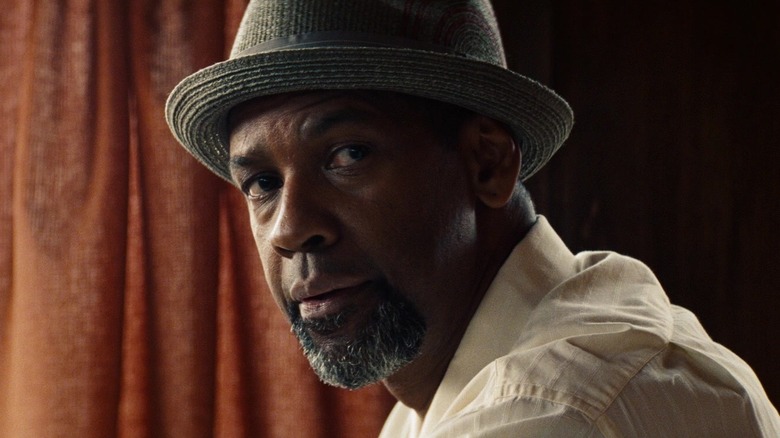
At its core, 2 Guns is a classic "buddy-cop" setup with a subversive, cynical twist. Denzel Washington stars as DEA Special Agent Robert "Bobby Beans" Trench, a man who carries himself with the quiet authority of a veteran operative, often hiding behind a hipster-adjacent trilby. Opposite him is Mark Wahlberg as U.S. Navy Special Operations Petty Officer 1st Class Michael "Stig" Stigman.
The film’s inciting incident is a bank robbery that goes sideways. Both men, operating deep undercover, believe they are working toward a common goal: dismantling the drug empire of Manny "Papi" Greco (played with chilling intensity by Edward James Olmos). However, there is a fundamental layer of deception at play—neither man knows the true identity or the agency of the other.
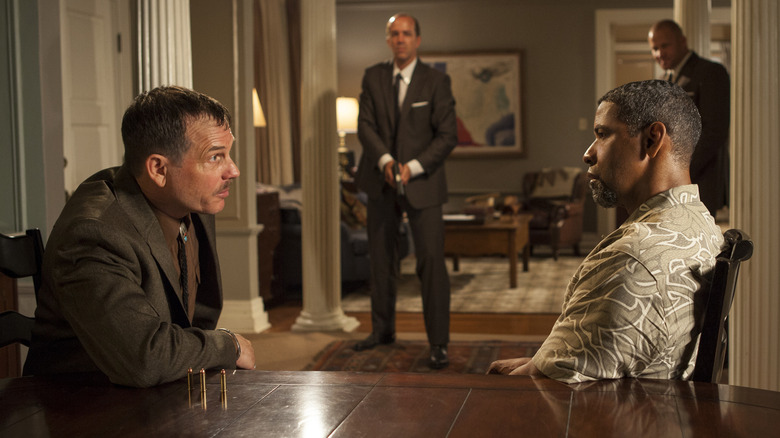
The plot pivots from a routine undercover operation into a high-stakes heist when the pair realize that the bank they’ve targeted holds not the $3 million they anticipated, but a staggering $43.125 million—money that belongs to the CIA rather than the local drug lord. This revelation transforms the narrative from a straightforward sting operation into a desperate scramble for survival, as Trench and Stig find themselves betrayed by their own handlers and hunted by a shadowy, ruthless CIA operative named Earl, played with unhinged glee by Bill Paxton.
Chronology of a Failed Franchise
When 2 Guns premiered in August 2013, it was positioned as a reliable late-summer adrenaline rush. It opened against the likes of Lindsay Lohan’s experimental project The Canyons and the critically beloved teen drama The Spectacular Now. However, the film suffered from the long shadow cast by The Wolverine, which had dominated the box office the previous week.
The Rise and Stall
Upon its release, the film was a financial success by most metrics. Produced on a budget of $61 million, it pulled in approximately $131 million globally. At the time, producer Randall Emmett was notably optimistic about the film’s potential as the launchpad for a new franchise, going on record to state his intentions to develop 3 Guns.
However, as the months turned into years, the momentum stalled. The "cinematic universe" fever that began to grip Hollywood in the early 2010s meant that films without clear sequel potential or massive merchandising tie-ins were often left to fend for themselves on the secondary market. 3 Guns never materialized, leaving the original film as a standalone relic of an era that was transitioning away from standalone action movies.
Supporting Data: The Cast and the Creative Engine
What makes 2 Guns stand out even today is not necessarily its plot, which is intentionally labyrinthine, but the sheer talent assembled by Kormákur.
- The Ensemble: Beyond the leads, the film features Paula Patton as Deb Rees, a DEA agent whose shifting allegiances provide the film’s emotional pivot points. James Marsden delivers a performance as Quince, the leader of Earl’s hit squad, while character actor Robert John Burke provides the bureaucratic foil as Trench’s boss.
- The Director’s Vision: Baltasar Kormákur, who had previously helmed the well-received 101 Reykjavík and had worked with Wahlberg on Contraband, brought a specific, grit-heavy visual language to the project. Cinematographer Oliver Wood—known for his work on the Bourne series—gave the film a kinetic, handheld urgency that perfectly suited the desert-baked, sun-bleached aesthetic of the story.
- The "43 Million" Fetish: As noted by critics like Odie Henderson, the film develops a strange, almost fetishistic obsession with the sum of $43.125 million. It is a recurring narrative device that serves as a visual anchor, often shot from high angles to emphasize the sheer, absurd scale of the cash.
Critical Reception: A Mixed Verdict
The critical response to 2 Guns was largely lukewarm, mirroring its status as a "middle-of-the-road" studio effort. Currently holding a 64% approval rating on Rotten Tomatoes, the consensus suggests that while the film is competent, it lacks the distinct voice required to be truly memorable.
The "Sleazy" Comparison
Critics like Anthony Quinn of The Independent were notably harsh, dismissing the film as a derivative throwback to the "mismatched cop" tropes of the 1980s. The common sentiment was that the film attempted to recapture the magic of Lethal Weapon or Midnight Run but failed to land the comedic beats necessary to elevate the material.
The Defense of Absurdity
Conversely, some reviewers found merit in the film’s self-aware tone. Odie Henderson’s review for RogerEbert.com stands out as a defense of the film’s peculiar rhythm. Henderson highlighted Bill Paxton’s performance, noting that Paxton’s delivery—slow, staccato, and menacing—turned the film’s repetitive dialogue into a form of dark poetry. For those who enjoy the "scuzzy" side of crime cinema, 2 Guns functions as a love letter to the hard-boiled genre of the 1970s, even if it occasionally loses its way in the weeds of its own plot.
Implications: Why We Don’t Remember ‘2 Guns’
The obscurity of 2 Guns in the modern era is a testament to the changing nature of film consumption. In 2013, a movie like this lived or died by its theatrical performance and its subsequent home video sales. Today, it resides in the "scroll-past" void of streaming platforms.
The primary implication of 2 Guns’ relative disappearance is the shift in Hollywood’s risk tolerance. Projects like this—mid-budget, star-driven, R-rated crime films—are increasingly rare. When they are made, they are often pushed directly to streaming services rather than receiving a theatrical rollout. The fact that 2 Guns earned $131 million would, by today’s standards, be a massive success for a non-franchise film, yet it was viewed at the time as merely "respectable."
Furthermore, the film highlights the "Paxton Factor." Bill Paxton, who passed away in 2017, was an actor who could elevate any material. His presence in 2 Guns provided a layer of menace that grounded the film’s more ridiculous plot points. Without his performance, the film likely would have been forgotten much faster.
Conclusion: A Worthwhile Revisit?
2 Guns is not a masterpiece. It is a chaotic, frequently confusing, and at times overly cynical crime comedy that relies heavily on the charisma of its stars to bridge the gaps in its narrative. However, in an era where the cinematic landscape is dominated by heavy CGI and established intellectual property, there is a certain charm to a movie that is simply about two guys, a massive pile of money, and the various ways they attempt to outsmart one another.
For those who enjoy the gritty, sun-soaked aesthetic of early 2010s action cinema, or for those who want to see Bill Paxton at his most delightfully villainous, 2 Guns remains a rewarding, if flawed, watch. It is a reminder that even "forgotten" movies have a pulse, a point of view, and a place in the history of a genre that continues to evolve. While the planned 3 Guns never came to fruition, the legacy of this project persists as a footnote—an entertaining, slightly scuzzy footnote—in the careers of two of the biggest names in Hollywood.