The Erasure of Memory: Rafael Manuel’s Filipiñana and the Architecture of Colonial Indifference

Editor’s note: This review was originally published on January 23, 2026, following the film’s debut at the 2026 Sundance Film Festival. The film is set to open at New York City’s Film Forum on Friday, August 28, with a wider theatrical expansion to follow.
In the canon of contemporary cinema, few spaces possess the inherently sinister geometry of the golf course. They are sprawling, lush gardens of solipsism, designed as much to isolate the player from the world as they are to facilitate the quiet, transactional theater of the elite. To the “masters of the universe” who frequent them, these fairways are idyllic sanctuaries for deal-making and status-signaling. But in Rafael Manuel’s Filipiñana, these 150-acre expanses of manicured grass and strategically placed sand traps are revealed to be something far more haunting: sites of systematic historical erasure.
Filipiñana is a work of profound, languid unease. It captures a specific form of "double terraformation," where the landscape is not just altered, but stripped of its indigenous memory, mulched into a sterile, peaceful version of itself that allows its patrons to forget the violence—or the history—that existed before the first hole was dug.
The Geography of Amnesia: Main Facts
At the heart of the film lies a fictional, yet painfully recognizable, country club near Manila. While Manuel remains intentionally vague about the specific history of the club, the implications are chilling. The Philippines, which transitioned away from American colonial control in 1946, has seen an explosion of such private, gated environments. Today, there are between 30 and 40 golf courses in the immediate vicinity of Manila alone.
This proliferation is not merely urban development; it is a cultural and political statement. The film draws a direct, if unspoken, line to the real-world histories of such lands—including sites where, in 2004, 14 striking sugar plantation workers were massacred. By replacing the visceral, blood-soaked reality of the plantation with the quiet, privileged "sport" of golf, the club acts as a mechanism of forgetting. As Manuel suggests, the American legacy in the region wasn’t just to leave a footprint; it was to leave behind a structure that helps the populace forget what the land was like before the arrival of the colonizer.

A Chronology of Indifference: Character Perspectives
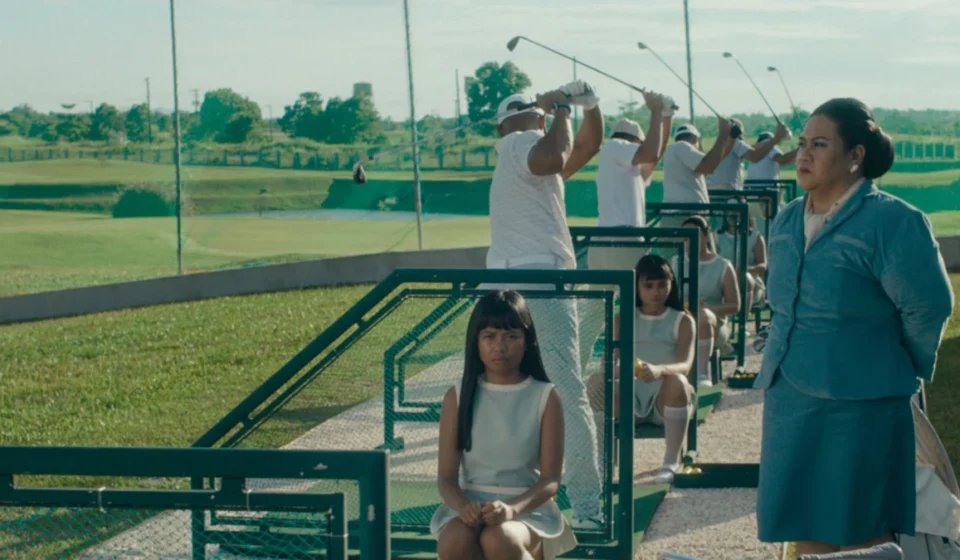
The narrative of Filipiñana unfolds through a mosaic of perspectives, reflecting the stratified social layers of the club. We are introduced to the environment through the eyes of disembodied foreign tourists, bemused by the spectacle of blind musicians greeting guests at the entrance. The scene is rhythmic, bordering on the mechanical, with golfers swinging in synchronized, hypnotic motion. Manuel has cited Jacques Tati as a primary influence, yet the film’s satirical bite feels more aligned with the detached, cynical elegance of L.A. Story.
The story gains its primary momentum through the arrival of 17-year-old Isabel (Jorrybell Agoto). A newcomer to the city from the northern region of Ilocos, Isabel takes a job as the club’s newest "tee girl." Clad in PanAm-inspired turquoise uniforms, these young women are forced to sit mere inches from the backswing of players who view them as little more than decorative furniture.
Parallel to Isabel’s journey is that of Clara (Carmen Castellanos), a privileged, Western-educated expat whose uncle is a high-ranking member of the club. Clara represents the modern, skeptical observer. She speaks to the caddies with a degree of respect that makes her presence friction-filled; she is clearly repulsed by the colonial undertones of the establishment, yet she remains paralyzed, unable to bridge the gap between her intellectual distaste and active intervention.
Supporting Data and Thematic Analysis: The Cost of Labor
The core of Filipiñana’s critique lies in the relationship between the members and the labor that sustains their leisure. The club members are not golfers in the traditional sense; they rarely care about the score, and many cheat with a casual disregard that mirrors their broader social impunity. They love the game because it requires the visible, subservient labor of the working class.
The film is a study in "narcotized" action. Manuel, working with executive producer Jia Zhangke, crafts a visual language of 4:3 shots that emphasize the verticality of the social hierarchy. The air of the club is thick with heat and inaction. The characters seem to move through a haze where no one possesses the life force to challenge the structural violence keeping the club in operation. Whether it is the pervy receptionist or the constant, dangerous stray balls from the driving range that strike workers without apology, the prevailing ethos is one of total, chosen blindness.

Official Responses and Creative Intent
In discussions surrounding the film’s premiere, Manuel has emphasized his desire to externalize the internal rot of a post-colonial society. The film’s aesthetic—which has drawn comparisons to the work of Lucrecia Martel—uses its slow, deliberate pacing to "weaponize" the environment. The pine trees, for instance, are an invasive species, imported to provide a certain aesthetic to the fairways. When one dies, it is immediately replaced. The club has no organic past; it is a manufactured reality that relies on the heat of the climate to maintain its sense of place.
The film’s, and by extension the director’s, critique is that the club is not just a place for golf; it is an apparatus for the erasure of the Filipino identity. The "inaction" of the characters is the film’s central drama. It is a portrait of a society so thoroughly stifled by colonial torpor that the mere act of speaking out against injustice feels like a radical, nearly impossible gesture.
Implications: The Political Becomes Personal
The film’s ultimate strength—and its most debated quality—is its lack of traditional dramatic catharsis. The narrative operates with a lack of subtlety that some might find off-putting, yet in the context of the film’s thesis, this lack of nuance is a feature, not a bug. It mirrors the obvious, suffocating nature of the oppression being depicted.
It is only in the final act that the film pivots, transforming the nebulous atmosphere of the previous two hours into something with stinging personal weight. The political struggle for memory is finally distilled into Isabel’s quiet, devastating quest to return a misplaced club to the club president, Dr. Palanca.
The most daring sequence occurs during the closing credits. While the audience expects the typical resolution of a feature debut, Manuel subverts the very grammar of Western cinema. He refuses to provide a neat ending, instead allowing the final moments of the film to unfold while the credits roll, literally burying the character’s resolution under the administrative machinery of the film industry. It is a masterful, if bleak, final stroke that underscores the central theme: when the system is designed to erase you, even your act of rebellion may go unseen.

Conclusion
Filipiñana is a difficult, demanding piece of cinema that offers no easy answers. While its sluggish, narcotized tempo may test the patience of some viewers, it is a necessary, searing examination of how colonialism continues to manifest in the architecture of our leisure. It forces us to look at the "perfect circles of grass" and the "random sandpits" not as landscapes of sport, but as monuments to the erasure of history.
Grade: B
“Filipiñana” premiered at the 2026 Sundance Film Festival. It opens at Film Forum on August 28.