
By [Your Name/Journalistic Staff]
August 31, 2026
For over four decades, a dark cloud has hung over the American civil rights landscape, centered on a single, devastating act of domestic terrorism that remains largely unaddressed by the mainstream consciousness. In October 1985, the life of Alex Odeh, a Palestinian-American educator and activist, was violently extinguished by a tripwire bomb in his Santa Ana office. Despite a wealth of evidence and the identification of primary suspects, the trail went cold, and the case was relegated to the archives of history—until now.
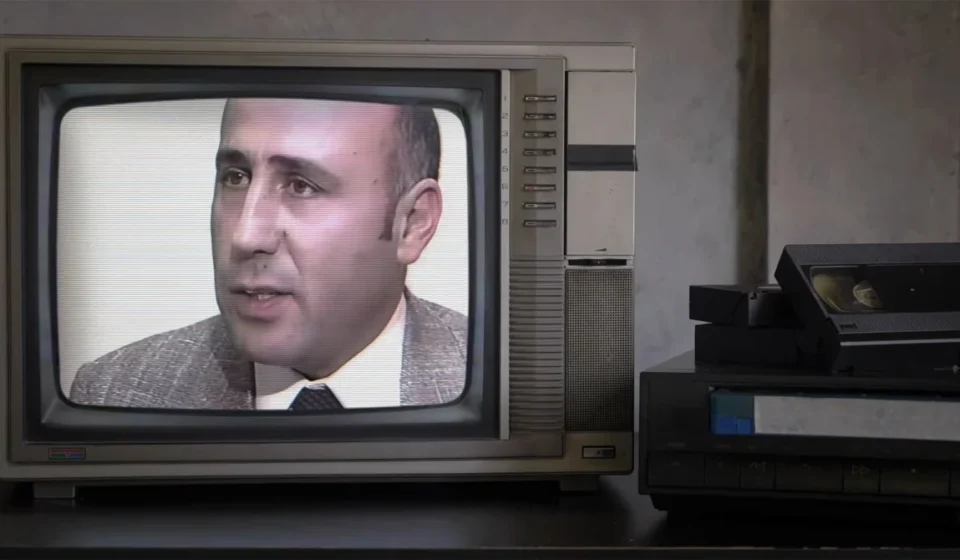
Watermelon Pictures has released the official trailer for Who Killed Alex Odeh?, an acclaimed investigative documentary that promises to reignite the search for truth. Following a triumphant festival run that included premieres at the 2026 Sundance Film Festival and the Berlinale, this film is not merely a retrospective; it is an active, real-time pursuit of accountability that demands a reckoning with a long-buried political assassination.
The Tragedy of 1985: A Life Cut Short
Alex Odeh was more than a victim of a targeted killing; he was a pillar of the Santa Ana community. As a respected teacher and a regional director for the American-Arab Anti-Discrimination Committee (ADC), Odeh was a bridge-builder who advocated for peace and mutual understanding. His voice was one of reason in an era of heightened geopolitical tensions, making him a target for those who sought to silence discourse through fear.
On the morning of October 11, 1985, that voice was silenced. Upon entering his office, Odeh triggered a pipe bomb designed to kill. The explosion was not just an attack on an individual; it was a calculated strike against the principles of free speech and political advocacy. The subsequent investigation into the blast was marred by what many observers describe as institutional negligence. Despite clear indications of who was responsible, the legal system failed to provide closure to the Odeh family or the community he served.

Chronology of a Forgotten Assassination
To understand the gravity of Who Killed Alex Odeh?, one must look at the timeline of a case that has spanned four decades:
- October 1985: The assassination of Alex Odeh occurs in Santa Ana, California. The incident is immediately recognized as a targeted act of terrorism.
- Late 1980s – 1990s: Federal investigators identify key suspects associated with militant factions, but political friction and bureaucratic hurdles stall the prosecution.
- The Decades of Silence: As the case recedes from the headlines, the Odeh family continues their quiet, persistent advocacy for justice, keeping the memory of the case alive despite the lack of official momentum.
- 2026 Sundance Film Festival: Who Killed Alex Odeh? premieres, bringing the cold case back into the national spotlight. The film’s release marks a turning point, as it presents new findings unearthed by directors Jason Osder and William Lafi Youmans.
- October 30, 2026: Watermelon Pictures is set to bring the film to select theaters across the United States, forcing a contemporary audience to confront the unresolved history of the 1980s.
The Filmmakers’ Investigative Approach
Co-directed by Jason Osder, known for his masterful work on Let the Fire Burn, and first-time feature director William Lafi Youmans, the documentary serves as a masterclass in investigative filmmaking. Osder and Youmans do not simply recount the past; they document a renewed investigation that unfolds in real time.
The film is characterized by its rigorous commitment to detail. By tracking down long-buried records and re-examining the forensic evidence that was previously sidelined, the directors create a narrative that is both harrowing and profoundly compelling. The filmmakers challenge the viewer to look past the official narratives provided in the 1980s and ask why justice was deferred for so long.
"We will not rest until the murder is solved," the film’s central message resonates throughout the trailer. It is a sentiment that transcends the screen, positioning the documentary as a tool for advocacy rather than just a historical piece.
Supporting Data: Why the Case Matters Now
The persistence of the Odeh case is a litmus test for the integrity of the American judicial system. Legal experts and human rights organizations have long pointed to the Odeh case as an example of "selective justice." When political violence is committed against minority community leaders, the urgency of the state response often wanes compared to other forms of terrorism.

The film highlights the structural failures that allowed the suspects to remain at large. Through interviews with former federal agents, journalists who covered the story in the 80s, and family members, the documentary paints a picture of a system that knew who the perpetrators were but lacked the political will to prosecute them. This context is vital, as it elevates the film from a true-crime mystery to a broader sociological critique of how the United States handles acts of domestic political violence.
Official Responses and Institutional Stasis
Historically, official responses to the Odeh case have been characterized by a wall of silence. While various government entities acknowledged the severity of the crime in the immediate aftermath, subsequent decades saw the investigation stagnate.
The documentary brings these institutional failures to light, confronting the "forces behind a political assassination." By focusing on the intersection of domestic politics and international influence, the film dares to ask uncomfortable questions about the relationship between the suspects and the agencies that were ostensibly tasked with catching them. It is this willingness to confront authority that makes the film a potential catalyst for renewed official interest in the case.
Implications: A Call for Accountability
The release of Who Killed Alex Odeh? arrives at a time when the American public is increasingly sensitive to the complexities of political violence and the role of the state in safeguarding human rights. The implications of the film are twofold:
- Legal Accountability: By presenting fresh leads and synthesizing long-buried records, the filmmakers are creating a public record that could potentially force the hand of justice. If the documentary succeeds in generating enough public pressure, it may prompt a re-opening of the formal investigation by the Department of Justice.
- Historical Correction: The film serves as a necessary intervention in the historical narrative. By centering the life and contributions of Alex Odeh, it restores his legacy as a teacher and activist, moving him out of the shadow of his death and into the light of his community impact.
The Viewing Experience: A Harrowing Mystery
Audiences can expect a film that is as thorough as it is unsettling. Who Killed Alex Odeh? manages to balance the pacing of a high-stakes thriller with the emotional depth of a family’s quest for closure. It is a film that makes the viewer "afraid for what could really happen to anyone," highlighting the fragility of justice in the face of political expediency.

As we approach the theatrical release on October 30th, the conversation surrounding the film is expected to grow. It is a rare documentary that manages to be both a work of art and a potential instrument of change. Whether or not the mystery is finally "solved" in the legal sense, the film ensures that the name Alex Odeh will no longer be relegated to the dustbin of forgotten history.
For those interested in the ongoing search for justice, the official website for the film offers resources and updates on the investigation, as well as information on local screenings. In a world where the truth is often obscured by time and apathy, Who Killed Alex Odeh? stands as a beacon of persistence.
Film Credits:
- Directors: Jason Osder, William Lafi Youmans
- Producers: Daniel J. Chalfen, Hassan Elmasry, Dawne Langford, Rasha Mansouri Elmasry, Jason Osder, William Youmans
- Distributor: Watermelon Pictures
- Release Date: October 30, 2026 (Select US Theaters)
For more information on the film, including showtimes and investigative updates, visit the official website.