The Art of Connection: Hirokazu Kore-eda’s ‘Look Back’ Redefines the Coming-of-Age Drama at Venice 2026

By Editorial Staff
September 12, 2026
The 2026 Venice Film Festival has played host to a myriad of high-stakes international cinema, but few projects have captured the collective heart of the Lido quite like Hirokazu Kore-eda’s latest masterwork, Look Back. Serving as a live-action adaptation of Tatsuki Fujimoto’s seminal 2021 manga, the film represents a profound return to form for the Japanese auteur. Following the divisive reception of his earlier 2026 Cannes entry, the science-fiction experimental Sheep in the Box, Kore-eda has recalibrated his lens, delivering a tender, achingly human portrait of artistic obsession and the transformative power of platonic love.
The Genesis of a Masterpiece: Adapting Fujimoto
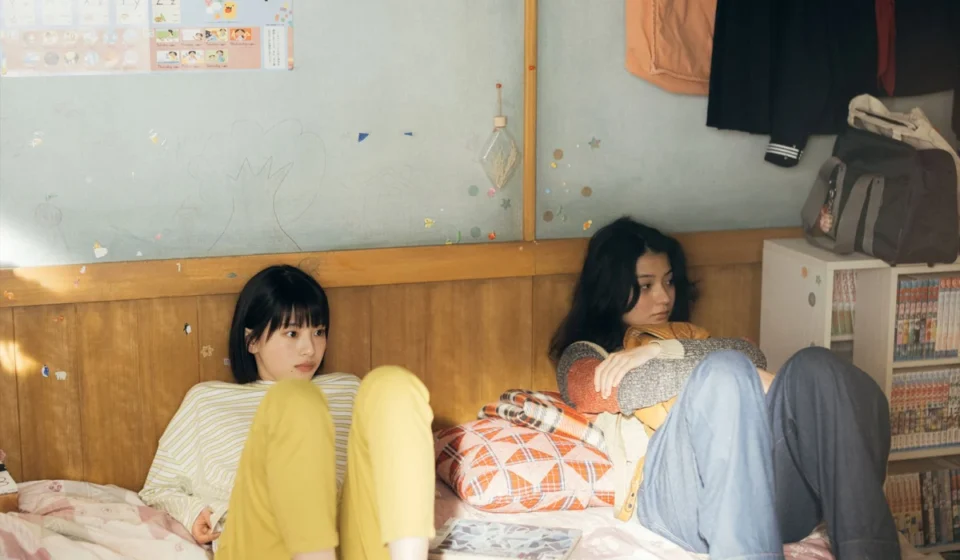
At its core, Look Back is a deceptively simple narrative. It tracks the parallel lives of two young girls: Fujino, a confident, industrious student who takes pride in her serialized newspaper manga, and Kyomoto, a withdrawn, agoraphobic recluse whose technical prowess in illustration eventually eclipses her own confidence. Their paths collide, then entwine, forming a partnership that transcends the mere act of drawing.
Kore-eda, renowned for his empathetic handling of familial and social dynamics in works like Shoplifters and Broker, brings a unique gravity to this adaptation. While the source material has already seen success as a celebrated anime film, Kore-eda’s live-action interpretation breathes new, tactile life into the story. By grounding the kinetic energy of manga creation in the physical reality of pencil-on-paper, cramped bedrooms, and the solitary grind of the artist, he elevates the material into a universal exploration of the creative spirit.
A Chronology of Artistic Growth
The film follows a deliberate, elegiac structure. We are introduced to the girls in their formative years—played with radiant, raw authenticity by newcomers Furi Nanase and Rokka Okada. Their early scenes are a masterclass in non-verbal storytelling; the silence of their shared workspace is punctuated only by the scratch of graphite and the mutual, unspoken acknowledgement of talent.
As the narrative progresses into their high school years, the film transitions to performances by Natsuki Deguchi and Aju Makita. This shift mirrors the girls’ own maturation. The pressure of parental skepticism—the recurring motif that art is an impractical, fleeting pursuit—serves as the primary external conflict. Yet, Kore-eda deftly subverts the "struggling artist" trope. The conflict isn’t just about financial success or societal approval; it is about the existential necessity of being "seen" by another person.
The second act, which introduces a seismic, tragic shift in the narrative, is handled with a delicate, albeit complex, editorial hand. Kore-eda, acting as his own editor, utilizes a non-linear, almost dreamlike sequence to navigate the aftermath of the story’s central trauma. While some critics may find the rhythmic shifts in the third act to be unconventional, the emotional core remains unshakable.
Visual Language: The Sublimity of Senzo Ueno
A pivotal element of the film’s success is the cinematography of Senzo Ueno. The visual palette is one of startling contrast. Ueno captures the static, claustrophobic nature of the shut-in artist’s life with a painterly patience, while injecting the film with bursts of kinetic vitality during scenes of movement—most notably, the recurring motif of Fujino running, a physical manifestation of her creative urgency.
The camera becomes an extension of the characters’ psychological states. When they are together, the framing opens up, utilizing deep focus to capture the shared space between two desks. When they are apart, the composition becomes tighter, emphasizing the isolation that eventually drives them toward one another. Ueno’s work is not merely supplemental; it is the visual backbone of the film’s argument that art is a bridge between two lonely souls.

Supporting Data and Production Context
Look Back stands as a significant outlier in the 2026 film landscape. In a year dominated by blockbuster spectacle and high-concept genre fare, Kore-eda’s film operates under the philosophy of "tenderness is the new punk."
- Director: Hirokazu Kore-eda
- Cinematography: Senzo Ueno
- Score: Yuta Bandoh
- Key Cast: Furi Nanase, Rokka Okada, Natsuki Deguchi, Aju Makita
- Source Material: Look Back by Tatsuki Fujimoto (2021)
The film’s score, composed by Yuta Bandoh, is an essential narrative layer. It avoids the mawkish sentimentality often associated with coming-of-age dramas, opting instead for a delicate, percussive soundscape that mimics the rhythm of a pen hitting a page. The production’s insistence on authentic child performances—a hallmark of Kore-eda’s career—proves to be the film’s secret weapon. Without the unvarnished, vulnerable performances of the younger cast, the more existential, high-concept shifts in the final act would likely have lost their emotional grounding.
Official Responses and Critical Reception
The Venice premiere was met with a standing ovation, marking a significant turnaround for the director after the mixed reception of Sheep in the Box. Critics have praised the film for its "wholesome, yet harrowing" honesty.
"Kore-eda has managed to find the exact frequency of what it feels like to be young, talented, and profoundly unsure of your place in the world," remarked one festival correspondent. While some discourse has emerged regarding the film’s "wonky" third-act editing—specifically how the narrative attempts to reconcile its darker plot developments with its more whimsical, artistic aspirations—the consensus remains overwhelmingly positive. The film is currently being hailed as a "must-see" for any creative professional, regardless of their medium.
The Implications of the "Look Back" Philosophy
The title itself, Look Back, functions as a dual-edged sword. It serves as a literal reference to the act of checking one’s past work, but also as a thematic directive to the audience. In a world where digital consumption is ephemeral, Kore-eda’s film acts as a permanent record of the people who shaped our identity.
The film carries deep implications for the future of the "artist biopic" genre. By stripping away the ego-driven narratives of traditional "tortured artist" stories, Kore-eda refocuses the camera on the quiet, collaborative, and often mundane joy of working with a peer. It suggests that while we may look back at our history to understand our trajectory, the true value of our journey lies in the people who walked alongside us, pushing us to sharpen our own lines and refine our own vision.
As the Venice Film Festival concludes, Look Back stands as a definitive entry in Kore-eda’s filmography. It is a work of immense empathy, proving that even when the narrative turns toward the tragic or the existential, the bond between two people—forged in ink and shared dreams—is the most durable force in the human experience.
For those who have struggled against the tide of practicality, or for those who have found their voice through the encouragement of a friend, Look Back is not just a film; it is a validation. It reminds us that looking back is not an act of regression, but a necessary step in moving forward with clarity, courage, and a renewed sense of purpose. As the closing credits roll, the audience is left with a singular, lingering thought: how fortunate we are to have been seen, and how vital it is that we, in turn, look back at those who helped us become who we are today.