From Disaster to Defining Moment: The Cinematic Resurrection of Jason Patric and ‘After Dark, My Sweet’

In the mid-1980s, the landscape of independent cinema was dominated by the towering presence of Brooksfilms. Founded by the legendary Mel Brooks, the production house had become the gold standard for prestige, having birthed critical darlings and cultural touchstones like The Elephant Man, Frances, My Favorite Year, and David Cronenberg’s visceral masterpiece, The Fly. For a young, burgeoning actor like Jason Patric, landing a starring role under the Brooksfilms banner in 1986 felt like winning the industry lottery.
"They had just made Frances and 84 Charing Cross Road, and a couple of years before that, The Elephant Man," Patric reflected in a recent interview with IndieWire. "This was the biggest and most respected independent company at that time."
However, the reality of the business would soon deliver a sobering lesson to the 19-year-old hopeful. The project, titled Solarbabies, was intended to be a tentpole science-fiction romp, a tone-deaf collision of Rollerball and Mad Max that lacked the soul of its predecessors. Upon arriving on location in Spain, the dream project quickly soured into a nightmare. Patric recalls the moment of realization as a visceral, career-defining trauma. "I got there and just went, ‘Oh my God,’" he said. By the time the final frame was shot, the young actor was contemplating a premature exit from the industry altogether. "Here I was as a 19-year-old, almost ready to quit the business."
A Chronology of Artistic Survival
Patric’s journey from that early, disillusioning nadir to becoming one of the most respected character actors of his generation is a testament to the power of artistic persistence. Following the Solarbabies debacle, Patric began to find his footing. He earned acclaim for his role in Joel Schumacher’s stylized vampire cult classic The Lost Boys (1987), followed by the gritty, unconventional war drama The Beast, directed by Kevin Reynolds.
While The Beast was largely ignored by the studio—leading to a release so limited that it barely registered in the public consciousness—it acted as the catalyst for the most important professional relationship of Patric’s life. The film caught the eye of director James Foley.

"I don’t know how he saw it, because it was only in two theaters for one week," Patric remarked. Foley, who had already established a reputation for atmospheric, character-driven storytelling with his 1984 debut Reckless and the 1986 crime masterpiece At Close Range, reached out to meet the actor. The meeting, which lasted several hours, famously bypassed the industry pleasantries of "pitching a project." They connected on a visceral, creative level, forming a bond that would soon result in one of the most underrated noir films of the 1990s.
The Wilderness Years: From Madonna to Jim Thompson
By 1987, James Foley was in a difficult position. Despite the brilliance of At Close Range, his subsequent film, the Madonna-led romantic comedy Who’s That Girl, failed to ignite with critics or audiences. The failure rendered him, for a time, persona non grata within the major studio system.
Both Patric and Foley found themselves at a crossroads, yearning for the autonomy to make raw, personal cinema in an era increasingly obsessed with high-concept commercialism. Their salvation arrived in the form of Jim Thompson’s hardboiled crime novel, After Dark, My Sweet. Patric saw the screenplay as solid, but the source material as a masterpiece of American noir. Foley agreed, and the two set out to translate the dark, humid desperation of Thompson’s world to the screen.
"Both Foley and I were ready," Patric recalled. "I laugh now, because I was only 23, but I told Foley that if I couldn’t nail this guy, I was packing it in. I knew I would only get an opportunity like this a handful of times. Look at your favorite actors, whoever they are. I don’t care if they had 40-year careers, there are only six movies you really talk about. And you know when one of those is coming along."
The Craft of ‘After Dark, My Sweet’
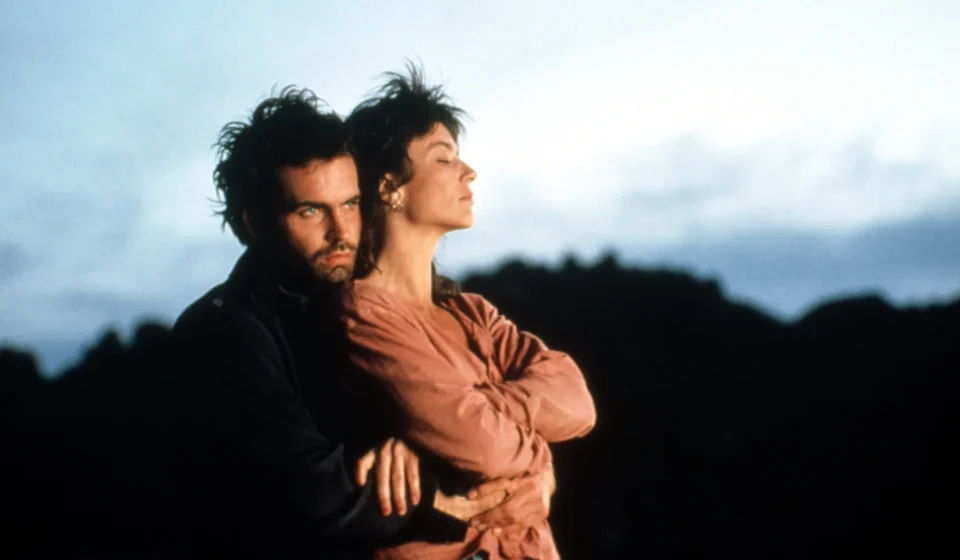
The preparation for After Dark, My Sweet was as intense as the film itself. Patric transformed into "Kid" Collins, an ex-boxer whose fractured psyche and wanderlust bring him into the orbit of a duplicitous widow (Rachel Ward) and a menacing ex-cop (Bruce Dern). Patric spent months in boxing training, developing a specific, twitchy, and defensive body language that left the audience perpetually uncertain about the character’s moral compass. Was he a simple-minded victim, a dangerous drifter, or a man genuinely seeking redemption?

The resulting film was a masterclass in ambiguity. Critics, most notably Roger Ebert, championed the film upon its 1990 release. Ebert famously labeled it one of the best films of the year and lauded Foley as one of the most underappreciated directors of his generation. Despite this critical validation, the film failed to find a wide audience, leaving it to languish in the "cult classic" bin for decades.
A Legacy of Understated Mastery
Foley’s career trajectory after After Dark, My Sweet remains a fascinating study in Hollywood’s inability to categorize true talent. He went on to helm the definitive adaptation of David Mamet’s Glengarry Glen Ross, the razor-sharp teen thriller Fear, and directed significant portions of high-end television for House of Cards and Hannibal. Yet, for all his contributions, he remains largely a "filmmaker’s filmmaker," known better to cinephiles than the general public.
However, the tides are turning. In the last few years, a resurgence of interest—spurred by pristine physical media releases from labels like Kino Lorber and Imprint—has brought After Dark, My Sweet back into the light.
The Implication of the Big Screen
The importance of the theatrical experience is not lost on Patric, who has recently taken it upon himself to preserve the film’s legacy. In May, he hosted a sold-out screening of his own personal 35mm print at Vidiots in Los Angeles. The response from the audience confirmed his belief that the film’s meticulous construction demands the scale of a cinema screen.
"It’s beautifully shot in a way where you don’t notice how complicated the shots are," Patric noted. "It’s not showy in any way, but every camera movement is really connected to the scene and to the actor. And that’s imperative because it’s a subjective piece of filmmaking. I’m in every scene, and part of the difficulty and the reward of playing that character is that the audience is in the same boat with him every step of the way."

This dedication to his craft and his filmography eventually allowed Patric to curate a career defined by ambitious, challenging roles in films like Rush, Geronimo, Sleepers, Your Friends & Neighbors, and Narc. While these films were often labeled as "dark" by contemporary critics, Patric defends his choices as being in line with the gritty tradition of 1970s legends like Al Pacino and Robert De Niro.
"I always got targeted as being dark," Patric said. "I wasn’t doing anything darker than Pacino or De Niro did in the 1970s. The culture was just different. But I wanted to make those movies, and if they didn’t do well, that was OK. I always felt that movies should last, and it’s good if they get discovered later on when all the detritus is gone."
As he prepares to bring his 35mm print to the Roxy Cinema in New York this August, the cycle of After Dark, My Sweet seems to be closing in a way that validates both the director’s vision and the actor’s early conviction. For those seeking the kind of cinema that prioritizes character depth and atmospheric tension over blockbuster spectacle, the resurrection of this 1990 gem serves as a powerful reminder: great art is rarely a product of its time—it is a product of the artists who refuse to let it die.
“After Dark, My Sweet” will screen at the Roxy Cinema on August 5 and 6, featuring post-screening Q&As with Jason Patric.