

The expansion of the new DC Universe (DCU) under the creative stewardship of James Gunn and Peter Safran has been defined by a desire for grounded, character-driven storytelling. HBO’s Lanterns was heralded as a prestige crime-noir entry, a gritty procedural that promised to strip away the cosmic artifice of the Green Lantern Corps to focus on the human cost of carrying the ring. However, as the series reaches its third episode, a familiar and arguably exhausted narrative crutch has emerged: the "genetic destiny" trope.
By attributing the extraordinary capabilities of John Stewart (Aaron Pierre) to his biological lineage rather than his earned character, Lanterns risks falling into the same trap that has plagued numerous modern franchises. While the show is visually arresting and narratively ambitious, the reliance on "DNA as destiny" threatens to undermine the very agency that has historically made John Stewart one of the most compelling figures in comic book history.
The Core Conflict: Nature vs. Nurture in the DCU
The third episode of Lanterns provides a pivotal, if divisive, flashback sequence that alters the established mythos of the Stewart family. We witness John Stewart Sr. (J. Alphonse Nicholson) in an intimate, high-stakes encounter with the Green Lantern Power Ring. In this version of events, the ring’s selection process—typically portrayed as a meritocratic search for the fearless—becomes a matter of biological curiosity.
When John Sr. expresses fear during the ring’s evaluation, he is discarded. The subsequent trauma of this rejection leads him down a path of alcoholism and societal ostracization, as his wife, Bernadette Stewart (Nicole Ari Parker), attempts to reconcile the reality of his experience with the "madness" perceived by those around him.
The turning point occurs when a Guardian (played by Laura Linney) visits the Stewart household. Rather than offering a traditional explanation for the ring’s interest, the Guardian pivots to the concept of biological inheritance. "Whatever the ring saw in your husband is in his genetic makeup," the Guardian asserts. "Your offspring could one day be an excellent candidate." This dialogue shifts the narrative from one of individual willpower—the hallmark of the Green Lantern Corps—to one of preordained bloodline excellence.

Chronology of a Trope: From Meritocracy to Midichlorians
To understand why this choice feels so regressive, one must look at the history of the Green Lantern mythos. In the original 1971 debut of John Stewart in Green Lantern (Vol. 2) #87, the character was defined by his active resistance to injustice. His selection by the Guardians was a response to his specific, localized courage—the decision to confront corrupt officers while two civilians played a board game on a sidewalk.
That version of John Stewart was a man who stood up because he refused to run, not because he was bred for it.
The Evolution of the "Chosen One"
Modern media has increasingly struggled with the concept of the "everyman hero." We have seen this in the Star Wars sequel trilogy, where the pedigree of a character often takes precedence over their personal development, and in various iterations of superhero cinema where extraordinary power is tied to ancestral luck.
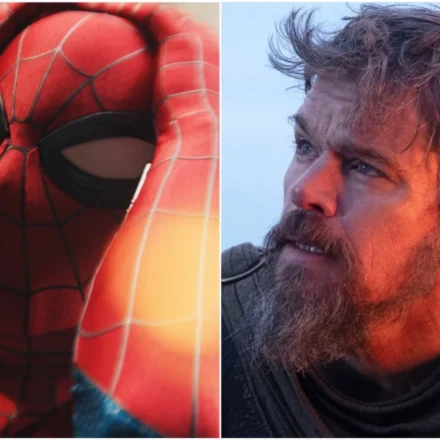
By contrast, the Spider-Verse franchise has enjoyed immense critical success by doubling down on the mantra that "anyone can wear the mask." It is a democratic approach to heroism that suggests the hero’s journey is defined by the choice to act, not by the quality of one’s genetic sequence. Lanterns appears to be moving in the opposite direction, suggesting that John Stewart’s potential to be one of the most powerful entities in the DC Universe is a trait he was born with, rather than a capability he developed through his own discipline.
Supporting Data: The Power Gap and the "John Stewart" Problem
The evidence of John Stewart’s raw, unexplained power is mounting within the series. In Episode 2, Stewart was observed maintaining a complex, semi-autonomous bird construct even while stripped of his Power Ring. This is a feat of willpower that dwarfs even the most seasoned Lanterns, including the legendary Hal Jordan (Kyle Chandler).

The Comparison to Hal Jordan
Hal Jordan has historically been portrayed as the most powerful Lantern due to his sheer, unbridled ability to manifest willpower, exemplified by his recreation of Coast City in the comics. However, the show is actively positioning John Stewart as an anomaly—a character whose power is so immense it requires a biological justification.
- The Problem with "DNA": If John Stewart is powerful simply because his parents possessed a specific genetic predisposition, the stakes of his journey are lowered. His growth becomes an unveiling of innate talent rather than a narrative of character development.
- The Erosion of Agency: If a character is "destined" to be the best, the choices they make along the way feel less like victories of the spirit and more like the fulfillment of a biological destiny.
Official Responses and Creative Direction
While showrunners have remained tight-lipped regarding the specific creative decision to emphasize the Stewart family’s DNA, the broader DCU mandate under James Gunn has been to create a "unified, cohesive universe." Within this framework, writers are often tasked with providing clear, "mythic" origins for their leads.
However, there is a distinct difference between "mythic" and "deterministic." The creative team behind Lanterns has succeeded in creating a palpable, noir-drenched atmosphere that feels distinct from the neon-soaked blockbusters of the past. The chemistry between Aaron Pierre and Kyle Chandler is electric, and the procedural elements of the show are top-tier. Yet, by leaning into the "chosen bloodline" trope, the writers may be inadvertently creating a ceiling for the character’s emotional resonance.
Implications for the Future of the DCU
The implications of this narrative choice are significant. If John Stewart is "special" because of his DNA, it creates a hierarchy within the DC Universe that is difficult to dismantle. It positions the Green Lantern mantle not as a tool for the worthy, but as a heirloom for the gifted.
Why This Matters
- The Audience Disconnect: Modern audiences are increasingly sophisticated in their critique of "destiny" narratives. They prefer stories where the hero’s success is a result of trauma, failure, and subsequent growth, not a pre-installed feature of their genetic code.
- Franchise Fatigue: We have seen this story before. When a franchise relies on the "it’s in his blood" explanation, it signals a lack of imagination regarding how characters can evolve through external conflict and internal choice.
- The Opportunity Cost: By focusing on the "why" of his biology, the show spends less time on the "how" of his psychology. What makes John Stewart interesting is not his DNA; it is his profession as an architect, his military background, and his stoic, principled nature.
Conclusion: A Call for Character-Driven Narrative
Lanterns is currently at a crossroads. It has the talent, the budget, and the source material to be the definitive Green Lantern adaptation. However, to truly elevate the character of John Stewart, the writers must pivot away from the genetic explanation.

The mystery of his power should not be found in a lab report or a Guardian’s vague prophecy, but in the crucible of the experiences he faces throughout the series. If the showrunners can shift the focus from what John Stewart is to what he chooses to do with his power, they will avoid the pitfalls of the "DNA trope."
Ultimately, the most powerful thing about a Green Lantern isn’t the ring—it’s the will. If that will is merely a byproduct of his genetics, then the ring is merely a tool for a predetermined fate. If, however, his will is a choice he makes every single day despite the weight of his history, then we have a story worth telling. One can only hope that as the season progresses, Lanterns realizes that the most compelling mysteries are not those written in our cells, but those we decide to conquer for ourselves.