The Lethal Grace of the Peshmerga: A Deep Dive into "No Paradise If You Are Killed By A Woman"

The cinematic landscape has long been populated by the trope of the lone, near-superhuman action hero—typically a man driven by vengeance or a rigid moral code. However, director Halkawt Mustafa’s latest feature, No Paradise If You Are Killed By A Woman, subverts these established norms by grounding the "one-person army" archetype in the harrowing, real-world geopolitical struggle of the Kurdish people. Selected as Iraq’s official submission for the Best International Feature category at the Academy Awards, the film is a visually arresting, emotionally charged exploration of survival, duty, and the psychological weight of the sniper’s scope.
Directed by the Norwegian-Kurdish filmmaker Halkawt Mustafa, known for previous acclaimed works such as Red Heart and El Clásico, this third fiction feature represents a significant milestone in Kurdish-language cinema. It offers a rare, unflinching look at the female Peshmerga fighters who became a symbol of resistance against the Islamic State (IS) during the mid-2010s. While the film navigates the precarious line between gritty war drama and high-stakes thriller, its technical prowess and cultural authenticity mark it as a definitive piece of contemporary Middle Eastern filmmaking.
Main Facts: A Story of Vengeance and Valor
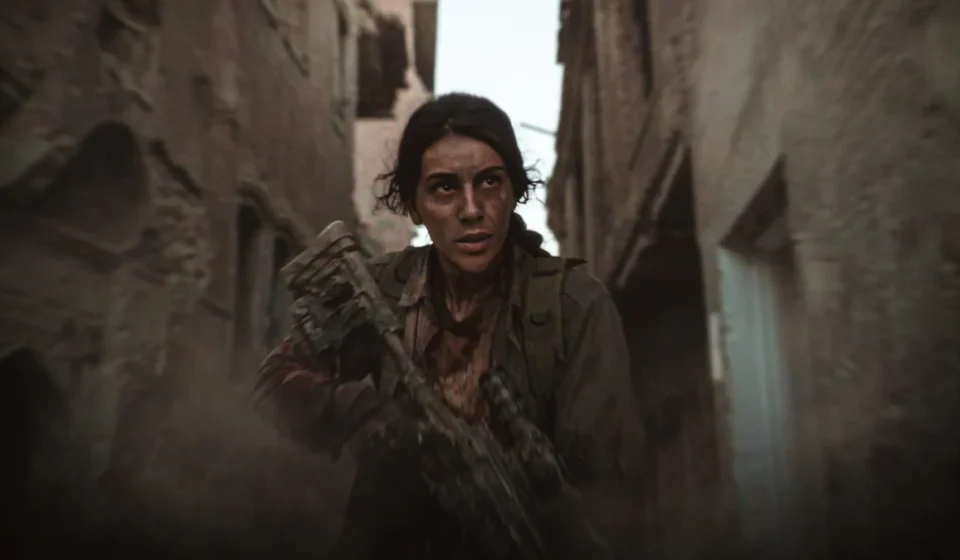
At its core, No Paradise If You Are Killed By A Woman is the story of Vyan, portrayed with a haunting, stoic intensity by London-based Kurdish actress Avan Jamal. The narrative follows her transformation from a civilian emigre into one of the most feared snipers in the Peshmerga—the military forces of the autonomous Kurdistan Region of Iraq.
The film’s title is derived from a pervasive belief among IS militants: that being killed by a woman denies a fighter entry into paradise. This psychological edge is weaponized by the Peshmerga’s elite female units, turning the gender of the combatants into a tactical advantage. Vyan, credited with over 100 kills, becomes the embodiment of this fear, leading the extremist group to place a million-dollar bounty on her head.
The production is notable for its commitment to realism, having been filmed on location in the ruins of Mosul. This provides a visceral backdrop that no soundstage could replicate, capturing the skeletal remains of a city once vibrant, now a testament to the brutality of the IS occupation. The film has already secured significant distribution through Sony/Empire in the Middle East and North Africa (MENA) territories, signaling strong commercial confidence in its appeal to regional and diaspora audiences.
Chronology: From Diaspora to the Frontlines
The narrative structure of the film meticulously charts Vyan’s journey through three distinct phases of trauma and reclamation.
1. The Fall of Innocence (2014)
The story begins in 2014, a pivotal year in the regional conflict. Vyan, then 24, is living a peaceful life in Norway but returns to Iraqi Kurdistan with her parents and younger sister, Helin, for a family visit. The trip turns into a nightmare when the Islamic State launches a lightning offensive. In the ensuing chaos, Vyan’s parents are murdered, and she and Helin are captured and sold into sex slavery. This sequence is handled with a grim earnestness that avoids exploitation, focusing instead on the psychological shattering of the family unit.
2. The Rise of the Sniper
Vyan’s resilience becomes the film’s driving force. After managing to kill her captor, she escapes to Peshmerga-controlled territory. Driven by a lack of alternatives and a burning desire for justice, she joins an elite all-female unit. Over the next three years, she evolves into a legendary marksman. The film uses poetic voiceover narration to explain the philosophy of the Peshmerga—a name that translates to "those who face death." For Vyan, the rifle becomes an extension of her being, a tool of "singing" death that she wields with surgical precision.
3. The Norwegian Dilemma and the Return to Mosul
The third act begins when Vyan is heavily wounded while thwarting a suicide truck bomb attack. She is evacuated back to Norway for medical treatment. Here, the film shifts into a political drama. A Norwegian government official (played by Thorbjørn Harr) presents her with a crushing ultimatum: she must either accept a new identity under government protection—to avoid drawing IS Retaliation to Norwegian soil—or face prosecution for fighting in a foreign conflict.
However, a haunting phone call to her family’s old landline reveals that her sister Helin is still alive, held captive in the ruins of Mosul by a notorious IS operative known as the "Swedish Sniper." Refusing the safety of the West, Vyan embarks on a final, unsanctioned mission to infiltrate the devastated city and rescue her sister.
Supporting Data: Technical Mastery and Authentic Research
Halkawt Mustafa’s approach to the film was deeply informed by his background as a war photographer and his 2015 television project, The Women ISIS Fears. His firsthand experience with female combatants allowed him to imbue the film with details that transcend typical Hollywood action tropes.
The Art of the Sniper
Unlike Clint Eastwood’s American Sniper, which focused heavily on the domestic fallout of war, No Paradise focuses on the "lonely patience" of the job. The latter half of the film is almost procedural in its depiction of Vyan’s tactics. She utilizes logic, environmental awareness, and the assistance of a sympathetic Kurdish commander within the Iraqi government forces to navigate the labyrinthine tunnels and rubble of Mosul. The film emphasizes that sniping is 90% waiting and 10% execution—a tension that is masterfully sustained through the sound design of Mattias Eklund and Jan Kasskawo.
Visual Authenticity
The cinematography by John Erling H. Fredriksen is a standout element. Using "prowling" camerawork, Fredriksen captures the claustrophobia of the tunnels and the vast, skeletal emptiness of Mosul’s streets. The decision to film in actual locations lends the movie a documentary-like weight. The ruins are not just a set; they are a character, representing the physical manifestation of the trauma Vyan and her people have endured.
Official Responses and Market Reception
The film’s selection as Iraq’s Oscar entry is a significant political and cultural statement. It positions the Kurdish struggle at the forefront of Iraq’s national narrative, acknowledging the pivotal role the Peshmerga played in the defeat of IS.
Critical Reception
Early reviews, including those from Variety, suggest a bifurcated reception. Arthouse viewers may find the film’s earnestness and occasional melodramatic flourishes—such as the poetic voiceovers—a departure from the detached style typical of European festival darlings. Conversely, hardcore action fans might find the pacing too deliberate, as the film prioritizes atmosphere and psychological depth over frequent firefights.
However, within the MENA region, the response has been overwhelmingly positive. Sony/Empire’s acquisition of the rights suggests that the film is expected to perform strongly in markets where the conflict is a lived memory. For the Kurdish diaspora, the film serves as a high-budget tribute to their resilience and cultural identity, incorporating traditional customs and music into the fabric of the war story.
Implications: Cinema as a Tool for Memory and Empowerment
No Paradise If You Are Killed By A Woman carries weight beyond its 100-minute runtime. It addresses several critical themes that resonate in the contemporary geopolitical climate:
- The Legal Status of Foreign Fighters: Vyan’s struggle in Norway highlights the complex legal grey area faced by members of the diaspora who return to their homelands to fight against extremist groups. The film asks whether these individuals are heroes or liabilities to their adopted nations.
- Gender as a Weapon of War: By centering the plot on the IS fear of female soldiers, Mustafa highlights a unique intersection of theology and military strategy. It reframes the female victim as the ultimate predator, subverting the patriarchal foundations of the extremist ideology.
- The Preservation of Kurdish Culture: Mustafa dedicates the film to his daughters, and this paternal care is evident in how he weaves Kurdish traditions into the narrative. From the specific way the fighters sing to the "music" of the rifles, the film is an act of cultural preservation.
- The Humanitarian Legacy of Mosul: By showing the "aftermath of carnage," the film serves as a reminder of the staggering cost of liberation. It forces the viewer to confront the reality of a city that was destroyed to be saved.
In conclusion, No Paradise If You Are Killed By A Woman is more than a revenge thriller. It is a polished, technically superior drama that bridges the gap between the visceral reality of war and the cinematic need for a compelling protagonist. Through Vyan’s silent, steady gaze, Halkawt Mustafa offers a window into a conflict that defined a decade, ensuring that the bravery of the women who stood "before death" is not forgotten. Whether it finds success at the Academy Awards or remains a regional powerhouse, its contribution to the canon of war cinema is undeniable.