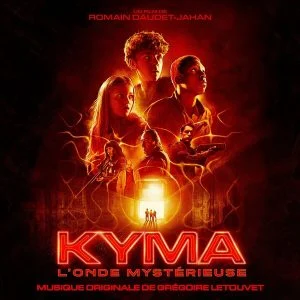
Harmonizing the Unknown: Grégoire Letouvet’s Score for the French Fantasy Adventure ‘Kyma’

Introduction: A New Chapter in French Fantasy
The landscape of French cinema, often lauded for its grounded social realism and intricate dramas, has recently pivoted toward the ethereal and the unknown. With the official theatrical release of Kyma (originally titled Kyma, l’onde mystérieuse), audiences are being introduced to a world where the boundary between human existence and the wild, untamed forces of nature blurs. Produced by Moana Films and directed by Romain Daudet-Jahan, the film serves as a poignant coming-of-age story wrapped in the aesthetics of modern fantasy.
Central to the film’s atmospheric immersion is the original score composed by Grégoire Letouvet. Released today by 22D Music, the soundtrack offers a sonic gateway into the village life of its young protagonist, Tony, and the life-altering encounter that shifts his reality. As the film makes its debut in French theaters, the musical accompaniment has already begun to garner attention for its delicate balance of youthful curiosity and cinematic tension.
Main Facts: The Intersection of Sound and Story
Kyma centers on the life of a teenager whose deep-seated affinity for the animal kingdom serves as the foundation for his character development. When he discovers a mysterious, otherworldly creature within his rural village, the narrative trajectory shifts from a standard youth drama to an adventurous exploration of connection and responsibility. Joined by his two best friends, the protagonist must navigate the complexities of taming a force that defies traditional classification.
The musical architecture, crafted by Grégoire Letouvet, mirrors this narrative progression. The soundtrack, now available on major streaming platforms, features a collection of tracks that prioritize texture and mood over conventional orchestral bombast.
Key Release Details:
- Film Kyma (Kyma, l’onde mystérieuse)
- Composer: Grégoire Letouvet
- Production House: Moana Films
- Director: Romain Daudet-Jahan
- Cast: Jules Lefebvre, Lucy Loste Berset, Mamadou Haïdara, and Patrick D’Assumçao
- Soundtrack Label: 22D Music
- Availability: Digital streaming and download platforms (as of today)
Chronology: The Journey to the Screen
The development of Kyma represents a significant investment in genre filmmaking within the French market. While many projects in this category struggle to find the balance between VFX-heavy spectacle and intimate character work, the team behind Kyma focused on a staggered development process that prioritized the script’s emotional resonance.
Pre-Production and Concept
The vision for Kyma began with Romain Daudet-Jahan’s desire to explore how isolation affects the adolescent psyche. The script, co-written to emphasize the chemistry between the three young leads, was designed to be a "creature feature" that relies on the "less is more" philosophy. By focusing on the interaction between the protagonist (Jules Lefebvre) and the creature, the production team sought to ground the fantasy elements in reality.
The Scoring Process
Grégoire Letouvet joined the project during the latter half of the editing process. His approach to the score was highly collaborative; he spent weeks on set and in the edit suite observing the movement of the creature and the emotional cues of the actors. Unlike traditional high-fantasy scores that lean heavily on leitmotifs, Letouvet opted for a more ambient, fluid approach—much like the "mysterious wave" hinted at in the French title.
The Theatrical Launch
Following a period of anticipation and festival buzz, Kyma officially opened in French theaters today. The release marks a crucial moment for Moana Films, as they look to establish a footprint in the burgeoning French "wonder" genre, a space typically dominated by American imports.
Supporting Data: Understanding the Musical Landscape
Grégoire Letouvet’s work on Kyma is characterized by a minimalist approach that emphasizes the solitude of the protagonist. To understand the score, one must examine the two primary tracks released as teasers: "Thème de Tony" and "Vélo."
Analysis of "Thème de Tony"
The main theme acts as an anchor for the listener. It utilizes sparse instrumentation—likely piano and subtle synth pads—to establish a sense of innocence. There is a melancholy undertone here that suggests the protagonist is already an outsider in his own village, long before the creature arrives.
The Energy of "Vélo"
Conversely, "Vélo" captures the kinetic energy of youth. By utilizing faster tempos and percussive layers that mimic the rhythm of bicycle wheels on gravel, Letouvet underscores the bond between the three friends. This shift in tempo is critical, as it highlights the film’s transition from a lonely exploration to a collaborative adventure.
Official Responses and Creative Vision
In recent discussions regarding the film’s release, director Romain Daudet-Jahan emphasized the importance of the soundscape in making the creature feel "tangible."
"We didn’t want the creature to feel like a digital construct," Daudet-Jahan stated. "We wanted it to feel like an extension of the environment. Grégoire’s music provides the texture of that environment. When the creature appears, the music doesn’t scream ‘danger.’ It whispers ‘mystery.’ That was our goal."
Grégoire Letouvet, reflecting on the composition process, noted the challenge of scoring for a creature that remains largely unseen in the early acts of the film. "Music is the primary vehicle for the unseen," Letouvet explained. "By focusing on the sounds of the village—the wind, the rustle of the trees, the mechanical sounds of their bikes—I was able to weave the creature’s presence into the fabric of the setting before the audience even sees it."
Implications: The Future of French Fantasy
The release of Kyma and its accompanying soundtrack has several implications for the French film industry and the broader global market.
1. The Rise of "Small-Scale" Fantasy
Kyma challenges the assumption that fantasy films require a $100 million budget to succeed. By prioritizing character dynamics and a localized setting, the film suggests that audiences are hungry for stories that feel grounded yet enchanted. If Kyma performs well, it may pave the way for a wave of "low-budget, high-concept" fantasy projects in Europe.
2. Exporting French Intellectual Property
While there is currently no word on a domestic (North American or UK) release, the soundtrack’s availability on global streaming platforms acts as a soft-launch for the film’s international profile. Digital distribution of scores often precedes the international licensing of the film itself, allowing a global audience to familiarize themselves with the tone of the movie before it hits their local screens.
3. Letouvet’s Growing Profile
Grégoire Letouvet is positioning himself as a composer capable of bridging the gap between independent arthouse cinema and genre-focused storytelling. His work on Kyma demonstrates a restraint that is often missing in modern blockbuster scores, potentially making him an attractive candidate for future international collaborations.
Conclusion: A Sonic Invitation
The release of the Kyma soundtrack is more than just a promotional tool for the film; it is a standalone artistic statement. Through the collaboration between Romain Daudet-Jahan’s vision and Grégoire Letouvet’s evocative sound design, Kyma invites the audience to experience the intersection of the mundane and the magical.
For those eager to dive into the world of the film, the soundtrack is now available for streaming. As the film continues its theatrical run, the success of this project will likely serve as a benchmark for how French cinema can continue to evolve, blending the intimate, human-centric narratives of its past with the boundless potential of fantasy. Whether or not Kyma achieves a global release, the music of Grégoire Letouvet ensures that the "mysterious wave" will resonate with listeners far beyond the borders of its French setting.
As we look toward the future of the genre, one thing remains clear: the most compelling stories are often those that start with a simple encounter in a small village, brought to life by the delicate interplay of light, shadow, and, most importantly, sound.