The Architecture of a Cinematic Disaster: Revisiting ‘Exorcist II’ Through ‘Boorman and the Devil’

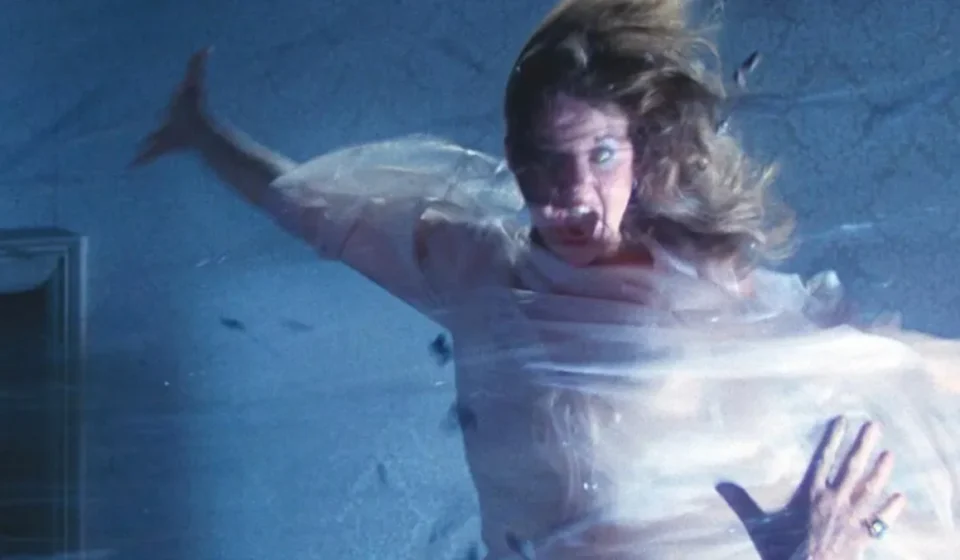
The history of Hollywood is littered with the wreckage of ambitious failures, but few films occupy a space as singular or as bewildering as Exorcist II: The Heretic. Released in 1977 as the highly anticipated sequel to William Friedkin’s cultural phenomenon, the film was met not with screams of terror, but with roars of derisive laughter. Decades later, the documentary Boorman and the Devil, directed by David Kittredge, peels back the layers of this legendary "dud" to examine how a world-class director, an Oscar-winning cast, and a massive budget resulted in what many consider one of the worst movies ever made.
The documentary serves as both a post-mortem of a production gone wrong and a psychological profile of its creator, John Boorman. It captures a moment in cinematic history when the "New Hollywood" era granted directors unprecedented carte blanche, leading to a series of high-profile "ambitious bombs." Through Boorman and the Devil, we see the collision of high-minded metaphysics and low-budget execution, offering a fascinating look at the hubris that often accompanies great talent.
Main Facts: The Anatomy of a Legendary Failure
Exorcist II: The Heretic was never intended to be a disaster. Following the massive success of The Exorcist (1973), Warner Bros. was desperate for a sequel. They turned to John Boorman, a director who had recently reached the zenith of his powers with the 1972 classic Deliverance. Boorman, however, was an unconventional choice; he famously loathed the original film, describing the source material as "torturing a child."
The documentary highlights the fundamental disconnect that doomed the project from its inception. While the studio and the audience wanted more "blood and gore"—a sentiment echoed by Stanley Kubrick in his advice to Boorman—the director intended to create a "meditation" on the aftermath of the original exorcism. The result was a film that replaced the visceral horror of the first installment with "synchronized hypnosis," metaphysical theories from French theologian Pierre Teilhard de Chardin, and a demon named Pazuzu that manifested as a swarm of locusts.
Boorman and the Devil presents this history as an "unintentionally funny story" of what happens when high-minded hubris becomes a guiding light. Despite the film’s reputation, the documentary reveals that Boorman, now in his 90s, remains largely unrepentant, viewing the film as containing some of his best work while blaming the audience for having the "wrong" expectations.
Chronology: From ‘Deliverance’ to the Pasadena Disaster
The timeline of Exorcist II is a study in escalating misfortune and questionable decision-making.
1. The Post-‘Deliverance’ Era (1972–1974)
Following the success of Deliverance, John Boorman was one of the most sought-after directors in Hollywood. He initially declined the offer to direct the original Exorcist. Instead, he leaned into his "visionary" and often "pretentious" side, directing the sci-fi oddity Zardoz (1974), which featured Sean Connery in a now-infamous red bandolier outfit. This period established Boorman as a director who favored "mythic" and Jungian ideas over traditional narrative logic.
2. The Development of ‘The Heretic’ (1975–1976)
When approached for the sequel, Boorman saw an opportunity to explore the "next phase of human evolution" and the concept of a cosmic telepathic hive mind. He cast Richard Burton as Father Philip Lamont and brought back Linda Blair as Regan MacNeil. The script was in a state of constant flux, with Boorman and collaborator Rospo Pallenberg rewriting scenes daily because the central theme of the movie remained elusive even to the creators.
3. A Production Beset by Calamity (1976–1977)
The production was plagued by both bad luck and poor judgment. Boorman contracted Valley Fever from inhaling imported dirt on the soundstage, shutting down production for five weeks. The budget spiraled from $10 million to $15 million—a record for Warner Bros. at the time. Meanwhile, Richard Burton’s performance was hampered by his own personal struggles, resulting in a "stentorian badness" that failed to ground the film’s lofty ideas.
4. The Summer of 1977: The Release
The film premiered in the summer of 1977. At a sneak preview in Pasadena, the reaction was instantaneous. Audiences began to giggle during serious scenes; by the middle of the film, the laughter turned to hostility. Warner Bros. executives reportedly fled the theater. Despite a massive release in 700 theaters, attendance plummeted by 50% in its second week. Boorman attempted a frantic recut, replacing the ending, but the damage was done.
Supporting Data: Technical Follies and Financial Fallout
The documentary provides specific technical details that illustrate why the film felt so "maladroit" to audiences:
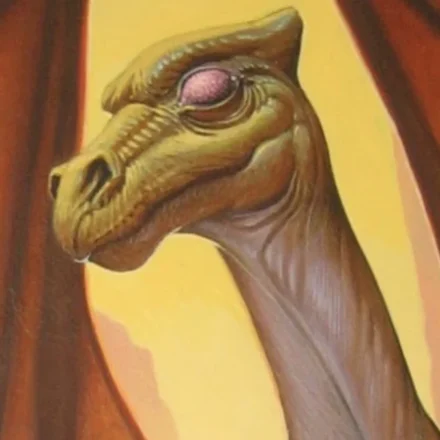
- The "Pazuzu" Problem: The film’s decision to represent the demon as a locust led to bizarre "locust’s-eye view" shots. While the newly invented Steadicam was used for these sequences, the effect was more akin to a "cheesy disaster movie" than a psychological thriller.
- The Ethiopian Set: To save money (ironically), the production recreated Ethiopia on a Hollywood soundstage. The result was a set filled with Styrofoam boulders and wind machines that blew dust into the actors’ faces, contributing to Boorman’s illness and the film’s "fakey" aesthetic.
- The Budgetary Leap: The increase from $10 million to $15 million made Exorcist II the most expensive film in Warner Bros. history at the time. In today’s currency, this would be equivalent to a major blockbuster, yet the screen was filled with "people sitting in a room staring at each other with wiry metal headbands."
- The "Synchronized Hypnosis" Device: A central plot point involved a machine that allowed two people to share a hypnotic state. This required actors to remain static for long periods, draining the film of any dramatic tension or momentum.
Official Responses: The Director and the Critics
One of the most compelling aspects of Boorman and the Devil is the contemporary commentary from those who lived through the era.
John Boorman’s Stance:
Now 93, Boorman remains a figure of "shining belief." In his interviews, he maintains that the film’s failure was a matter of "luck" and audience mismatch. He argues that he was attempting a metaphysical inquiry and that the public simply wanted a repeat of the first film’s shocks. His refusal to acknowledge the film’s structural and tonal flaws is described by the documentary as "delusional" yet "admirable" in its fortitude.
Contemporary Peers:
Director Joe Dante provides one of the film’s most droll critiques, noting that Boorman used techniques in Exorcist II that Dante has "never seen repeated again"—not out of innovation, but out of their sheer ineffectiveness.
The Critical Rebuttal:
The documentary features interviews with modern critics like Bilge Ebiri and Stephanie Zacharek. While the film was universally panned in 1977, a modern "hipster cinephile" culture has attempted to rehabilitate it as a "wacked but misunderstood grand folly." The documentary contrasts this with the late Pauline Kael’s original review. Kael, who hated the first Exorcist, found a "crazy spellbinding quality" in the sequel’s imagery—a stance the documentary suggests was more about her own critical contrarianism than the film’s actual merit.
Implications: The Rise of "Movie Disaster Rehabilitation"
The legacy of Exorcist II and its exploration in Boorman and the Devil points to a broader trend in modern film culture: the "Movie Disaster Rehabilitation Culture."
The Reframing of Failure
The documentary suggests that if a film is ambitious enough in its failure, it will eventually be "reframed" by later generations as a misunderstood masterpiece. This has occurred with films like Michael Cimino’s Heaven’s Gate and Stanley Kubrick’s Eyes Wide Shut. The implication is that modern audiences often view movies as "endlessly malleable texts" rather than stories requiring emotional logic. By treating Exorcist II as an "insane work of artistic daring," proponents of this culture ignore the fundamental requirement of coherence.
The End of the ‘Carte Blanche’ Era
The failure of Exorcist II, alongside other bombs like Steven Spielberg’s 1941 and Peter Bogdanovich’s At Long Last Love, signaled the end of the era where directors held absolute power over studios. The financial risks became too great, leading to the more controlled, producer-driven blockbuster era of the 1980s.
The Nature of Artistic Ambition
Ultimately, Boorman and the Devil poses a difficult question: Is a spectacular, high-minded failure more valuable than a safe, competent success? While the documentary "cuts Boorman some slack" by honoring his ambition, it concludes that no amount of artistic daring can save a film that loses its connection to the audience. As the review of the documentary notes, attributing success solely to "luck" ignores the necessity of an artist being "rooted in the real world."
In the end, Exorcist II: The Heretic remains a fascinating artifact of a time when Hollywood was willing to bet millions on a director’s idiosyncratic vision of locusts, metaphysics, and synchronized hypnosis. Boorman and the Devil ensures that while the film may never be "saved" in the traditional sense, its spectacular collapse will continue to be celebrated as a "party" in the annals of cinematic history.