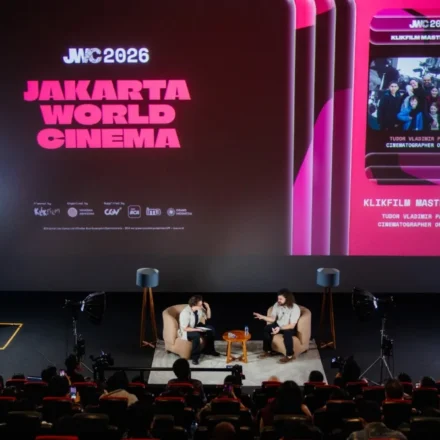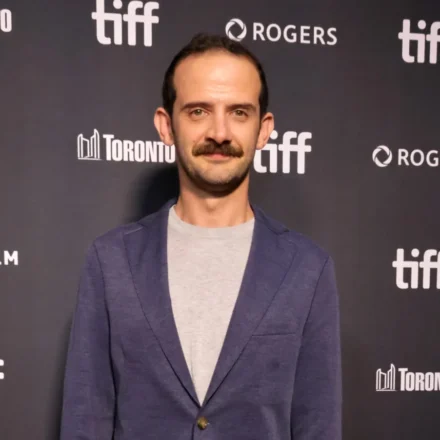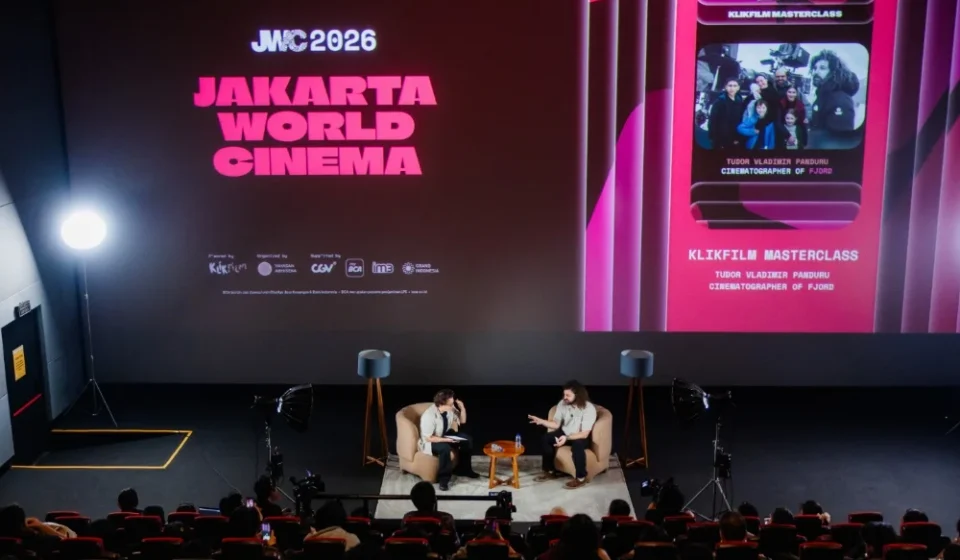

At the recent Jakarta World Cinema festival, the air in the masterclass hall was thick with the quiet intensity of craft. On stage sat Tudor Vladimir Panduru, the Romanian cinematographer whose lens has become synonymous with the searing, unflinching realism of contemporary European auteurism. Beside him sat Benh Zeitlin, the Oscar-nominated director of Beasts of the Southern Wild, who served as moderator—not merely as a peer, but as a hopeful collaborator.
"We hope to work together someday," Zeitlin remarked, his admiration palpable. "Tudor is the kind of cinematographer who brings a dimension to your work that is beyond your personal imagination. He doesn’t just photograph a script; he builds a visual architecture for the human soul."
This masterclass was more than a technical breakdown; it was a deep dive into the philosophy of the long take, the ethics of social realism, and the evolving language of light.
A Career Forged in the Romanian New Wave
The session traced the trajectory of Panduru’s career with chronological precision, beginning with his roots. Trained under the legendary Oleg Mutu—the eyes behind Cristian Mungiu’s Palme d’Or-winning 4 Months, 3 Weeks and 2 Days—Panduru’s ascent was anything but accidental. He was a protégé, absorbing the rigorous, disciplined approach of the Romanian New Wave while still a student.
His breakthrough came with Mungiu’s Graduation, a film that required a cinematographer capable of rendering domestic claustrophobia and moral decay without a hint of melodrama. "Graduation was my second film," Panduru recalled, "but it was the crucible. It taught me that the camera is a guest, not a director. It should be low-profile, observant. We trust the audience; we don’t need to force their eyes toward a prop or a gesture. They are smart enough to navigate the scene themselves."
The Discipline of the Plan-Séquence
For those unacquainted with the Mungiu-Panduru collaboration, the term plan-séquence—the long, uncut take—is the defining pillar. In their work, there is rarely an edit. This technique, while visually immersive, is a grueling endurance test for the entire production team.
"There is no safety net of the cutting room," Panduru explained. "From a cinematographer’s perspective, it is difficult because the performance dictates everything. If a subtle emotion is missed or a frame is slightly off-balance at the 15-minute mark, we go again."
It is not uncommon for the duo to shoot 30 or 40 takes of a single scene. Yet, Panduru insists this is not a sign of failure or "bad" acting. "It’s a matter of synchronicity. We aren’t shooting until the actors get it right; we are shooting until the environment, the light, the movement, and the performance align in a singular, perfect moment of truth."
This repetitive process, which might sound exhausting to the uninitiated, becomes a communal experience. Panduru emphasized that the responsibility for freshness—for maintaining the "living" quality of a take—lies with the individual. "When you reach the 30th take, you aren’t tired. You are in a trance. You are living the moment with your colleagues."
Technical Mastery: Lighting the Impossible
The masterclass pivoted to specific case studies, moving from the intimate interiors of Graduation to the complex, large-scale choreography of R.M.N. and the ethereal, fairytale-like quality of The President’s Cake.
In R.M.N., a film defined by its societal commentary, one particular scene stands out: a 20-minute town hall meeting involving over 100 extras. The technical demands were staggering. Panduru revealed a trade secret: the scene, which appears to take place in the harsh, natural light of day, was actually shot at night.
"You are essentially using focus pulling as your editor," Panduru explained. "Because we couldn’t move the camera, I had to reframe the scene through depth of field. Keeping 100 people in focus while shifting the audience’s attention from the speaker to the crowd was a puzzle of engineering."
Conversely, the work he did for Iraqi director Hasan Hadi on The President’s Cake required a radical departure from the Mungiu aesthetic. While the Mungiu films are stark and grounded in social reality, The President’s Cake demanded a visual language that felt like a children’s fable.
"When I saw that clip," Zeitlin interjected, "I was floored. I realized it was the same DP, yet the aesthetic was completely different. It felt like a dream. I knew then I had to talk to you."
Panduru explained that he embraced the natural landscape of the film, utilizing jib arms and wheels to create a fluid, sweeping movement that felt liberated compared to the static, observational style of his work with Mungiu. "Everything relates to affinities," he said. "The project dictates the tool. I don’t go into a film with a ‘signature’ look; I go in with an intention to serve the subject."
The "Fjord" Experience: Diving into the Cold
The discussion culminated in the analysis of Fjord, Mungiu’s latest work. The clip that garnered the most gasps from the audience involved lead actress Renate Reinsve navigating a scene that transitioned from a family gathering at "magic hour" to a dramatic plunge into the sea.
"The magic hour is a lie," Panduru joked. "We were chasing that light, so I had to block out all the natural ambient light from outside the house just to keep the exposure consistent and give the actors more time to find the emotional arc of the scene."
The final sequence—a long take following Reinsve into the freezing water—was perhaps the most physically demanding of Panduru’s career. "I jumped in with her," he said, laughing as the audience reacted. "I thought, ‘This is the most direct way.’ But the hardest part wasn’t the cold; it was the synchronization. If I lost the camera during the jump, the scene was dead. I relied entirely on my grips, who were there in the water with us, holding the rig, keeping me steady."
The Ethics of the Lens: Social Responsibility
Underlying the technical talk was a profound ethical conversation. Zeitlin noted that Mungiu’s films are fundamentally concerned with "directness and truthfulness," specifically attacking the "hypocrisy and dishonesty" that plague modern society.
Panduru agreed, identifying his role as an accomplice to that mission. "Romanian cinema is, by necessity, a mirror of social issues. If the director is trying to tell a story about corruption or the erosion of community, my job is to ensure the camera doesn’t lie. I don’t want to make an action movie unless it has that same social weight. Every shot has to carry the burden of the truth."
Implications for the Future of Cinematography
The masterclass at Jakarta World Cinema served as a reminder that the best cinematography is not about the latest high-end camera or the most complex lighting setup—it is about intent. By prioritizing the plan-séquence, Panduru is advocating for a return to the "whole" scene, where the audience is not manipulated by rapid-fire editing but is instead allowed to exist within the frame alongside the characters.
As the industry shifts toward shorter attention spans and high-frequency editing, Panduru’s commitment to long, arduous, and meaningful takes acts as a counter-current. His collaboration with Mungiu and his openness to diverse projects—from the harsh social drama of R.M.N. to the imaginative landscapes of Fjord—suggests that the future of cinema lies in the hands of those who are willing to wait for the perfect take, to trust the audience’s intelligence, and to dive into the freezing sea for the sake of an emotional truth.
For the aspiring filmmakers in the room, the lesson was clear: technology is merely the brush, but the vision—the "synchronicity" of light, movement, and human performance—is the paint. And as Panduru proved, when you align those elements, you don’t just capture a scene; you capture a moment in history.