
Grab your pentagrams, stay off the moors, and prepare for a stay at The Slaughtered Lamb. It has been 45 years since John Landis unleashed An American Werewolf in London upon the world, a film that didn’t just join the pantheon of great horror movies—it fundamentally altered the DNA of the genre. By blending visceral, bone-crunching practical effects with a uniquely cynical, sharp-witted sense of humor, Landis and legendary effects artist Rick Baker created a blueprint for modern horror-comedy that remains the gold standard nearly half a century later.
A Genre-Defining Collision of Fear and Humor
The premise is deceptively simple: two American backpackers, David (David Naughton) and Jack (Griffin Dunne), wander off the beaten path in the English moors. Despite the frantic warnings of the locals at a pub called The Slaughtered Lamb, they venture into the darkness, where they are stalked by an ancient, lupine evil. Jack is brutally killed, and David is left to navigate a harrowing new reality in London, caught between a budding romance with a nurse named Alex (Jenny Agutter) and the rotting, undead spectral presence of his best friend, who demands that David commit suicide to break the lycanthropic curse.
What separates An American Werewolf in London from its predecessors is its tonal audacity. It is a buddy film that spirals into a nightmare, a romance that morphs into a tragedy, and a horror movie that dares to make the audience laugh while they are recoiling in disgust.
The Chronology of a Passion Project
The seeds for the film were sown long before it hit theaters in 1981. In 1969, a young John Landis was working as an assistant director on the war comedy Kelly’s Heroes in Yugoslavia. During a production trip, Landis witnessed a local funeral ritual where the community took elaborate precautions to ensure the deceased would not return from the grave.
"I was fascinated by the idea," Landis recalled in an exclusive interview with Dread Central. "I began to wonder, how would a regular, sane person react if they were suddenly thrust into a supernatural situation? How does the mundane collide with the impossible?"
Landis sat on the concept for over a decade. During that time, he rose to prominence as a comedic powerhouse with massive hits like National Lampoon’s Animal House and The Blues Brothers. With his reputation cemented, he finally secured the leverage necessary to bring his dark, personal vision to life. It was a gamble—a high-budget, R-rated horror film with a dark, nihilistic streak—but it was a risk that would pay dividends for the horror genre at large.
Anatomy of a Transformation: The Rick Baker Revolution
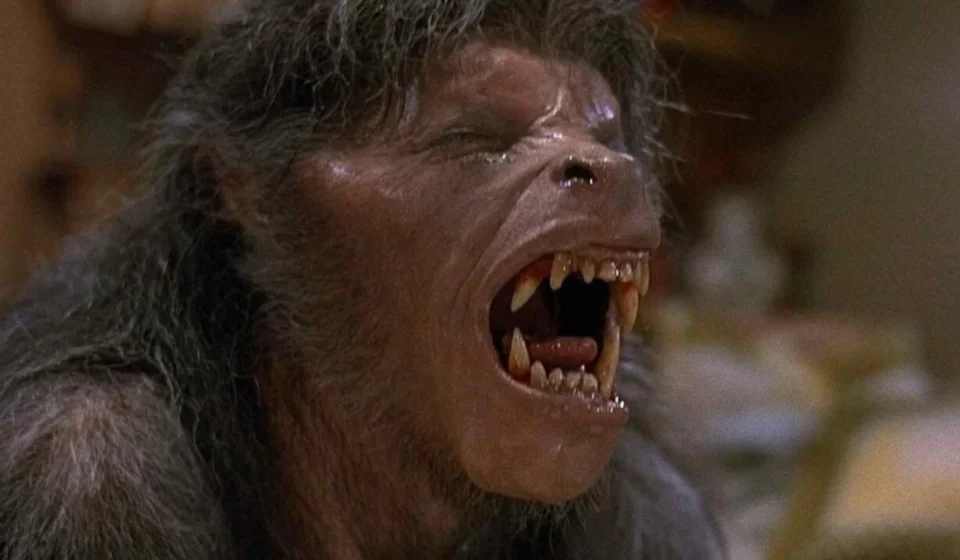
If the film’s heart is its script, its soul is the groundbreaking special effects work of Rick Baker. Prior to An American Werewolf in London, werewolf transformations in cinema were largely handled through "lap dissolves"—the camera would fade from a man’s face to a wolf’s face while the actor sat perfectly still. Landis refused to settle for this. He wanted the audience to feel the agony, the biological shift, and the sheer horror of the body warping against its own will.
"I told Rick that it made no sense to sit still," Landis explained. "We needed to show the anatomical reality of it."
Baker, aided by a young, brilliant team that included future industry titan Steve Johnson (The Howling, Ghostbusters), essentially invented a new language for creature effects. They utilized mechanical extensions, complex bladder systems, and innovative foam latex appliances to stretch David Naughton’s body. The result was a scene that remains difficult to watch even today: bones crack and lengthen, skin tears, and the silhouette of a man is obliterated by the emergence of a beast.
The work was so revolutionary that the Academy of Motion Picture Arts and Sciences felt compelled to create a brand-new category for the 1982 Oscars: Best Makeup. Rick Baker became the first-ever recipient of that award, effectively changing the film industry forever.
![Beware The Moon: An American Werewolf In London At 45 [Interview]](https://www.dreadcentral.com/wp-content/uploads/2026/08/american-werewolf-london-1200x675.jpg)
Industry Implications: A New Era for Practical Effects
The legacy of An American Werewolf in London is etched into every practical effect that followed. By proving that horror could be high-concept, technically sophisticated, and commercially viable, the film opened the floodgates for the golden age of 1980s creature features.
Steve Johnson, who cut his teeth on the film, emphasizes that the impact extended far beyond the makeup chair. "With American Werewolf, Landis and Baker didn’t just create the art of special makeup effects—they changed the entire film industry," Johnson told Dread Central. "Suddenly, writers were emboldened. Directors weren’t constrained by what they thought they could show. If you could dream it up, you could build it. Movies changed forever."
This shift allowed for the tactile, grotesque, and imaginative effects seen in films like The Thing, The Fly, and Hellraiser. It established a precedent where the "monster" was a character in itself, crafted with as much care as any lead actor.
Official Responses and Behind-the-Scenes Recollections
The cast of the film looks back at the production with a mixture of nostalgia and disbelief regarding the sheer scale of the operation. Griffin Dunne, who played the doomed Jack, recalls the intense experience of working under heavy prosthetic makeup to portray his character’s slow, decaying evolution.
"I was at the beginning of my career, being flown to London on the Concorde—too young to even know how to spell ‘legacy,’" Dunne shared. "The crew and David [Naughton] wanted to take me to local pubs in full corpse makeup just to freak people out. I never let them, though. I was convinced that if a regular patron saw me in that state, they’d suffer a legitimate heart attack."
Mick Garris, the renowned horror director who worked as a publicist on the film in 1981, notes that the movie broke the mold in its handling of the "horror-comedy" label. "It wasn’t just a gimmick," Garris explains. "It was one of the first times that the horror was legitimately terrifying and the comedy was genuinely funny. Landis had this rare ability to juggle tones that shouldn’t have worked together, but under his direction, they formed a perfect, cohesive whole."
The Enduring Legacy: Why We Still Watch
Forty-five years later, the film continues to serve as a rite of passage for "Monster Kids" and cinephiles alike. For those who didn’t quite fit in with the "normal" crowd, An American Werewolf in London offered a window into a world where the supernatural was not just a plot device, but a metaphor for the human condition—our fears of losing control, the struggle between our base instincts and our intellect, and the inevitability of mortality.
The film remains a masterclass in pacing, character development, and visual storytelling. Whether it’s the iconic, gore-drenched transformation in the London flat or the unsettling, existential conversations between David and the ever-rotting Jack, the film refuses to date. It is a testament to the power of practical artistry in an increasingly digital world.
As we celebrate this milestone, it is worth remembering that An American Werewolf in London was never just a movie about a man turning into a wolf. It was a movie about what happens when the unreal becomes real, and how we, as humans, attempt to navigate the carnage left in the wake. It is a masterpiece of the macabre, and as long as there is a moon in the sky, we will continue to look over our shoulders—and be thankful for the nightmares it provided.
Happy 45th Anniversary to one of the greatest horror films ever made. Just remember: keep off the moors, and whatever you do, stick to the road.