


In the landscape of contemporary documentary filmmaking, few works dare to tackle the fragmented soul of a nation with as much visceral ambition as Lana Daher’s debut feature, Do You Love Me (2026). A kaleidoscopic, 76-minute journey through seven decades of Lebanese history, the film is less a traditional documentary and more an immersive, archival tapestry. By stitching together found footage—ranging from 1928 home movies to contemporary hip-hop music videos—Daher transforms the screen into a mirror reflecting a society caught in a permanent state of flux, conflict, and irrepressible vitality.
Following a high-profile premiere at Venice Days, the film has arrived at Metrograph in New York, serving as a poignant, unsettling, and ultimately humanizing counter-narrative to the monolithic depictions of Lebanon typically found in Western news cycles.
The Architecture of a Fractured History
Do You Love Me does not attempt to provide a linear, textbook explanation of Lebanon’s turbulent past. To do so would be, in Daher’s view, a form of erasure. Instead, the film embraces what the Beirut-based multidisciplinary artist calls the "disorientation of the journey." By toggling between the polished artifice of action cinema and the grainy, raw reality of newsreels, Daher blurs the line between the staged and the lived.

The film’s narrative structure is built upon the collision of disparate temporalities. Viewers are guided through a sensory landscape where traditional Middle Eastern melodies bleed into the pulse of contemporary hip-hop, and where scenes of celebratory birthdays are juxtaposed with the harrowing search for missing loved ones. In one striking sequence, a clip from the 2008 film I Want to See features Catherine Deneuve wandering through an empty Beirut apartment building, only to be told that the structure is no longer a residence, but a monument to war. Such moments underscore the film’s central thesis: that in Lebanon, the built environment is a graveyard of memories, and every wall carries the weight of a history that refuses to stay buried.
The Archive as an Act of Resistance
The production of Do You Love Me was, by necessity, a feat of archaeological persistence. Lebanon famously lacks a centralized national archive, a void that reflects the country’s deeper societal divisions. Daher’s process was less a standard research project and more a "hunt," spanning nearly eight years.
By the Numbers: The Scale of the Search
- Source Material: The final edit drew from over 20,000 audiovisual fragments across multiple digital storage drives.
- The Selection Process: Only 7% of the initial researched material made the final cut.
- Film Sources: The film incorporates footage from approximately 106 distinct fiction and documentary features produced between 1958 and 2026.
- Legal Labor: The production team successfully navigated the clearance of nearly 400 individual rights contracts, a testament to the sheer logistical complexity of reclaiming Lebanese visual history.
For Daher, this process was deeply personal. Growing up in a nation where family archives were repeatedly decimated by waves of migration and recurring conflict, she found herself disconnected from her own heritage. "That absence was part of why I wanted to build something from the inside," Daher explains. "Made of Lebanese people speaking about themselves in their own voices."

A Collaborative Vision: The Editing Room
The film’s emotional resonance is heavily indebted to the editorial guidance of Paris-based Syrian editor Qutaiba Barhamji. Known for his work on the Oscar-nominated The Voice of Hind Rajab (2025) and Four Daughters (2023), Barhamji brought a crucial "outside eye" to Daher’s intensely personal project.
The pair operated under a set of rigid, self-imposed rules: no full scenes lifted from existing films, and a strict exclusion of Lebanese politicians—both in visual representation and on the soundtrack. By choosing an editor who did not share the same immediate proximity to the specific traumas of the Lebanese Civil War, Daher ensured that the film would prioritize universal emotional resonance over local political point-scoring. The resulting edit is a testament to "emotional logic"—a rhythmic, associative flow that mimics the way memory actually functions: non-linear, recursive, and deeply felt.
Centering the Female Gaze
A defining characteristic of Do You Love Me is its deliberate foregrounding of women’s perspectives. This is not merely a thematic choice but an acknowledgment of the reality of historical preservation in the region.
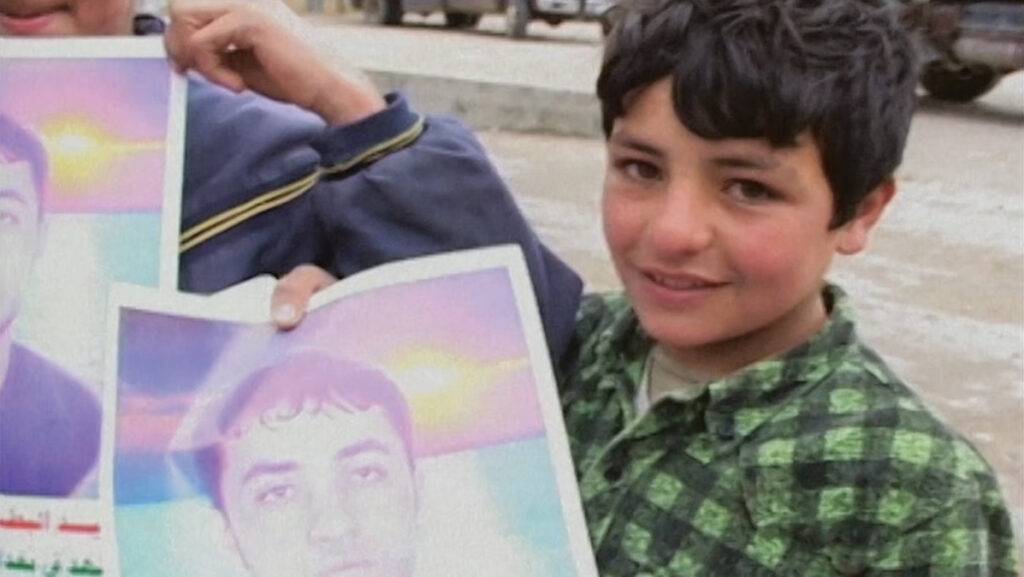
"So much of what survives as ‘the record’—home videos, family photographs, personal collections—was shot, kept, and passed down by women, even when they weren’t the ones holding the camera," Daher notes. By elevating these often-overlooked gazes, the film functions as a counter-history. The inclusion of footage from the pioneering filmmaker and journalist Jocelyne Saab serves as a touchstone for this lineage. Saab, who reported from the wreckage of her own demolished home, embodies the courage and endurance that Daher seeks to highlight. The Metrograph’s concurrent screening of a retrospective series, Jocelyne Saab: Letters from Lebanon, provides essential context for the audience, situating Daher’s work within a tradition of Lebanese women who have risked everything to document the unfolding truth of their country.
Implications in a Time of Crisis
The relevance of Do You Love Me has only sharpened in light of the current regional instability. When asked about the perception of Lebanon as a country "caught in the crossfire," Daher is quick to reject the oversimplification of the current conflict. She emphasizes that the devastation of southern Lebanon and the erasure of its villages must be understood within a timeline that predates the emergence of specific political factions.
"This history didn’t begin with Hezbollah," Daher argues. "Israel first invaded Lebanon in 1978, and it has repeatedly invaded and occupied parts of the country over the past five decades."
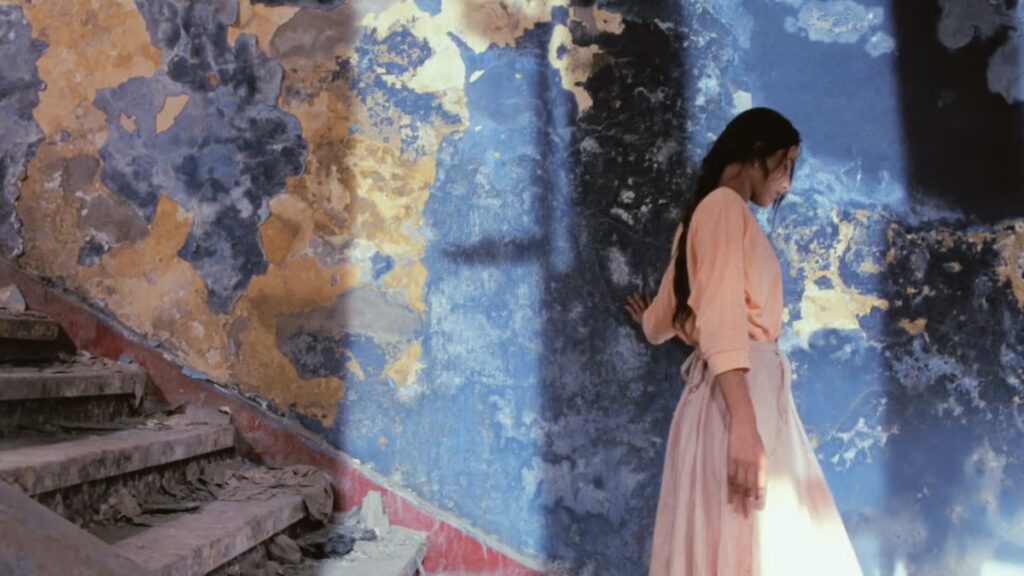
The film’s screening in Beirut during the current war added a layer of haunting meta-commentary to the experience. Daher recalls a screening where the distant hum of an Israeli drone became indistinguishable from the sound design of the film itself—a chilling reminder that in Lebanon, the archive and the present are never truly separated.
Conclusion: A Love Letter to Resilience
Ultimately, Do You Love Me is not a film about death, but a film about the fierce, stubborn desire to live. By synthesizing 70 years of fragmented imagery, Lana Daher has created a vessel that holds the joys, the contradictions, and the profound humanity of a people who refuse to be reduced to mere statistics.
"I truly hope the film reminds people that Lebanon isn’t just another war-torn country," Daher says. "We are people with stories, humor, and tenderness." In its refusal to provide easy answers, the film succeeds in something far more difficult: it validates the lived experience of its subjects. It asks the audience to look, really look, at the faces on the screen—to witness the weddings, the birthday parties, the grief, and the quiet moments of reflection—and to recognize the beauty that persists even in the shadow of the archive. Do You Love Me is a profound, necessary piece of cinema, standing as a living monument to a country that refuses to be forgotten.