
The Open-Weights Revolution: Why the Future of Generative AI Lies Within the Studio Walls

In a landmark industry statement titled “Open-Weights and American AI Leadership,” 35 of the most influential technology firms—including titans like Nvidia, Microsoft, Meta, IBM, and Hugging Face—have formally rallied behind the necessity of open-weight artificial intelligence models. This industry-wide endorsement marks a pivotal turning point in the global debate surrounding AI development, shifting the conversation from a binary “open vs. closed” struggle to a pragmatic strategy for long-term innovation, national sovereignty, and economic prosperity.
At its core, the letter advocates for a model of transparency: AI architectures that allow anyone to download, inspect, modify, and run software on their own infrastructure. For the media and entertainment industry, particularly in the high-stakes world of Visual Effects (VFX), this movement is not merely ideological—it is a survival mechanism. As production houses struggle to balance the explosive potential of Generative AI (GenAI) with the uncompromising demands of cybersecurity and workflow stability, the industry is increasingly looking toward local, open-weight deployment as the only viable path forward.
The Chronology of a Paradigm Shift
The ascent of open-weight models has been rapid, fueled by both necessity and frustration with the volatility of closed-source API ecosystems.
The timeline of this shift is punctuated by significant industry disruptions. In early 2026, the reliance on proprietary, cloud-only models hit a breaking point for many creative teams. A watershed moment occurred in March 2026, when OpenAI abruptly shuttered its Sora web service. The move sent shockwaves through the production community, most notably derailing the Critterz animated feature, which had planned a major debut at the 2026 Cannes Film Festival. The sudden removal of the service forced producers to scramble for new partners, ultimately pushing their release to 2027.
This event also effectively terminated a high-profile $1 billion investment deal between Disney and OpenAI, a partnership that had been public for three months but never reached finalization. For the industry, these events served as a grim reminder: relying on a third-party, closed-box provider creates a "single point of failure" that can jeopardize years of work and millions of dollars in capital.

The Cybersecurity Dilemma: Why "Open" Requires Caution
While the movement for open weights gains momentum, the VFX industry remains uniquely cautious. In professional post-production environments, where assets are protected by rigorous MPA (Motion Picture Association) and TPN (Trusted Partner Network) standards, the introduction of unvetted code is often viewed as a hostile intrusion.
Tools like ComfyUI, while revolutionary for their generative capabilities, present significant cybersecurity liabilities. Because these platforms often rely on vast, decentralized plugin ecosystems, they can become vectors for viruses or malicious scripts. For a mid-sized VFX house, the sheer volume of code involved makes forensic auditing an impossible task for an in-house IT team.
Industry experts argue that until robust, enterprise-grade auditing tools are developed for open-source AI workflows, the "bring-your-own-infrastructure" (BYOI) approach must be handled with extreme vigilance. The risk is compounded by the "shadow IT" of artists using personal devices to download unverified tools, potentially bypassing the tightly controlled egress points required by studio security protocols.
Supporting Data: The Economics of Generative Iteration
The economic case for on-premise, open-weight models is driven by the volatility of token-based pricing. Generative media is inherently iterative; it is a process of trial and error that currently lacks the predictability of traditional rendering.
Consider the case of Air Head, the 2024 short film produced by the Toronto collective Shy Kids. In discussions with fxguide, post-supervisor Patrick Cederberg estimated a generation ratio of approximately 80:1—meaning for every minute of final footage, 80 minutes of raw generative material were created. When API costs for video generation hover between $0.05 and $0.75 per second, these ratios turn production into a financial gamble.

The danger of this model was highlighted in June 2026, when a single employee at a San Francisco fintech startup accrued $81,267 in API token costs in just one week while experimenting with agentic workflows. For a studio, such an event is not just a bug—it is an operational disaster. By contrast, running models on local, studio-owned hardware transforms this variable cost into a fixed capital expense. Once the hardware is purchased, the cost of generating ten takes versus ten thousand remains identical, allowing producers to lock in budgets before the first frame is ever rendered.
Professional Perspectives: The Case for Integration
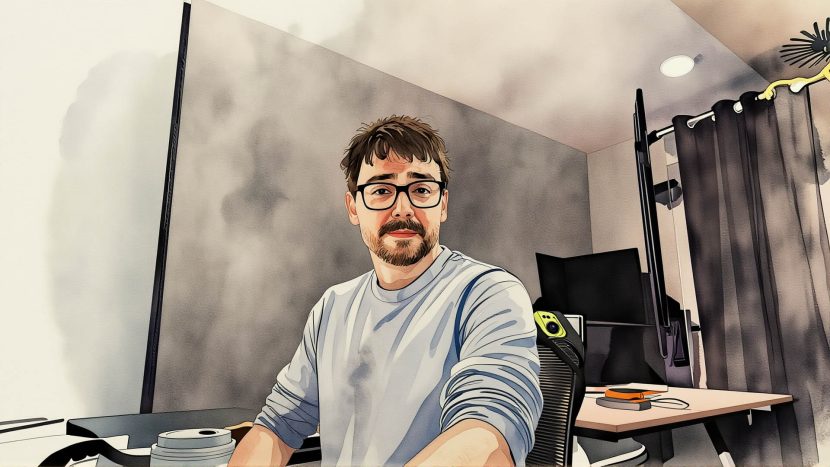
To gain deeper insight into these operational shifts, we spoke with JD Vandenberg, a veteran GenAI workflow and color science consultant with deep roots at Disney and Netflix. According to Vandenberg, the primary advantage of open-weight models lies in their ability to be "pipelined."
"A model you host is a model you can integrate," Vandenberg notes. "When you rely on a browser-based API, you are always working outside the system. When you host the model yourself, you can invoke generation directly from a Nuke node or a Resolve plugin. You can dispatch jobs to your existing render manager, using the same queues, priorities, and logs as every other render on the show."
Vandenberg also highlights the issue of color management. Most proprietary video generation tools deliver compressed, 8-bit H.264 files, which are fundamentally incompatible with the high-dynamic-range, scene-linear, EXR-based pipelines that define modern cinema. By hosting models internally, studios can ensure that the generative output aligns with existing ACES (Academy Color Encoding System) or OCIO (OpenColorIO) pipelines, eliminating the time-consuming and destructive process of converting proprietary formats.
The Fine Print: Understanding the "Weights"
It is vital to distinguish between "open-weights" and "open-source." While the open-weights movement advocates for the ability to download model parameters, this does not automatically grant the right to commercial usage or redistribution.
The licensing landscape is fragmented. Some models carry permissive Apache 2.0 licenses, while others are restricted to non-commercial or academic use. A studio that builds a production pipeline around a model that forbids commercial distribution faces a catastrophic realization during the final conform. Furthermore, as the industry matures, we are likely to see a "Red Hat" style business model emerge, where the software/weights remain accessible, but enterprise-grade support, fine-tuning services, and security hardening become the primary revenue drivers for AI labs like Black Forest Labs or LTX.
Implications for the Future of Production
The implications of the Open-Weights and American AI Leadership letter extend far beyond simple cost savings. They point toward a future of "technological sovereignty."
- Workflow Stability: By pinning models locally, studios ensure that their software stack remains static throughout a production cycle, preventing the "black box" updates that can break pipelines overnight.
- Security Compliance: On-premise deployment allows for fully air-gapped workflows, satisfying the most stringent TPN and MPA security requirements without relying on third-party trust.
- Hardware Utilization: The industry already possesses vast amounts of GPU capacity—render farms and high-end workstations—that currently sit idle during off-hours. Converting this latent capacity into an internal generative powerhouse is the next logical step in facility management.
- Integration: Moving away from browser-based tabs and into the node-graph represents a return to the professional standards of the VFX industry, where tools are meant to be controlled, scripted, and versioned.
Conclusion
The debate over open-weights is ultimately a debate about control. While closed-source, API-based models will continue to have a place for casual users and rapid prototyping, they are increasingly ill-suited for the rigorous demands of professional media and entertainment.
As the industry moves toward 2027, the divide will likely widen between companies that remain "tenants" of the generative cloud and those that choose to build their own infrastructure. The latter group, by leveraging open-weight models, is not just cutting costs—they are gaining the ability to integrate artificial intelligence into the very fabric of their existing pipelines. In an industry defined by its ability to push the boundaries of what is possible, the freedom to own, audit, and optimize one’s own tools is the ultimate competitive advantage.