
In the hours preceding the lifting of the review embargo for Ramayana: Rise of a Legend, Google search trends undoubtedly saw a surge in queries for "synonyms for epic." It is a reductive label, perhaps even a lazy one: if you are even remotely interested in a three-hour cinematic endeavor that attempts to distill half of a 1,500-page ancient Sanskrit text—a narrative spanning decades of war, romance, divine intervention, and existential struggle—you already know it is an epic. But in the case of director Nitesh Tiwari’s massive new adaptation, the word bears repeating. It demands underlining, or at the very least, a desperate replacement with every variation of "majestic" and "monumental" that a thesaurus can provide.
With a reported budget of $500 million, Sony Pictures’ Ramayana: Rise of a Legend represents more than just a blockbuster; it is a cultural litmus test for the global reach of Indian mythology. As it prepares for its U.S. theatrical debut on November 5, the industry is watching closely to see if this marriage of Bollywood scale and international production standards can capture the Western imagination in the same way it has defined the cultural bedrock of South Asia for millennia.
A Tapestry of Cosmic Proportions: The Narrative Scope
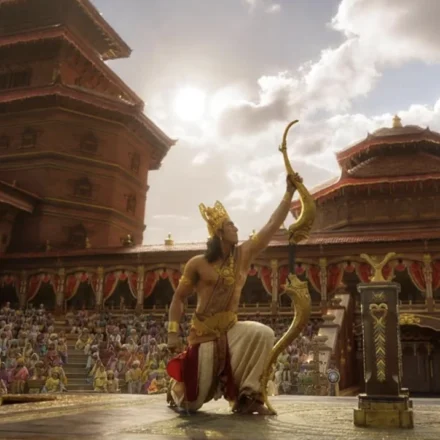
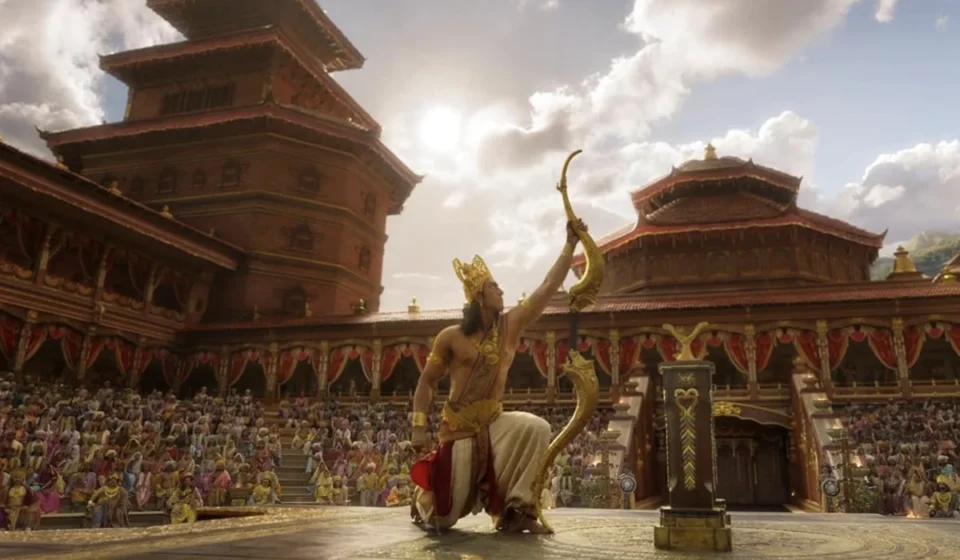
It is difficult to overstate just how vast Nitesh Tiwari’s vision truly is. This is a film where Brahma, the Creator of the universe, makes a tangible, onscreen appearance before the 10-minute mark. The film serves as a grand visual census of India’s topography, transitioning from lush, antelope-filled grasslands to gnarled, shadowy forests where tigers and malevolent spirits lurk in the periphery.
The film is a relentless barrage of spectacle: there are Gladiator-style arena contests, talking eagles, lavish traditional weddings, Shakespearean-level familial feuds, and Da Vinci-esque flying machines. In its commitment to density, there are moments where the film makes even the most ambitious Western epics—such as Christopher Nolan’s The Odyssey—feel like intimate, conversational chamber dramas.
Chronology of the Divine Conflict
The narrative trajectory is as follows:
- The Rise of Ravana: The film opens with the world under the shadow of Ravana (played by Bollywood titan Yash). His meditations are so fervent and focused that they threaten the stability of the cosmic order. Brahma intervenes, inadvertently granting Ravana a boon of near-invulnerability against humans, gods, and disease.
- The Descent into Darkness: Ravana, emboldened by his immunity, ushers in a dark age, plunging the world into chaos. This forces the god Vishnu to descend into the mortal realm, taking the form of Rama (Ranbir Kapoor) to restore cosmic balance.
- The Exile and the Dharma: Rama’s journey is not merely one of martial prowess but of moral duty (dharma). To honor his father’s word, he accepts a 14-year exile into the wilderness. He is joined by his wife, the semi-divine Sita (Sai Pallavi), and his loyal, if occasionally volatile, brother Lakshmana (Ravi Dubey).
- The Impending Storm: As the trio attempts to live a life of simple, righteous duty in the forest, the geopolitical and spiritual forces of the world continue to coalesce against them, setting the stage for an inevitable, cataclysmic confrontation.
Supporting Data and Production Magnitude
The film is not merely a retelling; it is a declaration of intent. By enlisting the collaborative musical talents of Hans Zimmer and A.R. Rahman—the former making his first foray into Indian cinema—the production signals a clear desire to bridge the gap between Eastern storytelling and Western orchestral sensibilities.

The production design utilizes every cent of its $500 million budget. The visual effects team has clearly prioritized the "mythic" quality of the environments, treating the landscape as a character in its own right. However, the sheer volume of "climax" moments creates a structural paradox. In the Ramayana, every beat—from the meeting of lovers to the winning of a battle—is elevated to a moment of supreme importance. Consequently, the film feels perpetually at peak volume, leaving the audience with little room to breathe or process the emotional stakes of the individual scenes.
Industry Implications and Critical Reception
When adapting an epic of this magnitude, a filmmaker is faced with a binary choice: adopt the "Nolan approach," which involves isolating a specific, narrow thematic thread to provide a unique, personal perspective on a massive event; or, take the "Generalist approach," which aims to translate the entire breadth of the text to the screen, often sacrificing character depth for narrative coverage.
Tiwari has firmly opted for the latter. The film succeeds in its objective to provide the highest possible production value, creating a feast for the senses that is arguably unmatched in modern cinema. Yet, this totalizing commitment to the text results in a product that occasionally lacks a distinct, singular voice. While it is undeniably "epic," it struggles to feel "personal."
The "Climax" Problem
The most significant criticism leveled at the film is its pacing. Because every scene is treated as a major turning point in the fate of the universe, the quiet, formative moments—the ones that allow an audience to forge an emotional bond with Rama or Sita—are fleeting. A three-hour runtime feels, paradoxically, too short. To truly understand why these characters are worth fighting for, one needs to sit with them in the stillness, not just the storm. However, the film is so packed with incident and excitement that it leaves no room for the audience to do anything but watch the spectacle unfold.
Official and Industry Perspectives
While official studio responses have been limited to promotional fanfare, industry analysts suggest that the success of Ramayana could redefine the expectations for international co-productions.
"This is the ‘Ramayana’ that the global box office has been waiting for," says one independent analyst. "By blending the mythological depth of the Sanskrit epic with the high-octane pacing of a modern superhero franchise, Sony is testing a new model for cross-cultural distribution."

For the millions who have grown up with these characters, the film acts as a mirror for their own cultural identity. It reflects the struggle between worldly duty and personal desire, between the temptations of the ego and the requirements of the soul. Even if the film occasionally sacrifices intimacy for grandiosity, it succeeds in making the mythological feel tangible.
Final Verdict
Ultimately, the decision to adapt such a foundational piece of literature is a heavy burden. These characters have survived for centuries because they embody universal ideals and fears. They are immortal because we see ourselves in them.
In moments where the viewer finds it difficult to invest in the two-dimensional characters, they can simply sit back and surrender to the spectacle. The bright, saturated colors, the sweeping camera movements, and the towering orchestral score are more than enough to justify the price of admission.
Calling Ramayana: Rise of a Legend an "epic" might be a cliché, but in the context of this specific production, there is simply no other word that suffices. It is a monument to the scale of human imagination, a $500 million love letter to a story that refuses to die.
Grade: B
Sony Pictures will release "Ramayana: Rise of a Legend" in U.S. theaters on Friday, November 5.