
The late 1990s occupy a paradoxical space in the history of cinema. It was an era defined by a seismic shift in production technology, where the transition from practical effects to computer-generated imagery (CGI) began to fundamentally alter the visual language of blockbuster filmmaking. While 1999 is frequently cited by film historians as the greatest year for cinema in the modern age, 1998 served as the essential precursor—a year of bold experimentation, high-concept narratives, and the birth of modern cult classics.
From the box-office dominance of disaster epics like Armageddon to the rise of independent visionary directors, 1998 was a year where science fiction thrived in both the multiplex and the art house. While the genre occasionally faltered—exemplified by the widely panned, over-budgeted Godzilla—it also produced a collection of films that challenged the boundaries of human identity, technology, and reality itself.
The Cultural Landscape: Cinema in Transition
To understand the sci-fi landscape of 1998, one must look at the socio-political context of the time. The internet was still in its infancy, yet the anxiety surrounding human reliance on technology was reaching a fever pitch. Filmmakers were increasingly fascinated by the "simulated reality" trope, a precursor to the existential dread that would dominate post-9/11 cinema.

While heavy hitters like Saving Private Ryan and Titanic (which was still reaping massive global returns) occupied the mainstream consciousness, a quiet revolution was occurring within the sci-fi genre. Independent voices were beginning to secure larger budgets, and television-to-film adaptations were testing the viability of transmedia storytelling. This was a year where the "what if" question of science fiction was being applied not just to space exploration, but to the nature of the soul and the structure of our digital lives.
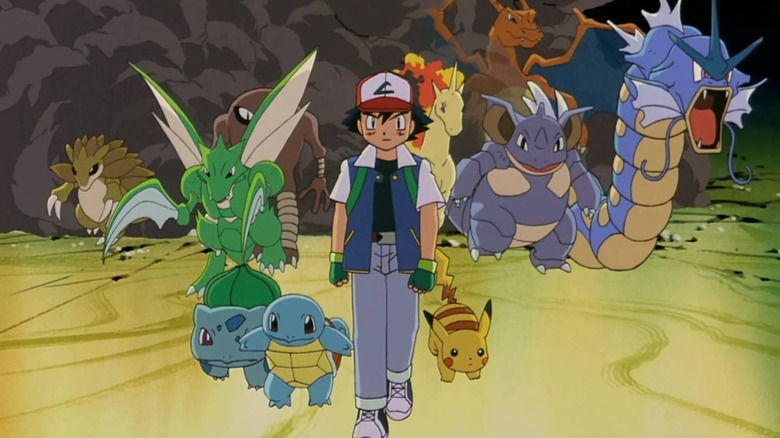
5. Pokémon: The First Movie (1998)
It may seem counterintuitive to include an animated feature based on a children’s trading card game in a list of "best" sci-fi, but Pokémon: The First Movie remains a monumental achievement in animation history. Holding the record for the highest-grossing anime film in the United States for over two decades—a streak only broken by the meteoric rise of Demon Slayer: Infinity Castle in 2025—the film was a cultural juggernaut.
Beyond the catchy soundtrack and the marketing blitz, the film functions as a surprisingly poignant exploration of cloning and existentialism. The antagonist, Mewtwo, is a creature engineered in a laboratory, burdened with the trauma of his own artificial creation. His subsequent "crisis of self" and his desire to prove that he is more than just a byproduct of human scientific arrogance provides a dark, philosophical core to an otherwise colorful premise. While the international dubbing process unfortunately stripped away some of the more nuanced dialogue regarding the value of life, the film remains an essential, albeit unexpected, entry in the canon of 1990s sci-fi.

4. The X-Files: Fight the Future (1998)
By 1998, The X-Files was arguably the most significant science fiction property on television. Moving a show with such a dense, multi-year mythology to the silver screen presented a unique challenge: how to reward longtime fans without alienating general audiences.
Director Rob Bowman and creator Chris Carter navigated this tightrope with surgical precision. Fight the Future serves as a bridge between the show’s "monster-of-the-week" format and its grand, overarching conspiracy regarding alien colonization. By confirming the existence of extraterrestrial life and the complicity of the government, the film escalated the stakes of the series from mere paranoia to a global existential threat. It stands as a masterclass in atmospheric tension, proving that the intimacy of the Mulder-Scully dynamic was just as vital to the genre as the high-concept spectacle of alien spacecraft.
3. The Truman Show (1998)
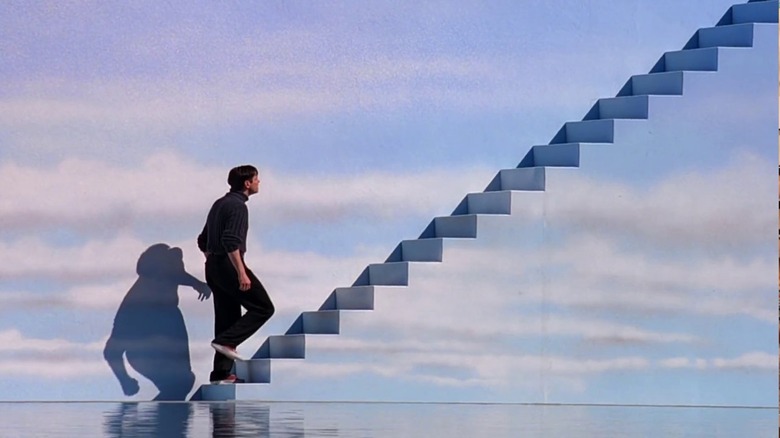
If the 1990s were the decade that invented the modern reality television craze, The Truman Show was the prophet that warned us of the consequences. Peter Weir’s masterpiece remains a chillingly prescient work of speculative fiction. It tells the story of Truman Burbank (Jim Carrey), a man whose entire life is an elaborate, 24-hour reality show broadcast to a global audience without his knowledge.
Carrey’s performance is nothing short of a career-defining turn. By balancing his inherent comedic timing with a profound, aching sense of vulnerability, he grounds the film’s high-concept premise in genuine human tragedy. The film’s brilliance lies in its meta-commentary; as the audience watches the film, we are complicit in the voyeurism that defines Truman’s prison. Weir’s direction uses the visual language of surveillance—hidden cameras, wide-angle "fish-eye" lenses, and framing that emphasizes the artifice of the set—to force the viewer to question their own relationship with the media they consume. Decades later, in an age of social media influencers and performative living, The Truman Show feels less like a satire and more like a documentary.
2. Pi (1998)
Before he was an Academy Award-winning director, Darren Aronofsky announced his arrival with Pi, a low-budget, high-intensity psychological thriller. Filmed in high-contrast, grain-heavy black and white, Pi feels like a fever dream. It follows Max Cohen, an obsessive mathematician searching for a numerical pattern that could explain the stock market, the Torah, and perhaps the fabric of reality itself.
Aronofsky’s debut is a testament to the power of aesthetic constraint. Through his signature use of extreme close-ups, macro photography of neural pathways, and disorienting tracking shots, he turns a story about math into a visceral, body-horror experience. The film is a bridge between the classic "mad scientist" trope and modern anxieties about data and information overload. It is a stark, uncomfortable, and utterly brilliant piece of cinema that set the tone for the "arthouse-sci-fi" movement that would gain momentum in the early 2000s.

1. Dark City (1998)
Topping our list is Alex Proyas’ Dark City, a film that arguably serves as the aesthetic and thematic blueprint for the sci-fi revolution that followed. Released a year before The Matrix, Dark City explores similar ground—a world of manufactured memories and hidden controllers—but does so with a distinct, German Expressionist flair that sets it apart from anything else in the genre.
The film follows John Murdoch, a man suffering from amnesia in a city where the sun never rises and the architecture shifts every midnight. The "Strangers," pale, trench-coated beings, manipulate the city’s structure and the inhabitants’ memories, treating humanity like laboratory mice. The production design is nothing short of breathtaking; the city feels like a character itself, blending the retro-futurism of the 1940s with a dark, dystopian nightmare.
The implications of Dark City go beyond its visual spectacle. It tackles the fundamental philosophical question of the "self": if your memories are replaced, do you remain the same person? Through the use of Plato’s Allegory of the Cave, Proyas elevates the film from a simple thriller to a profound meditation on consciousness. Though it initially underperformed at the box office, Dark City has rightfully earned its status as a foundational cult classic. It is a rare example of a film that is as intellectually challenging as it is visually arresting.
Conclusion: The Legacy of 1998
The films of 1998 were not merely entertainment; they were the harbingers of a new millennium. They captured the transition from an analog world to a digital one, mapping out our collective fears about surveillance, identity, and the loss of reality. Whether through the mathematical paranoia of Pi or the existential awakening in Dark City, these films asked the audience to look deeper into the screens that were beginning to dominate their lives.
As we look back, it is clear that 1998 was a watershed moment. It was a year where science fiction stopped being just about space travel and started being about the internal space of the human mind. For those looking to understand the trajectory of modern genre filmmaking, these five films remain essential viewing—a testament to the power of vision, creativity, and the enduring nature of the "what if."