The Odyssey of Werner Herzog: A Cinematic Icon to Receive the Prestigious Donostia Award

Introduction: A Titan of Global Cinema
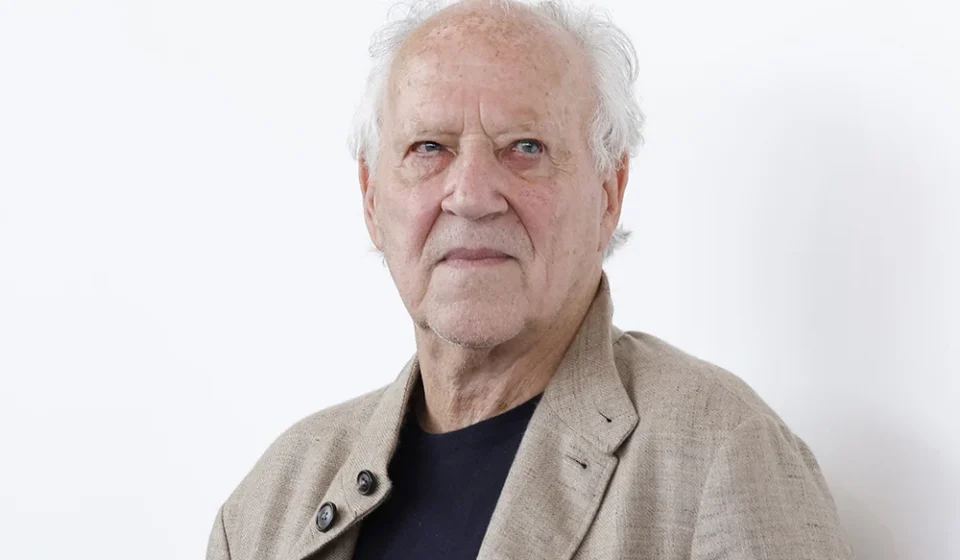
The San Sebastián Film Festival, a pillar of the international cinematic calendar, has announced that its 74th edition will bestow its highest honor, the Donostia Award, upon one of the most enigmatic and prolific visionaries in the history of the medium: Werner Herzog. The German director, whose career has spanned over six decades and encompassed nearly 80 films, will be celebrated during the festival’s opening gala this September.
This recognition serves as a testament to a man who has not only shaped the landscape of the "New German Cinema" but has also redefined the boundaries between documentary and fiction. Herzog’s presence at the festival will be further marked by the screening of his latest feature, Bucking Fastard, a film that arrives in Spain hot on the heels of its world premiere at the Venice Film Festival.
The Donostia Distinction: A Legacy Recognized
The Donostia Award, named after the Basque name for San Sebastián, is not merely a lifetime achievement accolade; it is an acknowledgment of a filmmaker’s contribution to the evolution of the moving image. Festival organizers, in an official statement, lauded Herzog for his unique contribution to the arts, noting that his work is fundamentally "shaped by obsession, extreme situations, and the contradictions of human nature."
The festival organizers underscored the philosophical rigor Herzog brings to his craft, highlighting his signature concept of the "Ecstatic Truth." Unlike traditional documentarians who prioritize the objective observation of facts, Herzog has spent a lifetime advocating for a cinema that reaches for a deeper, more poetic, and internal reality—a truth that transcends the surface of the image.
Chronology: A Career of Extreme Pursuits
To understand the significance of the Donostia Award, one must look back at the trajectory of a man who famously once walked from Munich to Paris to prove his commitment to a dying friend.
The Formative Years (1960s–1970s)
Herzog emerged in the late 1960s as a central figure of the New German Cinema movement, alongside contemporaries like Wim Wenders and Rainer Werner Fassbinder. His early work was defined by a restless search for landscapes—both physical and psychological—that could mirror the turmoil of the human spirit. Aguirre, the Wrath of God (1972) stands as the defining work of this era, a harrowing study of colonial madness in the Amazon that cemented his reputation as a director willing to put his cast and crew through extreme physical trials to achieve cinematic authenticity.
The Era of Grand Obsession (1980s–1990s)
The 1980s saw Herzog’s scope expand, most notably with Fitzcarraldo (1982). The production is legendary, characterized by Herzog’s insistence on hauling a real 320-ton steamship over a mountain in the Peruvian jungle, mirroring the protagonist’s own impossible dream. This period solidified his image as a director for whom the act of filmmaking was an act of survival.
The Documentarian Turn (2000s–Present)
While Herzog never stopped making narrative films, the 21st century saw a massive surge in his output as a master of the documentary form. With films like Grizzly Man (2005) and Cave of Forgotten Dreams (2010), he turned his gaze toward the periphery of humanity—the eccentric, the isolated, and the ancient. His 2008 documentary Encounters at the End of the World, which took him to the frozen extremes of Antarctica, earned him an Academy Award nomination, cementing his status as a master of the non-fiction genre.
Supporting Data: By the Numbers
- Decades of Activity: 6+ (Starting in the early 1960s).
- Total Filmography: Approximately 80 films, split between narrative features and documentaries.
- Major Festival Wins: Cannes (Best Director for Fitzcarraldo), Berlin, and Venice.
- Oscar Nominations: One (Best Documentary Feature, 2008).
- The "Ecstatic Truth": A recurring theme in his masterclasses and writings, emphasizing that factual accuracy is often less important than the "poetic" or "visionary" truth of a scene.
The Latest Chapter: Bucking Fastard
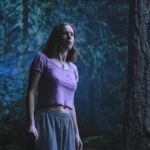
The centerpiece of Herzog’s San Sebastián visit is the screening of his latest project, Bucking Fastard. The film represents a departure from his more rugged, landscape-heavy works, focusing instead on a deeply intimate, albeit bizarre, human connection. Starring sisters Rooney and Kate Mara, the film explores an unusual narrative of twins whose bond is so profound that they speak in unison, share identical dreams, and fall in love with the same man.
The film, which arrives in San Sebastián fresh from its Venice debut, is expected to provoke the kind of intellectual discourse that Herzog’s work has historically invited. Critics are already noting the film’s dreamlike quality, a hallmark of Herzog’s recent experiments with narrative structure.
Official Responses and Industry Impact
The film community has reacted with widespread enthusiasm to the announcement. The San Sebastián Film Festival director, in a private briefing, noted, "Werner Herzog is not just a director; he is a force of nature. His films are populated by dreamers and conquerors confronted with forces beyond their control. By honoring him, we are honoring the very spirit of cinema—the refusal to accept the world exactly as it is presented to us."
Industry analysts suggest that this award acts as a bridge between the traditional "New German Cinema" era and the modern streaming-dominated landscape, proving that Herzog’s voice remains as relevant as ever. His work has influenced generations of filmmakers, from independent documentarians to blockbuster directors who borrow his sense of visual scale and existential dread.
Implications: Why Herzog Still Matters
Why does a filmmaker who began his career in the 1960s continue to command such reverence today? The implications of his influence go beyond the technical aspects of filmmaking.
The Philosophy of the "Outsider"
Herzog has always operated as an outsider, even when his films gained massive critical success. He rejects the traditional "Hollywood" mode of production, often choosing to work with minimal crews and utilizing natural light or minimal equipment. This ethos has become a blueprint for modern independent cinema.
The Convergence of Fact and Fiction
Perhaps the most significant contribution Herzog has made to the modern era is his dissolution of the binary between documentary and fiction. In the age of "post-truth" media, Herzog’s "Ecstatic Truth" feels more prescient than ever. He argues that by manipulating or staging reality, one can reveal something deeper about the human condition that a purely "objective" camera would miss.
Global Reach
His commitment to filming in the most inhospitable corners of the globe—from the volcanic landscapes of the Caribbean to the sub-zero temperatures of Antarctica—has provided a visual language for the environmental anxieties of our time. By showing the indifference of nature to human ambition, he forces his audience to confront their own insignificance, a theme that has never felt more urgent.
Conclusion: The Horizon of the 74th San Sebastián Film Festival
As the San Sebastián Film Festival prepares to welcome the legendary director from September 18 to 26, the industry is poised to reflect on a career that has defied categorization. The Donostia Award is, in many ways, an inadequate vessel for the scale of Herzog’s achievements, yet it serves as a necessary punctuation mark in a life dedicated to the pursuit of the profound.
Werner Herzog remains a director who refuses to sit still. Even as he accepts the honors of the past, he continues to push into the future, exploring the limits of human experience through the lens of a camera. Whether he is capturing the breath of a cave bear in a prehistoric cavern or the intimate, synchronized lives of the Mara sisters, Herzog reminds us that cinema is not merely entertainment—it is a mirror held up to the vast, chaotic, and beautiful unknown.
For the attendees of the 74th edition of the San Sebastián Film Festival, the opportunity to witness a master at work, reflecting on a life defined by the "Ecstatic Truth," will undoubtedly be the highlight of the season. As for Herzog, the journey continues, likely toward the next horizon, forever searching for the images that have not yet been discovered.