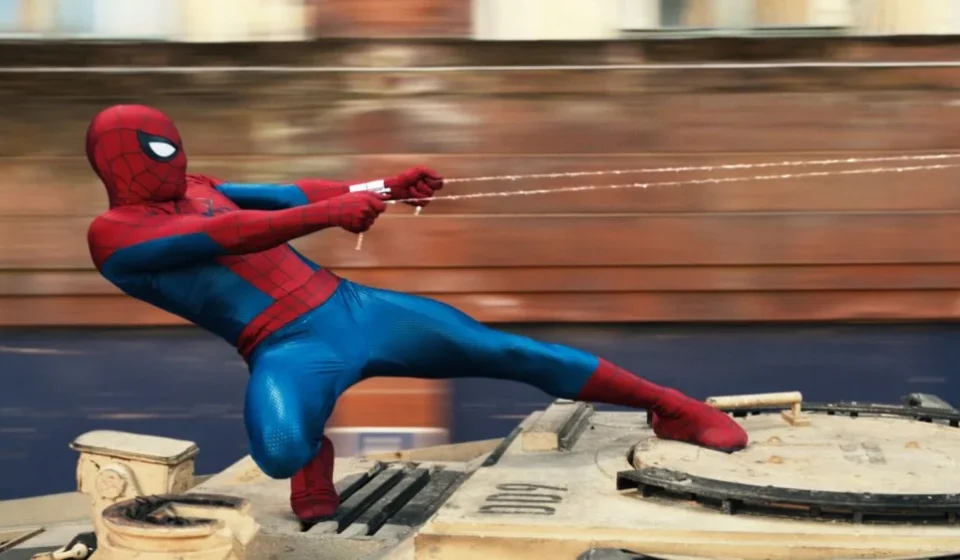
The Web That Won the Summer: How ‘Spider-Man: Brand New Day’ Redefined the Blockbuster Era

The North American box office has just concluded its most triumphant summer season since the global pandemic upended the cinema industry in 2020. At the heart of this resurgence sits a wall-crawling titan: Spider-Man: Brand New Day. For the sixth consecutive weekend, the film has reigned supreme at the domestic box office—a rare, iron-fisted display of dominance that highlights both the film’s extraordinary staying power and the current landscape of the theatrical marketplace.
The King of the Marquee: A Historic Run
Spider-Man: Brand New Day continues to defy gravity, earning $18 million over the traditional weekend, with projections reaching $23.3 million through the Labor Day holiday on Monday. This six-week streak marks the longest reign at the No. 1 spot since James Cameron’s Avatar: The Way of Water dominated the charts for seven straight weekends in 2022.
With a current domestic haul of $923 million, the film is now within striking distance of the all-time domestic record currently held by 2015’s Star Wars: The Force Awakens ($936 million, unadjusted). Globally, the numbers are even more staggering. The fourth entry in Sony’s Tom Holland-led franchise has amassed $2.4 billion worldwide. This achievement cements it as the third-highest-grossing film in history, trailing only the original Avatar ($2.9 billion) and Avengers: Endgame ($2.7 billion), while officially eclipsing the lifetime gross of Avatar: The Way of Water ($2.3 billion).
A Summer of Statistical Significance
Labor Day weekend serves as the curtain call for a summer that defied expectations. According to data provided by Rentrak, domestic ticket sales between May and early September reached a total of $4.73 billion. This figure is not merely a post-pandemic recovery milestone; it represents the second-largest summer season in history, sitting just shy of the all-time record of $4.755 billion set in 2013.
The success of the season was bolstered by a diverse slate of blockbusters, including the juggernaut Spider-Man: Brand New Day, the epic scope of The Odyssey, the animated powerhouse Toy Story 5, and the cultural phenomenon The Devil Wears Prada 2. Independent cinema also contributed significantly to the bottom line, with "sleeper hits" like Obsession and Backrooms proving that audiences remain hungry for unique, non-franchise narratives. These wins were essential in balancing out the balance sheets, effectively offsetting high-profile disappointments such as Disney’s live-action Moana, the DC-Warner Bros. collaboration Supergirl, and Amazon MGM’s Masters of the Universe.
The View from the Industry
Paul Dergarabedian, a senior analyst at Rentrak, views this summer as a potential inflection point for the industry. "This summer could signal a meaningful turning point for movie theaters," Dergarabedian stated. "More than anything, it serves as a huge reminder of the singular nature of the moviegoing experience and how much fun people have going to theaters. The ‘eventization’ of film has returned in full force."
However, David A. Gross, publisher of the box office newsletter FranchiseRe, notes that the late-summer slowdown is a reality the industry must reconcile with. "September and the Labor Day holiday are traditionally sluggish at the box office," Gross explained. "We haven’t had a down weekend like this in a long time, but it serves as a reminder that even in a record-breaking year, the calendar still dictates the flow of commerce."
Labor Day Newcomers: A Muted Debut
While Spider-Man maintained its lead, the holiday weekend saw a wave of new releases that failed to generate significant momentum. Paramount’s R-rated crime thriller By Any Means debuted in fourth place with $7.4 million, reaching an estimated $9.1 million through the four-day frame. Directed by Elegance Bratton, the film, which pairs Yahya Abdul-Mateen II with Mark Wahlberg, found favor with general audiences (earning a "B+" CinemaScore) despite lukewarm critical reception (52% on Rotten Tomatoes).
The struggle was more pronounced for genre films. Fall 2: Deadpoint landed at No. 12 with a disappointing $2.3 million opening weekend. Despite the original Fall (2022) being a low-budget success story, the sequel’s inability to draw crowds suggests a potential ceiling for the franchise. Similarly, the action-horror flick Onslaught, directed by Adam Wingard, arrived in 13th place with $1.8 million. The film suffered from a lack of critical and audience consensus, earning a "C" CinemaScore, which typically signals a short theatrical life.
The Resilience of Legacy Titles
While new arrivals struggled, established films continued to provide a sturdy foundation for the box office. Christopher Nolan’s The Odyssey easily secured the No. 2 spot in its eighth weekend of release. By generating $13 million between Friday and Sunday—and a projected $17 million through the holiday—it pushed its domestic total to $584 million, with a global tally of $1.62 billion. Notably, the IMAX format has accounted for $486 million of that global total, highlighting the enduring power of premium large-format screens.
Equally impressive was the performance of Coyote vs. Acme. In its second weekend, the film saw a minuscule 27% decline, landing in third place with $11.3 million. Having survived a highly publicized cancellation attempt by Warner Bros. before being acquired by Ketchup Entertainment, the film has become a symbol of creative resilience, grossing $37 million domestically to date.
Roadside Attractions’ horror-thriller Buddy also defied standard box office trends, securing seventh place with $5.7 million. The film actually saw a rare 5% increase in its sophomore outing, a testament to positive word-of-mouth following its debut at the Sundance Film Festival.
Looking Ahead: Sustaining the Momentum
The industry now looks toward the fall slate with a mix of optimism and anticipation. The momentum built over the summer must be sustained by a variety of high-profile releases, including Practical Magic 2 starring Nicole Kidman and Sandra Bullock, the Tom Cruise-led comedy Digger, a new Resident Evil reboot directed by Zach Cregger, and the highly anticipated adaptation of Colleen Hoover’s Verity, featuring Anne Hathaway and Dakota Johnson.
The long-term outlook for the year remains bullish. With major tentpole films such as Avengers: Doomsday, the next installment of the Dune franchise (Dune: Part Three), and the long-awaited Jumanji 3 slated for the Christmas window, there is a strong consensus among industry analysts that North American revenues are on track to surpass $10 billion for the first time since the onset of the pandemic.
As the dust settles on this historic summer, one thing remains clear: the communal experience of the cinema is not just surviving—it is thriving. From the record-breaking heights of Spider-Man to the unexpected indie successes, the data suggests that when the quality of the product meets the appetite of the audience, the box office remains an essential pillar of global entertainment. The movies, as many are now saying with renewed confidence, are truly back.