The Unfinished Justice: Why the Murder of Alex Odeh Remains a Defining American Silence

The moral arc of the universe is often cited as bending toward justice, a comforting platitude that suggests time naturally erodes injustice. Yet, in the American experience, certain historical wounds are not healed by the passage of time; they are instead buried under layers of political convenience and institutional apathy. For over four decades, one of the most glaring instances of state-sanctioned impunity has been the assassination of Alex Odeh, the West Coast Regional Director of the American-Arab Anti-Discrimination Committee (ADC).
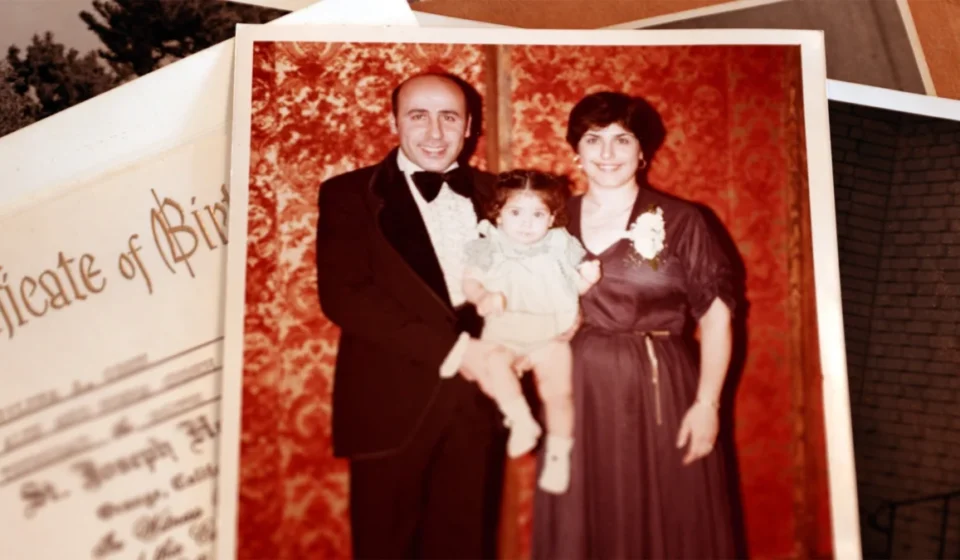
On the morning of October 11, 1985, a pipe bomb detonated at the ADC’s Santa Ana, California office, killing Odeh instantly. He left behind a wife, Norma, and three young daughters. Despite the case being effectively solved by law enforcement almost immediately, the "unsolved" label persists. A new, piercing documentary, Who Killed Alex Odeh? by directors Jason Osder and William Youmans, argues that this label is a lie. The film contends that the murder was never truly "unsolved"—it was merely unprosecuted, a casualty of a geopolitical and domestic landscape that deemed the life of a Palestinian-American activist expendable.
The Life and Death of Alex Odeh: A Chronology of Violence
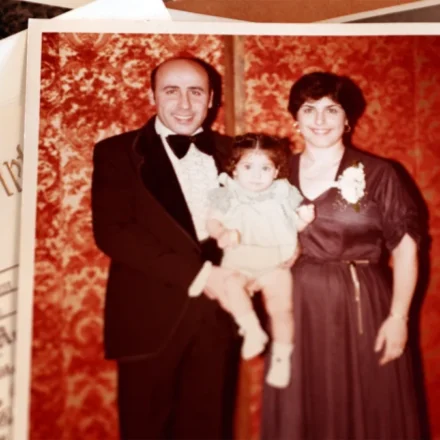
To understand the tragedy of Alex Odeh, one must understand the man. Born in Palestine and displaced to Egypt following the 1967 Arab-Israeli War, Odeh eventually made his way to the United States. He was not a firebrand or a militant; he was a soft-spoken, intellectual community organizer who sought to bridge divides. As a leader of the ADC, his work was dedicated to combating discrimination against Arab-Americans and fostering dialogue.
The events of October 1985 did not occur in a vacuum. They were the culmination of rising tensions within the Jewish Defense League (JDL), a militant ultra-nationalist group founded by Meir Kahane. On October 11, 1985, the bomb that killed Odeh was placed specifically to target him. While the FBI identified three primary suspects—all associated with the JDL—the investigation stalled in a manner that remains chillingly suspicious. All three suspects were permitted to flee to Israel, where they found sanctuary. Despite clear evidence and international extradition protocols, the United States government made no substantive efforts to bring them to justice. One of the suspects has since returned to the United States, living freely, unbothered by the specter of his alleged crime.
The Documentary as an Act of Defiance
Osder and Youmans’ Who Killed Alex Odeh? subverts the traditional true-crime genre. While the film utilizes the aesthetic of a procedural thriller, it abandons the search for "whodunit" in favor of an investigation into why the truth was suppressed. The film is a study in systemic obstruction.

Through investigative journalism—most notably a sequence where reporter David Sheen infiltrates the inner circle of a suspect while wearing a hidden camera—the film exposes the arrogance of the perpetrators. When confronted, the suspects demonstrate the dismissiveness of men who know they are untouchable. The documentary highlights that the failure to prosecute was not a result of a lack of evidence, but a lack of political will. It suggests a tacit, perhaps even explicit, collaboration between domestic security apparatuses and international actors to ensure that justice for an Arab-American victim remained a low priority.
A Legacy of Institutional Apathy
The official response to the murder of Alex Odeh is a testament to the hierarchy of human worth in the eyes of the American political establishment during the 1980s. President Ronald Reagan, who was swift to condemn other acts of terrorism, famously failed to send a letter of condolence to Odeh’s widow. This silence was not an oversight; it was a policy.
The documentary posits that the state’s failure to address the murder of a citizen on American soil served as a green light for future discrimination. If the murder of a high-profile activist could be ignored, then the systemic dehumanization of Arabs and Muslims in American media, politics, and law enforcement could proceed without consequence. This culture of permission has metastasized. From the bigotry faced by local politicians like Zohran Mamdani in New York to the rhetoric currently being leveled against Senate candidate Abdul El-Sayed, the "quiet part" is being said out loud with increasing frequency. The same ideological currents that rendered Odeh’s murder a footnote in American history continue to frame the struggle for Palestinian human rights as inherently suspect or "un-American."
Implications: The Moral Cost of Silence
The implications of the Odeh case extend far beyond the borders of California or the decade of the 1980s. By failing to hold the perpetrators accountable, the United States signaled that the "War on Terror"—a framework that would later define American foreign policy—was never a neutral effort. Instead, it was constructed on a foundation that explicitly excluded Arab and Muslim victims from the protections of the state.
The film makes a sobering point: the lack of political will to address the slaughter of one Palestinian activist is, in essence, the same lack of will that characterizes the contemporary American stance toward the wider conflict in Palestine. If a nation cannot admit to the injustice within its own borders, it is structurally incapable of recognizing the injustice it enables abroad.

Conclusion: The Persistence of Memory
Who Killed Alex Odeh? is more than a historical document; it is a demand for accountability in a system designed to forget. It challenges viewers to confront the reality that "justice" in America has often been a selective commodity, provided to some and denied to others based on their ethnicity and their political affiliations.
As the documentary draws to a close, it leaves the audience with a haunting realization. The suspects in the murder of Alex Odeh are not ghosts; they are real men who have lived long, full lives while the life of the man they killed was cut short in the prime of his advocacy. The film does not offer the catharsis of a courtroom verdict. Instead, it offers the uncomfortable, necessary truth: the case is only "unsolved" because we, as a society, have collectively decided that it is not worth solving.
By centering the life of a man who worked for peace and highlighting the violent, state-tolerated forces that silenced him, the film forces a reckoning with our national conscience. It reminds us that until the systemic biases that allowed Alex Odeh’s murder to go unpunished are dismantled, the arc of the moral universe will remain fixed, unable to bend toward a justice that remains forever out of reach for the marginalized.
Film Details:
- Directors: Jason Osder, William Youmans
- Genre: Documentary/Political Thriller
- Grade: B
- Availability: Now playing in select theaters.