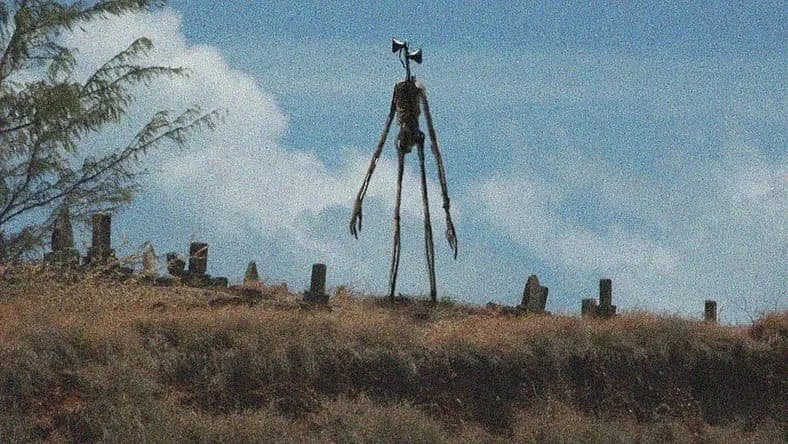
From Viral Cryptid to Cinematic Nightmare: Zach Cregger and Brian Duffield Tackle ‘Siren Head’

In the modern digital era, the landscape of horror has shifted from the silver screen to the glowing pixels of social media. No creature better exemplifies this transition than Siren Head, the towering, audio-mimicking anomaly that has haunted the collective consciousness of the internet since 2018. Now, the entity is set to make the leap from YouTube mythos to a major motion picture, as powerhouse filmmakers Zach Cregger and Brian Duffield have secured the rights to bring the creature to life for Warner Bros.
The project, which emerged from a heated five-studio bidding war, promises to be more than just a superficial adaptation of a viral phenomenon. By bridging the gap between digital folklore and traditional narrative filmmaking, Cregger and Duffield are aiming to cement Siren Head as a permanent fixture in the horror pantheon.
The Genesis of a Modern Monster
To understand the gravity of this upcoming production, one must look at the origin of the creature itself. Siren Head was birthed in the creative mind of Canadian artist Trevor Henderson in 2018. Henderson, a master of “liminal space” horror, designed the creature as a 40-foot-tall, mummified, skeletal humanoid with two rusted, antique sirens functioning as a head.
Unlike traditional slashers or ghosts, Siren Head possesses a unique predatory methodology: it emits broadcast sounds—sirens, white noise, radio snippets, and even human voices—to lure its victims into the wilderness before striking. Henderson’s original image, posted to social media, quickly transcended its static form. It became the subject of countless short films, independent video games, and expansive fan-generated lore. By 2020, the creature had achieved global ubiquity, becoming a staple of the "analog horror" genre, where the aesthetic of low-fidelity, nostalgic media amplifies the sense of dread.
The Creative Powerhouse: Cregger and Duffield
The film’s development is being spearheaded by two of the most exciting voices in contemporary horror. Zach Cregger, whose directorial debut Barbarian (2022) redefined the structural possibilities of the genre, brings a penchant for subverting audience expectations. His follow-up projects, including the highly anticipated Weapons and his involvement in the Resident Evil franchise, have established him as a master of atmospheric tension and thematic depth.
Brian Duffield, serving as director for the Siren Head project, brings an equally impressive pedigree. With his breakout hit No One Will Save You (2023), Duffield proved that horror could be effectively told with minimal dialogue, relying instead on visual storytelling and pure, visceral dread. His work on Whalefall further underscores his ability to handle large-scale, high-stakes environments.
Together, the duo is co-writing the screenplay, a collaboration that suggests a rigorous focus on narrative mechanics rather than relying solely on the creature’s pre-existing visual recognition.
A Strategic Move for Warner Bros.
The decision by Warner Bros. to acquire the rights following a fierce competitive bidding war indicates the studio’s confidence in the project’s box-office viability. In an industry increasingly wary of unproven intellectual property, Siren Head represents a rare commodity: a creature with built-in, multi-generational recognition that does not require an existing cinematic franchise to introduce it to audiences.
The production team is stacked with industry veterans. Roy Lee and Andrew Childs of Vertigo Entertainment—names synonymous with successful horror adaptations—are producing alongside Scott Glassgold of 12:01 Films and Duffield’s own banner, Jurassic Party Productions. Crucially, creator Trevor Henderson is attached as an executive producer, ensuring that the film maintains the DNA of his original vision while expanding into a feature-length narrative.
Official Responses: Beyond the Meme
In a recent interview with Deadline, Zach Cregger addressed the skepticism that often accompanies the adaptation of internet-born IP. Critics often argue that digital monsters lack the depth required for a 90-to-120-minute feature. Cregger, however, remains undeterred, emphasizing that the story is the primary driver of the project.

“Look, Siren Head, I think that the story that we have is super cool, and so whether it was an internet meme or not, I would be interested in telling this story,” Cregger stated. “And I think that’s the lesson. It should stand on its own.”
This philosophy is pivotal. By distancing the film from the "viral meme" label, Cregger is signaling that the production will not rely on jump-scares or internet nostalgia. Instead, the focus appears to be on the existential dread of the unknown—a hallmark of Henderson’s original artwork. The implication is clear: the team intends to treat Siren Head not as a YouTube curiosity, but as a legitimate cinematic threat, much like how John Carpenter’s The Thing or Ridley Scott’s Alien utilized singular, terrifying designs to anchor a deeper, more unsettling human drama.
Implications for the Future of Horror
The Siren Head project represents a significant shift in how Hollywood interacts with digital content creators. For years, the film industry treated internet culture as a "wild west" of untapped ideas, often stripping them of their nuance in favor of quick, low-budget cash grabs. The collaboration between Cregger, Duffield, and Henderson suggests a new model of partnership.
1. Legitimacy for Digital Creators
By bringing an artist like Trevor Henderson into the fold as an executive producer, the studio is acknowledging that the original architect of the horror possesses a creative authority that cannot be easily replicated by screenwriters who are outsiders to the community. This sets a precedent for how future "creepy-pasta" or internet-horror properties should be developed.
2. The Rise of "Analog Horror" on the Big Screen
If the Siren Head film proves successful, it could open the floodgates for other sub-genres of internet horror to transition into mainstream cinema. Themes involving distorted media, corrupted signals, and the uncanny valley—all central to the Siren Head mythos—have proven incredibly effective in low-budget indie projects. A high-budget exploration of these themes could usher in a new era of "Digital Weird" cinema.
3. Narrative-First Filmmaking
Cregger’s insistence that the story must "stand on its own" is perhaps the most important implication. In an era of cinematic universes and bloated franchises, a self-contained horror film that prioritizes internal logic and character development over brand recognition is a welcome prospect. It signals a shift back to the "event horror" films of the 70s and 80s, where the primary goal was to create a singular, terrifying experience that lingers in the audience’s mind long after the credits roll.
Conclusion: The Horizon of Dread
While specific plot details remain locked behind a veil of mystery, the involvement of Cregger and Duffield provides a clear indication of the film’s potential quality. They are not merely tasked with putting a monster on screen; they are tasked with grounding a digital phenomenon in the visceral reality of human fear.
As production continues to ramp up, the horror community waits with bated breath. Will Siren Head be the film that finally breaks the "internet adaptation curse"? If the track records of those involved are any indication, we are likely to see a film that honors the chilling, static-filled legacy of the creature while evolving it into something entirely new.
For now, the sirens are quiet, but the anticipation is deafening. The transformation of Siren Head from a sketch on a screen to a towering nightmare on the silver screen is not just a commercial endeavor; it is an evolution of horror itself, proving that in the right hands, the monsters of the internet are just as capable of terror as the monsters of our oldest folklore.