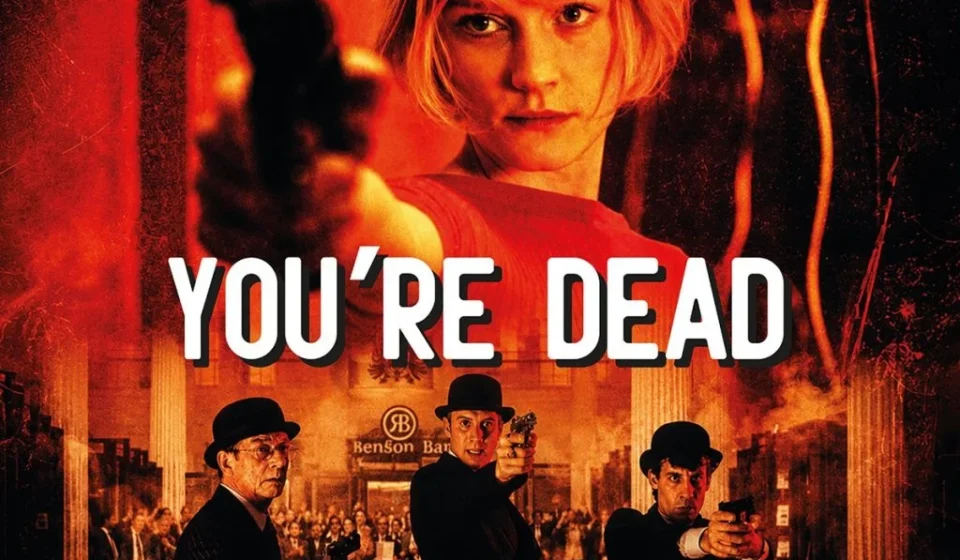
A Sonic Resurrection: Quartet Records Unearths Robert Folk’s Score for the Cult Classic ‘You’re Dead’

September 1, 2026 – By Film Music Reporter
For fans of late-90s British cinema and the idiosyncratic stylings of composer Robert Folk, the long-awaited arrival of a new soundtrack release feels like a cinematic archeological discovery. Quartet Records, the boutique label renowned for its meticulous curation of rare and archival film music, has officially announced the world premiere release of the original motion picture soundtrack for the 1999 crime comedy You’re Dead.
Directed by Andy Hurst, the film—a dark, kinetic caper featuring a stellar ensemble cast including the late, great John Hurt, Rhys Ifans, Claire Skinner, and David Schneider—has long been a footnote in the careers of its participants. Now, nearly three decades after its initial theatrical run, the film’s score is finally receiving the prestige treatment it has long deserved, preserved in a limited-edition CD format that highlights the rhythmic complexity and melodic wit of one of Hollywood’s most versatile composers.
The Core Facts: A Long-Overdue Release
The announcement from Quartet Records confirms that the soundtrack will be available immediately through the label’s official digital storefront. This release marks the first time Robert Folk’s original music for the film has been made available to the public in an official capacity.
Robert Folk, a name synonymous with the sonic identity of high-concept comedies and thrillers alike, brings his signature flair to You’re Dead. His career, which spans iconic franchises such as Police Academy, the Ace Ventura series, and The NeverEnding Story II, is characterized by a mastery of genre-blending. With You’re Dead, Folk was tasked with underscoring a film that occupies a volatile space between slapstick comedy and gritty heist-thriller, a tonal tightrope that he navigated with characteristic precision.
For collectors, this release is not merely a digital transfer but a comprehensive archival presentation. The CD features nineteen tracks, including a rare, six-minute demo version of the title theme, providing listeners with an intimate look at the creative process behind the film’s distinctive soundscape.
A Chronology of a Cult Classic
To understand the significance of this release, one must contextualize the landscape of British cinema at the turn of the millennium. The late 1990s were a golden era for the "British Crime Comedy," a genre popularized by the frantic editing and dark humor of directors like Guy Ritchie. Andy Hurst’s You’re Dead entered this crowded marketplace in 1999 with a premise that was as chaotic as it was compelling.
The film follows a series of unfortunate events triggered by a botched robbery, leading to a frantic narrative of mistaken identities and escalating stakes. Despite a cast that boasted the gravitas of John Hurt and the rising comedic energy of Rhys Ifans, the film struggled to find a foothold in the global box office at the time of its release.
For years, the film remained relegated to the bargain bins of VHS and DVD retailers. However, in the world of film music composition, the quality of a score is rarely tied to the commercial success of the source material. Robert Folk’s music for You’re Dead became a "lost treasure" among enthusiasts of the composer, often cited in online forums as one of the most requested, yet unavailable, scores of the 90s. The journey to this release began years ago, as Quartet Records began the painstaking process of sourcing, mastering, and licensing the original tapes—a testament to the label’s commitment to preserving the heritage of film music.
Supporting Data: Dissecting the Folk Sound
The tracklist for the You’re Dead soundtrack serves as a roadmap to the film’s narrative tension and release. From the "Main Title" (3:03) to the high-stakes "The Chase / Maitland and Manager / Jo Saves Maitland" (5:52), the progression of the music reflects the film’s shift from a contained character piece into an expansive, frantic pursuit.
A Breakdown of the Score’s Anatomy:
- The Comedy-Crime Synthesis: Folk utilizes rapid-fire percussion and brass stabs to punctuate the physical comedy sequences, such as "Rob the Bank, Sahb" (2:01). This mirrors the "heist gone wrong" energy that defines the middle act of the movie.
- The Emotional Undercurrent: Tracks like "Jo Confesses to Maitland / George Murdered" (2:43) demonstrate Folk’s ability to pivot from absurdity to genuine dramatic weight. It is here that the presence of John Hurt’s performance—often subtle and weary—is mirrored in the orchestration.
- The Bonus Material: The inclusion of the "You’re Dead Demo" (6:04) is a significant boon for musicologists. It reveals the foundational motifs that Folk developed before the final studio recording, showcasing the melodic skeletons that eventually morphed into the film’s final sonic identity.
The Composer’s Legacy and Official Responses
Robert Folk has long been regarded as a craftsman of the highest order. His work on There Be Dragons showcased his ability to handle sweeping, epic narratives, while Toy Soldiers highlighted his aptitude for military-inflected, tense action scoring.
In discussions regarding the release of You’re Dead, industry observers have noted that Folk’s work represents a bridge between the classic orchestral Hollywood style of the 80s and the more experimental, rhythmic-heavy scores of the 2000s. Quartet Records, in their promotional materials, emphasized that the audio quality has been meticulously restored from the original scoring session elements.
While official statements from the composer himself have been sparse regarding this specific retrospective, the release serves as a silent validation of his contribution to the film. In the ecosystem of soundtrack releases, the "first time on CD" label acts as a badge of honor, ensuring that the composer’s work is immortalized beyond the lifespan of the film’s distribution cycle.
Implications for the Film Music Industry
The release of You’re Dead is emblematic of a larger trend in the digital age: the "Long-Tail Archival" movement. Boutique labels like Quartet Records, Intrada, and La-La Land Records have effectively turned the film music industry into a curator of cultural history.
By prioritizing scores from films that were not necessarily "hits," these labels are changing the way we view cinematic history. The implication is that every film, regardless of its theatrical reception, possesses a sonic identity worth preserving. For a generation of listeners who grew up watching these films on home video, these soundtrack releases serve as a powerful mnemonic device, capable of unlocking the nostalgia of 1999 while allowing the listener to appreciate the technical sophistication of the composition as a standalone work of art.
Furthermore, this release puts a spotlight back on the work of Andy Hurst. While Hurst’s career followed a different path after 1999, the renewed interest in the film’s assets—both visual and auditory—often leads to a "critical re-evaluation." It is not uncommon for films that were dismissed upon release to find a second life through the lens of modern retrospective critique, and the presence of a high-quality score is often the catalyst for this reassessment.
Conclusion: A Worthy Addition to the Library
For those who have followed the career of Robert Folk, or for the casual collector of 90s cinema ephemera, this release is an essential acquisition. It stands as a reminder of a time when film scores were defined by distinct, recognizable themes and orchestral precision.
The You’re Dead soundtrack is currently available for order, and with its status as a limited edition, it is likely to become a collector’s item in the near future. As we move further into an era dominated by streaming and ephemeral content, the physical release of such a score acts as a grounding force—a tangible piece of the magic that made 1999 cinema so vibrant, chaotic, and unforgettable.
Whether you are a completist seeking to round out your Robert Folk collection or a fan of the dark, quirky British humor of the late 90s, this world premiere release offers a compelling reason to revisit the world of You’re Dead. It is a sonic resurrection that proves, in the world of film music, nothing is ever truly dead as long as the music remains.