The Logic of the Abyss: Kiyoshi Kurosawa’s "The Samurai and the Prisoner" Examined

Editor’s Note: This review was originally published during the 2026 Cannes Film Festival. Janus Films releases "The Samurai and the Prisoner" in theaters on Friday, July 31.
In the landscape of modern cinema, few filmmakers have managed to translate the abstract anxieties of the human condition into celluloid quite like Kiyoshi Kurosawa. From the creeping dread of Cure to the psychological disintegration in Creepy, Kurosawa has consistently explored a specific brand of accelerationism—the terrifying tendency of individuals and societies to rush headlong toward catastrophe rather than pausing to interrogate the source of their unrest.
His latest feature, The Samurai and the Prisoner, represents a radical departure in setting, yet it remains tethered to the director’s lifelong obsession with the "backward logic" of survival. Set against the claustrophobic backdrop of a 16th-century Japanese castle during the siege of Nobunaga Oda, the film poses a deceptively simple question: In the face of inevitable destruction, is it better to advance into the fire or to find a way to retreat into a different kind of hell?
A Genre Collision: The Jidaigeki Detective
The film, an adaptation of Honobu Yonezawa’s acclaimed 2021 novel, serves as a bridge between the traditional jidaigeki (period drama) and the procedural murder mystery. It is a dense, often plodding, but intellectually rich exercise that finds Kurosawa trading his modern-day urban malaise for the mud-caked, shadow-drenched reality of the Sengoku era.
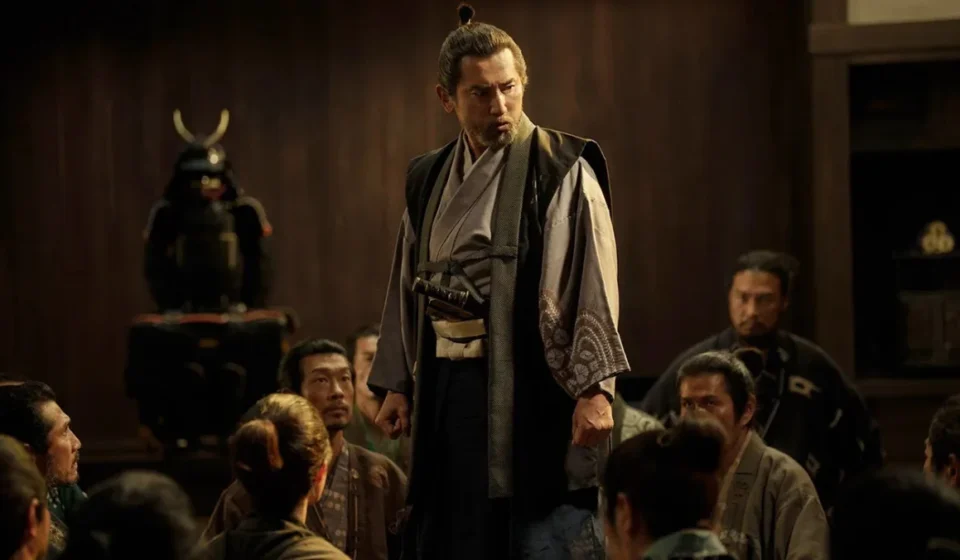
The story centers on Araki Murashige (Masahiro Motoki), a historical figure infamous for his quixotic and ultimately disastrous rebellion against the juggernaut of Oda’s army in 1578. As the winter of that year sets in, Murashige and his inner circle, including his wife Chiyoho (Yuriko Yoshitaka), find themselves trapped behind the walls of Arioka Castle.
However, the siege takes an unexpected turn with the arrival of Kuroda Kanbei (Masaki Suda), a master strategist for the opposition. Rather than executing his high-value prisoner—as custom and military necessity would dictate—the weary, introspective Murashige chooses a path of radical non-violence, locking Kanbei in the dungeon. When a series of mysterious murders begins to plague the castle from within, the feudal lord is forced into an uneasy, cerebral partnership with the man he has shackled in the basement.

Chronology of a Siege: Four Acts of Investigation
The 147-minute runtime is structured around four distinct "whodunnit" episodes. These mini-mysteries provide the film’s narrative engine, yet they are also the source of its most significant pacing struggles. Each case mirrors the mounting dread of the encroaching army, with each revelation shedding light on the rotting core of the castle’s defenses.
- The Winter Siege: The initial discovery of a murdered child within the castle walls shatters the fragile peace, forcing the first dialogue between captor and prisoner.
- The Inventory of Greed: As spring approaches, a second death forces Murashige to re-evaluate the material wealth he has stockpiled, raising questions about what truly holds value when life is on the line.
- The Silent Violence: The third act moves into summer, where the peripheral violence of the outside world begins to bleed into the internal politics of the castle, testing the patience and loyalty of the remaining clans.
- The Divine Intervention: In the final act, the film pivots toward the metaphysical. As autumn leaves fall, the investigation concludes not with a simple arrest, but with a philosophical confrontation regarding divine will and the futility of resistance.
The Director as Strategist: A Technical Critique
Kurosawa’s direction is undeniably professional, yet there is a sense of constraint throughout the film. One cannot help but view the director’s role as analogous to that of his protagonist, Kanbei. Just as the strategist is a genius trapped in a dungeon, Kurosawa appears to be a filmmaker of immense vision working within the rigid, "stodgy" confines of a source material that demands an unwavering commitment to period accuracy.
The visual palette—dominated by thick, muddy browns and deep, oppressive shadows—is thematically consistent with the misery of the characters, but it lacks the vibrant, hallucinatory flair found in Kurosawa’s best works. While the film embraces the creakiness of classic jidaigeki with a sense of nostalgia, it sometimes feels like a museum piece rather than a living, breathing drama. The decision to forgo black and white in favor of a muted color scheme arguably leaves the film feeling "entombed" in its own history, struggling to breathe beneath the weight of its own period-accurate trappings.
Supporting Performances and Narrative Friction
Masaki Suda’s performance as Kanbei provides the film with its much-needed contemporary edge. His portrayal is sharp, clinical, and increasingly desperate, providing a perfect foil to Motoki’s more stoic, melancholy Murashige. The chemistry between the two—a "thawing codependency" that evolves as the seasons change—is the film’s strongest asset.
When the two characters interact, the film’s schematic plot falls away, revealing a deeper meditation on loyalty. They are two men on opposite sides of a war, yet they are united by their realization that the world they serve is governed by a destructive, unthinking momentum. They begin to ask if the "paradise" promised by their superiors is actually a trap, and if true strength lies in the act of opting out of the machine entirely.
Implications: The Modernity of the Past
The ultimate power of The Samurai and the Prisoner lies in its conclusion. Kurosawa has long been a critic of the modern world’s impulse to accelerate—to move faster, conquer more, and ignore the consequences until the crash. By setting this story in the 16th century, he effectively strips away the technological noise of his previous films, exposing the raw, human impulse to "advance to paradise" while actually retreating into hell.

Murashige’s realization that loyalty can be forged through surrender is a profound, if quiet, subversion of the jidaigeki genre. In a genre traditionally defined by the glory of combat and the nobility of the sacrifice, Kurosawa offers a hero who finds courage in the refusal to participate in the carnage.
Conclusion: A Master’s Exercise in Restraint
While The Samurai and the Prisoner may be tedious in its middle chapters and predictable in its mystery reveals, it remains a vital entry in Kiyoshi Kurosawa’s filmography. It is a film that chafes against its own constraints, and in that chafing, it finds a unique, haunting beauty.
For the viewer, the film serves as a reminder that history is not merely a sequence of dates and battles, but a recurring cycle of choices. As the film suggests, society may continue to advance for another 500 years without ever reaching a heavenly destination. In the end, perhaps the only way to change the future is to have the courage to stop, to look at the dungeon walls, and to recognize the devil for who he really is.
Grade: C+
"The Samurai and the Prisoner" premiered at the 2026 Cannes Film Festival. Janus Films releases it in theaters on Friday, July 31.
Want to stay up to date on IndieWire’s film reviews and critical thoughts? Subscribe here to our newsletter In Review by David Ehrlich, in which our Chief Film Critic and Head Reviews Editor rounds up the best new reviews and streaming picks along with some exclusive musings—all only available to subscribers.