The Unyielding Vision of James Gray: Why Cinema’s Most Consistent Auteur is Just Getting Started

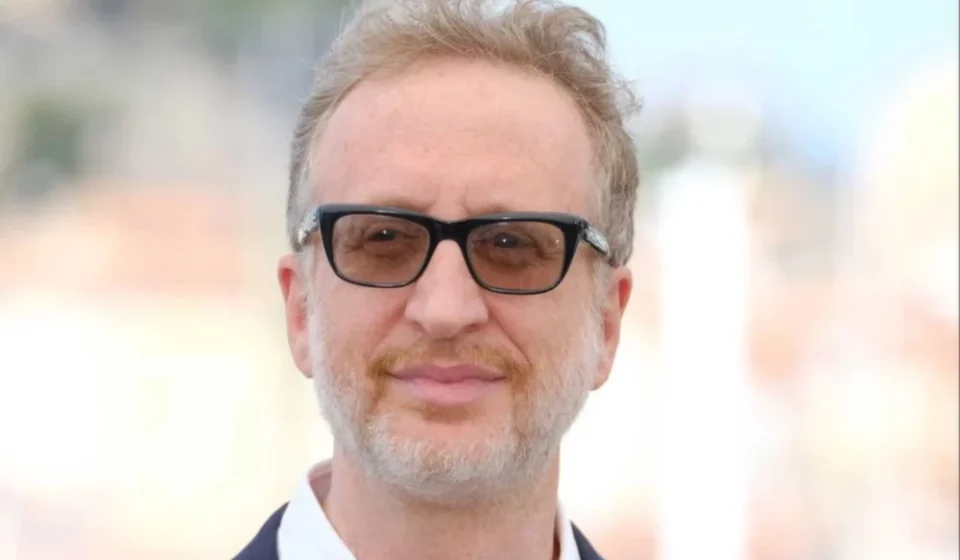
Over three decades into a career defined by moral complexity, visual elegance, and an unwavering commitment to the human condition, James Gray stands as an anomaly in modern Hollywood. While the industry oscillates between the hyper-commercialized, franchise-driven blockbuster and the insular, often obtuse, world of festival arthouse, Gray has carved out a unique, albeit often difficult, middle ground. As he prepares to receive the prestigious Pardo alla Carriera lifetime achievement award at the Locarno Film Festival, Gray is not looking back with nostalgia, but forward with a renewed sense of purpose.
The Myth of “Newness” and the Trap of Capitalism
In an era obsessed with disruption and the constant pursuit of the “fresh,” Gray offers a contrarian perspective. For the director of Little Odessa, Two Lovers, and Ad Astra, the obsession with being new is a hollow pursuit.
“This idea that we’re supposed to always try to be ‘new’… that doesn’t really mean anything,” Gray tells Variety. “Many people say: ‘Oh, it’s important for a work to be fresh.’ The older I get, the more I realize that pursuit is a folly. I like to say that what’s fresh in your refrigerator today is spoiled tomorrow.”
Gray argues that the industry’s fetishization of the new is less an artistic imperative and more a byproduct of corporate structure. “If you look at Picasso, he stole from African art that’s a thousand years old. Stanley Kubrick stole liberally from silent films, using The Phantom Carriage for The Shining and Our Heavenly Bodies for 2001. This idea that we have to create something ‘new’ is actually very much a business concept. It’s rooted in the idea of copyrights and capitalism, rather than reminding people of what is true: emotion, beauty, and transcendence.”
For Gray, his own artistic DNA is firmly rooted in the cinema of the late 1970s and the masters who preceded that era. Rather than viewing this as a limitation, he sees it as an essential, honest extension of his identity. “It’s not a conscious effort to make a statement,” he notes. “It’s just an extension of who I am. I think it’s important that we embrace who we are, especially as we get older.”
A Career Defined by Idiosyncrasy
James Gray’s filmography is a testament to the power of the auteur. Since his striking 1994 feature debut, Little Odessa, he has systematically built a body of work that prioritizes character-driven narratives over spectacle—even when that spectacle is a literal voyage to the stars.
A Chronology of Artistic Persistence:
- 1994: Little Odessa introduces audiences to Gray’s penchant for intimate, crime-infused family dynamics.
- 2007: We Own the Night cements his ability to blend genre tropes with deep, Shakespearean moral conflict.
- 2008: Two Lovers showcases his profound sensitivity toward the internal lives of his protagonists.
- 2016: The Lost City of Z proves his capacity for large-scale, epic storytelling without losing the microscopic focus on human obsession.
- 2019: Ad Astra takes his philosophical inquiries to the vacuum of space, using a massive budget to explore the quiet loneliness of a father-son relationship.
- Recent: Paper Tiger marks his continued evolution, drawing critical acclaim for its exploration of familial betrayal and complex moral dilemmas.
Gray acknowledges that his position in the “middle” of the industry—too commercial for the purists, too nuanced for the multiplexes—has not been without its professional struggles. “It has caused me some agitation, but at the same time, it has been a superpower,” he admits. “If your only yardstick is making tons of money, then you want to eliminate risk—and risk is idiosyncrasy and subversion, and all the things that we treasure in movies.”
The Art of Directing: Giving Actors Space to Breathe
Gray’s reputation for extracting career-best performances from Hollywood’s elite—including frequent collaborator Joaquin Phoenix, Brad Pitt, and most recently, Scarlett Johansson—is built on a foundation of trust and restraint.
“Directing actors is not about telling them how to say a line,” Gray explains. “It’s about giving them the space to be themselves, to be artists, to feel free in the moment, to listen, react, and be in the scene.”
This philosophy has fostered a “word-of-mouth” reputation among A-list talent. When discussing working with Scarlett Johansson on Paper Tiger, Gray laughs, noting that while he was unaware she was a “rabid fan” of his work, he knew she had done her due diligence. “I guess the word is out that I leave them alone,” he says.
The Auteur’s Hand and the Threat of AI
In an increasingly digitized production environment, Gray remains a staunch defender of the “auteur theory”—the idea that a film should bear the unmistakable mark of its director, much like a musical performance bears the mark of its conductor. He draws a direct comparison to the legendary conductor Carlos Kleiber. “Even with different orchestras, you can still tell it’s Kleiber. It has to do with the mood of the piece and the ability to express emotion in a certain register.”
This visual and tonal consistency is what Gray believes separates true cinema from the rising threat of artificial intelligence. “There are a lot of problems with auteur theory, but it’s great that you can identify a John Ford or Alfred Hitchcock movie simply from the placement of the camera and the pacing of the scene,” he says. “That’s why AI is so worthless. It will never be able to do that.”
Implications: The Reckoning and the Rise of Cinephilia
Perhaps the most surprising facet of Gray’s outlook is his burgeoning optimism. Despite the challenges he has faced in getting mid-budget, intelligent dramas greenlit, he senses a shift in the cultural tide.
“I may say something that will shock you. I have quite a bit of optimism, which I didn’t have even five years ago,” he reveals. “This nightmarish side of AI has sharpened people’s idea of what it means to be authentic. Young people today have a real hunger for interesting, honest stuff that doesn’t feel jury-rigged to make a ton of money. I think that the reckoning is here.”
He points to the current health of independent cinema and the surprising resurgence of revival houses as evidence. “I see my son going to revival houses to see Il Sorpasso and it’s sold-out. That’s new. When I was a kid, revival houses were empty. There’s a cinephile culture that’s really exploding right now.”
Looking Ahead: The Prime is Now
As he prepares to accept his lifetime achievement award in Locarno, Gray is quick to deflect the “old man” connotations of such an honor. He views his career not as a finished tapestry, but as a project still in its most vital stage.
“I’m not old,” he asserts. “And I’m very gratified, but I feel like my best work is ahead of me. When he was my age, Hitchcock hadn’t yet made Vertigo, Psycho or The Birds. My prime is right now.”
Gray reflects on the benefit of having avoided the “trap” of immediate, massive success early in his career, which he believes might have forced him into a stylistic rut. Instead, he has enjoyed a career that has “steadily built in value.” He is particularly proud of his latest work, Paper Tiger, a project he feels uniquely close to.
Ultimately, Gray’s drive remains undiminished by the awards or the decades of labor. “I do have many flaws, obviously. But not wanting to keep going is not one of them,” he says. “I’m not done yet. Honestly, I feel like I owe the world one or two truly great movies. I don’t think I’ve gotten there yet.”
In a world of ephemeral trends and disposable content, James Gray remains a beacon of continuity—a filmmaker who understands that the only way to make something that truly lasts is to stop trying to be new, and start trying to be honest.