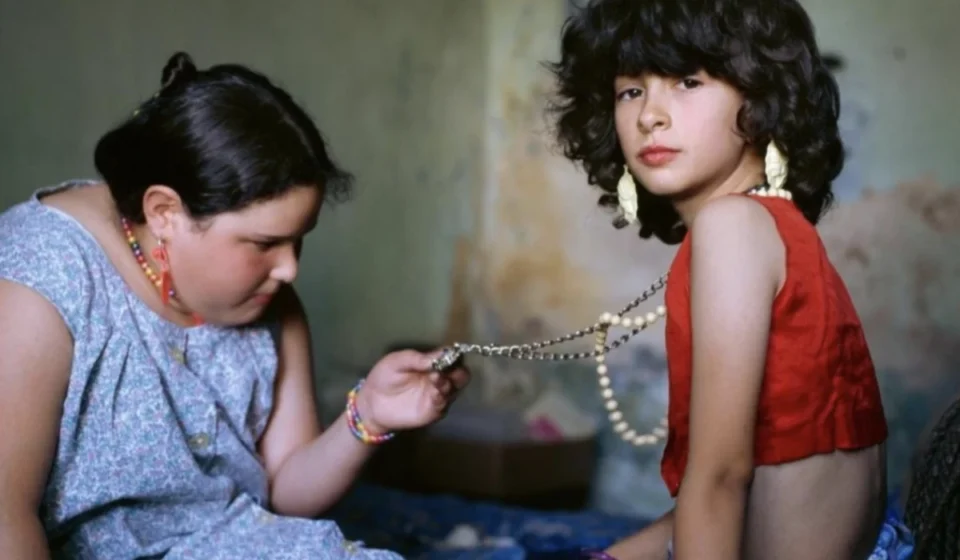
The Unrelenting Horizon: Alessandra Sanguinetti’s 25-Year Portrait of Childhood and Change

In the vast, windswept landscape of the Argentine Pampas, photographer Alessandra Sanguinetti found more than just a subject; she found a mirror for the passage of time. Her debut documentary, The Illusion of an Everlasting Summer, is a monumental achievement in observational filmmaking. Spanning a quarter-century, the film follows two cousins, Guillermina and Belinda, as they evolve from preadolescent girls into women in their mid-30s. By weaving together decades of footage, Sanguinetti has crafted an intimate, often melancholic, and deeply profound meditation on the trilateral relationship between the observer, the observed, and the relentless, rhythmic ticking of the clock.
The Genesis of a Lifelong Project
The project began in the late 1990s, when Sanguinetti first encountered the cousins in their rural home. What started as a photographic exploration—later resulting in two acclaimed books documenting their transition from childhood through their mid-twenties—eventually demanded a cinematic form. The Illusion of an Everlasting Summer incorporates the visual archives of these earlier works while stretching far beyond them, tracking the women into their adult lives.
At the heart of the film is the dynamic between the cousins and "Ale," as they affectionately call Sanguinetti. This is not a traditional documentary that seeks to uncover hidden secrets or spark dramatic revelations. Instead, it is a slow-burn study of the "ebbs and flows" of human connection. The film captures the girls as they navigate the transition from a world of make-believe to the structural realities of rural Argentine adulthood.
Chronology: From Playgrounds to the Plains
The film is structured, perhaps intentionally, to mirror the subjective experience of aging. The first half is a languid, sun-drenched immersion into the world of Guillermina and Belinda as children. During this period, roughly ages nine to thirteen, the cousins are at their most uninhibited. They are seen dancing, playing dress-up, and staging elaborate, improvised skits. In one particularly poignant scene, they role-play a funeral, with one cousin acting as a grieving widow and the other as a priest. Their inability to maintain a straight face underscores the innocence of their youth—a time when even the concept of death is merely a backdrop for performance.
Sanguinetti’s role here is not that of a passive observer. She is an active participant who encourages their imagination, lending a theatrical, mythic quality to their everyday interactions. However, this childhood idyll exists within a rigid, rural environment. The Pampas are defined by a community of taciturn male farmers, where traditional gender roles are deeply entrenched. As the girls grow, these external pressures begin to permeate their private sanctuary.

As the film moves into its second half, the pace shifts dramatically. Editor Andrés Tamborino skillfully avoids the common documentary trap of "signposting"—the reliance on title cards or voice-overs to explain the passage of time. Instead, the audience experiences the acceleration of adulthood through the changing rhythms of the cousins’ lives. A scene of youthful flirting is followed by a scene of pregnancy; a moment of close-knit sisterhood is replaced by the quiet, aching distance that comes with careers, motherhood, and geographical separation. By the film’s conclusion, Guillermina and Belinda are raising children of their own—children who are the same age as the cousins were when Sanguinetti first set up her camera.
Supporting Data and Thematic Nuance
The documentary functions as a sociological study of rural femininity in Argentina. Guillermina and Belinda grapple with the conflicting expectations placed upon them. Guillermina voices a desire for domestic stability, coupled with a deep-seated fear of abandonment. Belinda, meanwhile, harbors dreams of acting and dance, yet feels the gravitational pull of her rural roots. Her family’s ultimatum—that she must either marry a farm boy or secure agricultural work—highlights the limited pathways available to women in such traditional spaces.
Sanguinetti captures these tensions without ever becoming didactic. She avoids the pitfalls of sentimentality, trusting that the audience will recognize the gravity of the shift from the girls’ vibrant, imaginative play to the more somber, quiet reality of their adult routines. The visual transition from the wide, open plains of their youth to the more enclosed, domestic spaces of their adult lives is a subtle but powerful visual metaphor for the narrowing of options that often accompanies the transition into adulthood.
Official Perspectives and Critical Reception
Since its premiere at the 2026 Locarno International Film Festival, The Illusion of an Everlasting Summer has garnered significant critical attention. Following a successful run at the Telluride Film Festival, the film has solidified its status as one of the most important documentaries of the decade. Critics have praised Sanguinetti’s ability to balance her background as a photographer—using striking, composed frames—with a cinéma vérité approach that feels raw and immediate.
"Sanguinetti’s camera acts as an intermediary," noted one industry critic, "recording not just the lives of the subjects, but the way in which the subjects and the filmmaker have been shaped by their two-decade-long dialogue." The film’s ability to turn "not inherently remarkable" individuals into figures of profound cinematic weight is cited as its greatest strength.

While some reviewers have noted that the film’s pacing can occasionally feel repetitive, particularly during long, languid stretches of community gatherings, most agree that this is a deliberate stylistic choice. The first half’s protracted tempo is designed to reflect the perceived infinite duration of childhood, while the frantic, sudden nature of the second half serves as a jarring representation of how quickly time moves once one enters the workforce and parenthood.
Implications: The Ethics of Long-Form Observation
The existence of The Illusion of an Everlasting Summer raises fascinating questions regarding the ethics of long-term longitudinal documentation. The project is an "accidental yet fruitful collaboration." The cousins are not merely subjects; they are co-creators of their own mythos. When they reunite in Paris as adults for a gallery show featuring Sanguinetti’s photographs, or when they pose for a high-fashion spread in Italian Vogue, the film captures the full-circle nature of their growth.
This is a film about the "illusion" of the title—the idea that the summer of youth can be held onto. Through the lens of the camera, the illusion is preserved, even as the reality of the women’s lives moves forward. The film does not argue that they have failed or succeeded in their ambitions; it simply records the quiet, persistent accumulation of days.
The implications for the documentary genre are clear: The Illusion of an Everlasting Summer sets a new bar for how we conceptualize the "biographical documentary." By moving away from the "great man" theory of biography and focusing instead on the quotidian, slow-moving evolution of ordinary people, Sanguinetti has produced a work that is less about what her subjects did, and more about the simple, universal tragedy and beauty of existing over time.
As the film currently seeks U.S. distribution, it stands as a testament to the power of patience. In an era of rapid-fire content and fleeting digital memories, Sanguinetti has provided a rare, sustained look at what it means to grow up, to drift apart, and to find one’s way back to the people who knew you before the world told you who you were supposed to be. It is, at its core, a film about the relentless, beautiful, and sometimes cruel passage of time—a summer that, while never everlasting, remains etched in the light of the camera forever.