Unraveling the Enigma: A Deep Dive into David Robert Mitchell’s The End of Oak Street

In the landscape of contemporary speculative fiction, few films have generated as much discourse as David Robert Mitchell’s latest cinematic odyssey, The End of Oak Street. Starring industry heavyweights Anne Hathaway and Ewan McGregor, the film acts as a profound meditation on domestic stability and the terrifying fluidity of time. As audiences continue to dissect its complex narrative layers, the latest episode of The VFX Show offers an exhaustive technical and thematic autopsy of the production, providing listeners with a front-row seat to the creative friction that defined the film’s development.
The Premise: When Suburbia Collapses
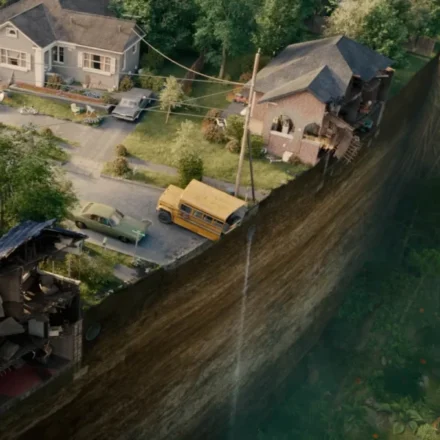
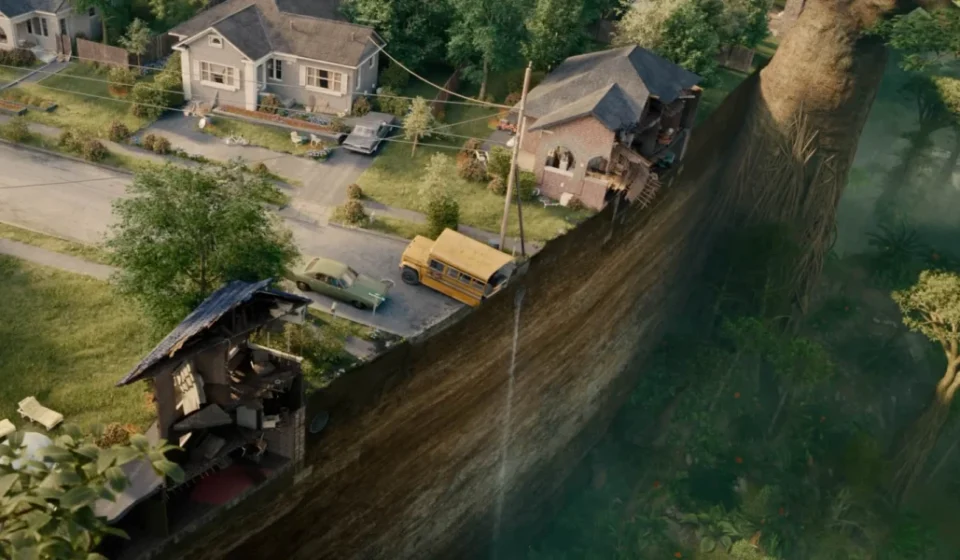
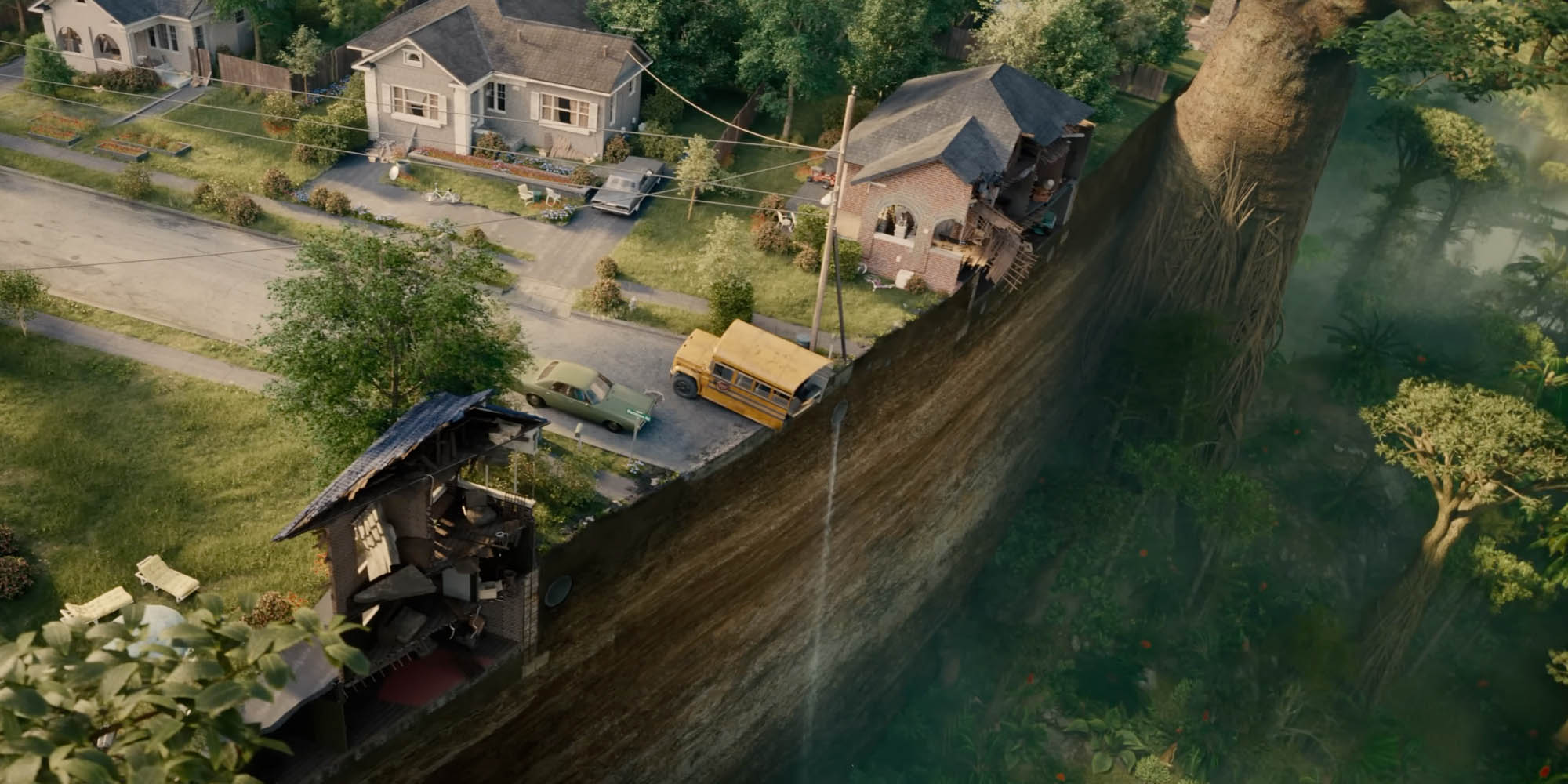
At its core, The End of Oak Street centers on the Platt family, whose idyllic suburban existence is abruptly shattered by a localized, reality-bending anomaly. When a mysterious event transports their entire neighborhood into an uncharted temporal and spatial void, the story shifts from a character study into a visceral survival thriller.
Director David Robert Mitchell, known for his ability to weave dread into the fabric of the mundane, utilizes the setting of "Oak Street" not just as a backdrop, but as a character in its own right. The narrative tension is sustained by the performances of Hathaway and McGregor, who portray parents forced to navigate the collapse of their social and temporal reality. As the lines between the present, the past, and an unknown "elsewhere" blur, the Platt family must reconcile their internal domestic struggles with the external chaos of their new, hostile environment.
Chronology: From Concept to Screen
The production history of The End of Oak Street was marked by an ambitious vision to blend practical, location-based storytelling with groundbreaking visual effects.
- Development Phase: Mitchell spent nearly three years refining the script, focusing heavily on the "physics of the displacement." The goal was to ensure that the transition between the familiar suburban setting and the anomalous void felt organic rather than jarring.
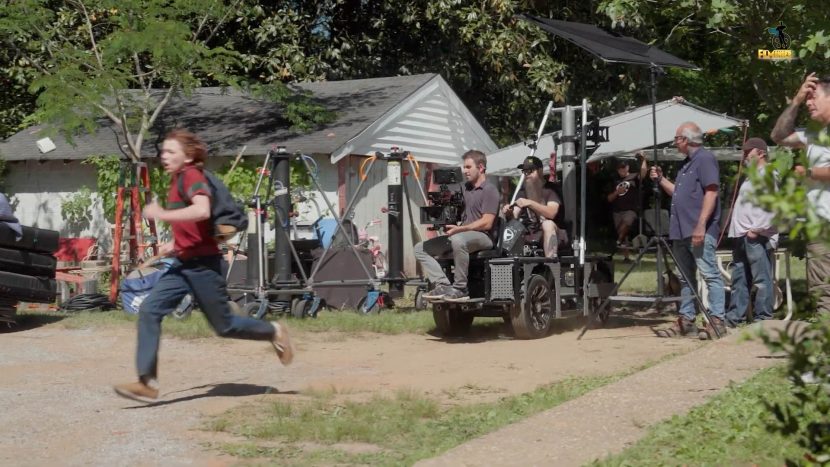
- Principal Photography: Filming took place over a grueling six-month period. Much of the early production focused on building a fully realized, functional neighborhood that could be systematically "deconstructed" through digital post-production.
- The VFX Integration: Following the wrap of principal photography, the visual effects team, led by industry veterans, began the painstaking process of creating the "void." This required a seamless marriage of on-set practical effects and high-fidelity digital environments.
- The Final Cut: The film underwent extensive editorial review, with the production team meticulously balancing the pacing of the emotional beats against the high-octane spectacle of the neighborhood’s temporal shift.
Supporting Data: The Technical Architecture
To understand the scope of The End of Oak Street, one must look at the data driving the film’s production. The VFX pipeline was arguably one of the most complex in recent history. The team utilized advanced lighting simulations to replicate the unique, discordant atmosphere of the "unknown" realm into which the Platt family is thrust.
The production relied on a hybrid approach:
- Digital Twins: Every house on the set was scanned in high resolution, allowing the VFX team to manipulate the architecture in a 3D space. This enabled the film’s signature "time-folding" sequences, where buildings appear to shift through different decades within the span of a single cut.
- Atmospheric Modeling: To distinguish the "Oak Street" world from the anomaly, the color grading and particle effects were calibrated to create a sense of claustrophobia. The data suggests that over 70% of the film’s runtime contains some form of digital augmentation, yet the film maintains a surprisingly grounded, tactile aesthetic.
- Rendering Throughput: The sheer volume of frames required for the film’s climactic sequence necessitated a distributed rendering farm that operated continuously for four months, pushing the boundaries of current GPU-accelerated rendering capabilities.
Official Responses and Creative Critique
The latest installment of The VFX Show—featuring Matt Wallin, Jason Diamond, and Mike Seymour—serves as the definitive forum for analyzing the film’s successes and shortcomings. The panel offers a critical perspective on the filmmaking choices that define the viewing experience.
The Debate on Pacing
One of the central points of contention among the panelists was the film’s deliberate pacing. While some praise the slow-burn approach as essential to grounding the audience in the Platt family’s mounting psychological distress, others argue that the narrative occasionally stumbles in its attempt to balance the metaphysical elements with domestic drama. "There is a fine line between building tension and stalling the momentum," noted Mike Seymour during the broadcast. "Mitchell walks that line with immense confidence, but it’s a demanding experience for the viewer."
Performance vs. Spectacle
The panel also debated the interplay between the human performances and the technical spectacle. With actors of the caliber of Anne Hathaway and Ewan McGregor, the danger is that the VFX might overshadow the performances. However, the consensus among the experts is that the production design actually served to heighten the actors’ work. By creating a physical space that felt genuinely wrong—disoriented by lighting and perspective shifts—the actors were able to react to their environment in a way that felt authentic to the script’s premise.
Implications: The Future of Sci-Fi Realism
The End of Oak Street represents a pivot point for the genre. By utilizing big-budget VFX to tell an intimate, character-driven story rather than a standard blockbuster disaster narrative, Mitchell has set a new benchmark. The implications for future filmmaking are significant:
- The Rise of the "Invisible" VFX: The film demonstrates that audiences are increasingly drawn to visual effects that feel grounded rather than stylized. The goal of future productions will likely move away from "spectacle for the sake of spectacle" and toward "environment as emotional narrative."
- Collaborative Storytelling: The success of the film’s production highlights the necessity of early collaboration between directors and VFX supervisors. By bringing the technical team in during the script-development phase, the production was able to bake the visual language into the story’s DNA, rather than applying it as an afterthought.
- Audience Engagement: The film has successfully ignited a new wave of analytical viewing. As listeners to The VFX Show have noted, the audience is no longer content with simply watching a film; they are eager to "look under the hood." This trend toward media literacy in the digital age suggests that the market for deep-dive, technical criticism is growing rapidly.
Conclusion: A Masterclass in Atmosphere
Ultimately, The End of Oak Street is a film that demands multiple viewings. Whether you are a fan of Anne Hathaway’s nuanced portrayal of a mother protecting her family, or you are interested in the granular details of how digital environments are constructed, there is much to unpack.
As we look toward the future of the medium, the debates fueled by Mitchell’s latest work will continue to influence how filmmakers approach the intersection of the human condition and the impossible. We encourage our readers to subscribe to the podcast, join the conversation on our social channels, and watch the full breakdown on the fxguide YouTube channel.
As the panel suggests: "Where you ‘end up’ in the debate is entirely up to you, but the journey to get there is one of the most compelling cinematic experiences of the year."
For further discussion or to submit your own analysis to the team, please contact us at the email addresses provided in the show notes. We look forward to hearing your thoughts on the temporal mechanics and character arcs that make The End of Oak Street a standout in modern cinema.