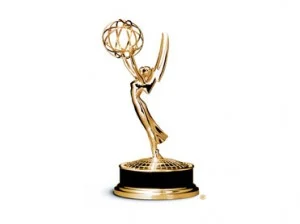
A Night of Musical Excellence: Highlights from the 78th Primetime Creative Arts Emmy Awards

The landscape of television scoring and musical direction reached a pinnacle of recognition this week as the 78th Primetime Creative Arts Emmy Awards commenced. Held amidst the glittering anticipation of the industry’s most prestigious technical and craft-based honors, the first night of the ceremony highlighted the profound impact of sound in storytelling.
Among the standout victors, composer Tyler Strickland secured his inaugural Primetime Emmy Award, while Miguel Gandelman cemented his reputation in the high-stakes arena of live music direction. As the industry celebrates these achievements, the spotlight turns to the collaborative alchemy between visual media and the composers who define the emotional resonance of modern documentary filmmaking and live performance.
Main Facts: A Landmark Night for Sonic Storytelling
The 78th Primetime Creative Arts Emmy Awards delivered a series of career-defining moments, led by the recognition of excellence in music composition and direction.
Tyler Strickland emerged as the victor in the category of Outstanding Music Composition for a Documentary/Nonfiction or Reality Program (Original Dramatic Score). His evocative work for the Colin Hanks-directed Prime Video documentary, John Candy: I Like Me, was lauded by the Television Academy for its ability to balance the inherent nostalgia of the subject’s legacy with the nuanced, modern scoring required for a contemporary biographical film. The score, which was made available to the public via Lakeshore Records last autumn, has been praised by critics for its empathetic approach to the life of the late comedic icon.
Simultaneously, the award for Outstanding Music Direction was presented to Miguel Gandelman. His masterful orchestration of The Apple Music Super Bowl LX Halftime Show Starring Bad Bunny served as a masterclass in scale and precision. By navigating the logistical complexities of a global broadcast while maintaining the artistic vision of a modern pop titan, Gandelman’s win reflects the increasing complexity and cultural weight of the Super Bowl’s musical interludes.
Chronology: The Journey to the Podium
The path to these Emmy wins represents years of dedication to craft, distinct creative visions, and a convergence of high-profile media production.
The Rise of Tyler Strickland
Tyler Strickland’s journey to the Emmy stage is rooted in a career defined by atmospheric storytelling. For John Candy: I Like Me, Strickland was tasked with a unique challenge: honoring a man whose public persona was defined by manic energy and warmth, while uncovering the complexities of his private life. The production of the score involved deep archival research into the late actor’s filmography to find musical motifs that could bridge the gap between his comedic past and the documentary’s reflective tone.
Following the documentary’s release on Prime Video, the score gained traction within the industry for its thematic depth. Lakeshore Records’ decision to release the soundtrack in October served as a catalyst for the Academy’s consideration, ensuring that voters could engage with the score as a standalone work of art—a critical step in the modern Emmy voting process.
The Spectacle of Super Bowl LX
The timeline for Miguel Gandelman’s success was significantly more compressed and high-pressure. Designing the music for a Super Bowl Halftime Show involves months of pre-production, MIDI programming, and rehearsals with thousands of participants. As the musical director for Bad Bunny’s performance, Gandelman was responsible for translating the artist’s reggaeton-heavy studio catalog into a live, televised experience that had to be sonically impeccable for millions of viewers. The victory at the 78th Creative Arts Emmys marks the culmination of this high-intensity project, reinforcing the importance of music direction in the hierarchy of live television production.
Supporting Data: The Craft Behind the Content
The technical demands of both winning projects highlight the evolving standards of television production.
Analyzing the Score: John Candy: I Like Me
- Genre: Documentary/Nonfiction
- Composer: Tyler Strickland
- Label: Lakeshore Records
- Key Elements: Minimalist piano motifs, warm synthesizer pads, and subtle integration of 80s-era stylistic cues.
- Distribution: Prime Video / Digital Streaming (Lakeshore Records)
The documentary score functions as a narrative device. Unlike standard background music, Strickland’s composition acts as the "inner voice" of the subject. Data from the soundtrack’s streaming performance suggests that the audience for documentary scores has grown significantly in the last five years, with listeners often seeking out the music to replicate the emotional catharsis experienced while watching the film.
The Scale of the Super Bowl LX Halftime Show
- Event: Apple Music Super Bowl LX Halftime Show
- Headliner: Bad Bunny
- Role: Music Direction
- Scope: Multi-camera live broadcast with complex audio routing and real-time live mixing.
Gandelman’s win highlights the shift in what the Academy looks for in "Music Direction." It is no longer enough to lead a band; the music director must act as a bridge between the artist, the technical director, and the broadcast engineers. The complexity of Bad Bunny’s set, which featured intricate beat-matching and live-to-track transitions, required a level of technical mastery that set a new benchmark for live event production.
Official Responses: Voices from the Winners and Industry Peers
While the winners were understandably overwhelmed during the ceremony, their brief remarks provided insight into the collaborative nature of their work.
Tyler Strickland, speaking briefly to the press, noted, "To score a film about John Candy is to walk a tightrope of emotions. You want to celebrate the joy he brought the world, but you have to respect the gravity of the story Colin [Hanks] was trying to tell. This award is a testament to the trust a director places in a composer to find the right frequency for a human life."
Miguel Gandelman, acknowledging his team, stated, "The Super Bowl is not a solo endeavor. It is a massive machine. To receive this recognition is to honor the engineers, the musicians, and the producers who worked through the night to ensure that every beat hit exactly when it needed to. This win belongs to the team that made the impossible look effortless."
Industry commentators have also weighed in on the results. Film music critics noted that Strickland’s win signals a move toward more "human-centric" documentary scoring, moving away from the wall-to-wall orchestral bombast that characterized the genre in the previous decade.
Implications: The Future of Television Music
The recognition of Strickland and Gandelman suggests several key trends for the television industry heading into the next year.
1. The Elevation of the Documentary Score
Documentary filmmaking is experiencing a golden age, and the quality of the music is keeping pace. As platforms like Prime Video and Netflix continue to pour resources into long-form nonfiction, composers are increasingly being treated with the same reverence as those scoring major motion pictures. We can expect to see more boutique soundtrack releases for documentary projects as labels recognize the growing fan base for these scores.
2. Live Music Direction as a Technical Art Form
The victory for The Apple Music Super Bowl LX Halftime Show confirms that the Television Academy values the technical "invisible work" required for live events. As live broadcasts move toward more integrated, high-tech experiences—incorporating augmented reality and complex remote audio mixing—the role of the music director will become even more pivotal in ensuring that the final output maintains the integrity of the live performance.
3. Impact on the 78th Primetime Emmy Season
With the first night of the Creative Arts Emmys in the rearview mirror, the industry now looks toward the main ceremony. The trends established by these two wins—specifically the appreciation for nuanced, story-driven composition and high-precision live direction—will likely carry over into the remaining categories. The remaining music category winners, to be announced tomorrow, are expected to further solidify the influence of these production values on the broader industry.
Conclusion
The 78th Primetime Creative Arts Emmy Awards have set a high bar for excellence. Through the poignant, reflective score of Tyler Strickland and the precise, high-energy direction of Miguel Gandelman, the Academy has reminded us that the soul of television lies in its sound. As these artists move forward, their contributions serve as a blueprint for the next generation of creators, proving that whether in a quiet documentary or a roaring stadium, music remains the essential heartbeat of the medium.
As the industry waits for the announcement of the remaining musical categories, the tone for the remainder of the awards season has been set: one of deep appreciation for the craft, the collaboration, and the sonic innovation that makes modern television such a powerful force in global culture.