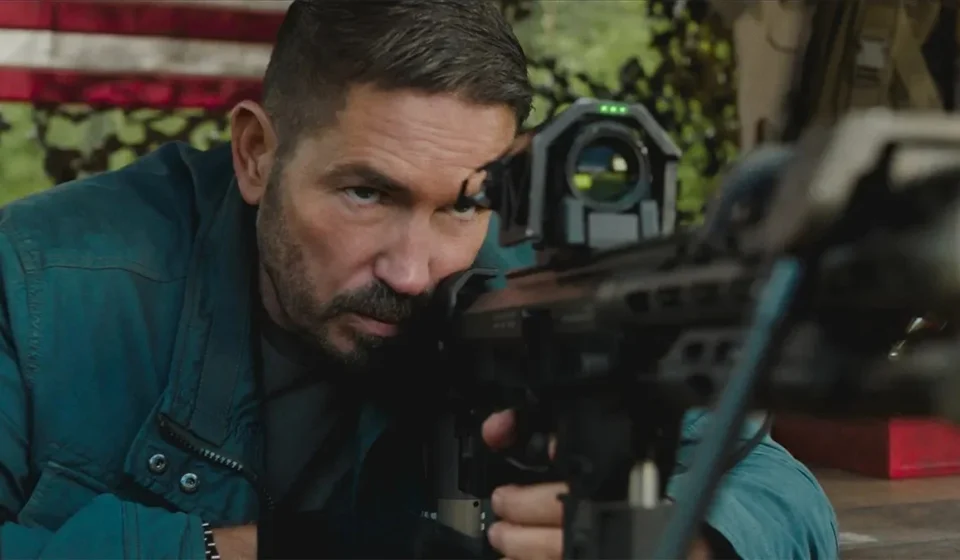

The modern cinematic landscape is often defined by its relationship with tropes. Just as the film Walk Hard arguably retired the traditional music biopic by exposing its repetitive beats, and MacGruber satirized the "one-man army" action subgenre, William Eubank’s Ghost Soldier enters a crowded field of high-stakes military thrillers. Released by Sony Pictures to coincide with Veterans Day, the film serves as both a tribute to American servicemen and a lightning rod for discussions regarding modern political signaling in mainstream entertainment.
Main Facts: The Tactical Blueprint of ‘Ghost Soldier’
Directed by William Eubank (Underwater, The Signal) and written by Chris Papsadero, Ghost Soldier stars Jim Caviezel as Henry “Fitz” Fitzgerald. The film positions itself as a gritty, "ripped-from-the-headlines" action-thriller that pits a retired elite operative against a predatory corporate entity.
The production is notable for its blend of high-concept technology and blue-collar sentimentality. While Eubank brings a glossy, high-budget aesthetic to the proceedings, the narrative structure follows the well-worn path of the "retired soldier forced back into action" archetype. Supported by a robust cast of veteran character actors, including Garret Dillahunt, Michael Ironside, and Olivia Thirlby, the film attempts to balance explosive B-movie thrills with a poignant social commentary on corporate overreach and the displacement of rural Americans.
Chronology: From Retirement to Retribution
The narrative of Ghost Soldier unfolds with a deliberate, albeit predictable, pacing that establishes its protagonist as a modern-day folk hero with a lethal edge.
The Quiet Life in Valentine
The story begins in the fictional, idyllic town of Valentine, Wyoming. Henry “Fitz” Fitzgerald has transitioned from the high-stakes world of Special Forces to a life of relative anonymity. However, his "retirement" is a technicality; Fitz remains a consultant for DARPA (the Defense Advanced Research Projects Agency), designing next-generation weaponry from a high-tech bunker concealed beneath his modest home. This setting establishes the film’s central dichotomy: the humble, rural American life versus the cutting-edge military-industrial complex.
The Corporate Incursion
The peace is shattered by the arrival of Brownstone, a "water monetization" company. Led by a ruthless CEO (Mido Hamada) and his domestic representative, Ty Bell (Alexej Manvelov), the company is aggressively purchasing land to facilitate the construction of massive data centers for AI development. These facilities require vast amounts of water for cooling, leading Brownstone to target local rivers and lakes. When local residents, specifically the Hernandez family, refuse to sell their ancestral land, Brownstone’s tactics shift from financial coercion to physical intimidation.
The Catalyst of Conflict
The tension reaches a breaking point when Brownstone’s enforcers, Graves (Garret Dillahunt) and McNeil (Ricky Whittle), use eminent domain threats and eventually arson to break the Hernandez family’s resolve. Fitz, having formed a paternal bond with the family’s young son, Jack (Cameron Gayden), decides to intervene. What begins as a neighborly defense quickly escalates into a small-scale war.
The Mercenary Escalation
Realizing that Fitz is no ordinary civilian, Brownstone’s leadership deploys a specialized mercenary unit led by the cold-blooded Mirko (Beau Knapp). The final act of the film sees Valentine transformed into a battlefield. Aided by a local gun dealer named Garry (Michael Ironside) and a disillusioned sheriff, Heidi (Olivia Thirlby), Fitz utilizes his DARPA-grade arsenal to dismantle the mercenary threat and take the fight directly to the corporate interests threatening his home.
Supporting Data: Production Values and Ensemble Dynamics
Despite the script’s reliance on cliches, the production value of Ghost Soldier is bolstered by Eubank’s directorial eye and a cast that punch above the script’s weight class.
Technical Prowess and Gadgetry
A significant portion of the film’s "wow factor" is derived from Fitz’s arsenal. Rather than relying solely on traditional ballistics, the film introduces futuristic military technology that pushes the story toward the realm of science fiction. Key features include:
- Homing Ballistics: Bullets that can change trajectory mid-flight to strike targets behind cover.
- Active Camouflage: Clothing that allows the wearer to blend into the environment, rendering them nearly invisible.
- Advanced Fragmentation: Explosive rounds that splinter into multiple lethal components upon impact.
These elements, while visually impressive, have led some critics to compare the character more to a superhero like Iron Man than a traditional gritty soldier, potentially distancing the audience from the "everyman" stakes the film seeks to establish.
The Ensemble Cast
The film benefits from a "who’s who" of reliable character actors:
- Jim Caviezel: Following the massive commercial success of Sound of Freedom, Caviezel brings his trademark intensity and "stoic protector" persona to the role of Fitz.
- Garret Dillahunt: Known for his versatility, Dillahunt provides a menacing presence as the corporate enforcer Graves.
- Michael Ironside: A legend of the genre, Ironside offers gravitas and a sense of history to the role of Garry the gun dealer.
- Olivia Thirlby: As Sheriff Heidi, Thirlby portrays the moral rot of local government and the struggle of those trying to maintain integrity within it.
Official Responses and Critical Reception
The release of Ghost Soldier has sparked a variety of responses from critics and industry analysts, many of whom are focused on the film’s thematic undertones and its star’s public image.
Critical Analysis of Tone and Originality
Early reviews have been polarized. While some praise the film’s "merciless urgency" and technical execution, others have criticized the script for a lack of dimensionality. Variety noted that the film "stacks up one-man-army cliches as early as the opening credits," suggesting that the movie feels more like a "training exercise" than a fresh take on the genre.
The Controversy of "Dog Whistles"
A recurring point of contention among critics is the film’s portrayal of its antagonists. The decision to make the CEO of the villainous corporation a "ruthless Bahranian" has led to accusations of xenophobic signaling. Critics argue that while the film purports to defend American workers, it relies on "othering" foreign interests to generate patriotic fervor. Sony Pictures has not issued an official statement regarding these specific critiques, though insiders suggest the character choices were intended to heighten the "David vs. Goliath" stakes rather than serve as a political manifesto.
Audience Reception
Market research suggests the film is performing well with its target demographic—primarily male audiences and those with an interest in military themes. The Veterans Day release strategy appears to have been effective in capturing the attention of viewers looking for content that celebrates service and traditional American values.
Implications: The Future of the "Fitz" Franchise
The conclusion of Ghost Soldier leaves the door wide open for future installments, hinting at a broader "cinematic universe" where Henry Fitzgerald is deployed to resolve international conflicts. This has several implications for the industry and the actors involved.
The "Caviezel Brand"
For Jim Caviezel, Ghost Soldier solidifies his position as the go-to lead for projects that cater to conservative-leaning and faith-based audiences. By moving from the social-advocacy thriller (Sound of Freedom) to the high-tech actioner, Caviezel is carving out a unique niche in Hollywood that operates somewhat independently of traditional "A-list" trends.
The Mid-Budget Action Revival
The film’s existence as a wide release from Sony Pictures indicates a renewed interest in mid-budget action movies. In an era dominated by $200 million superhero epics, Ghost Soldier represents a more focused, 90-minute "B-movie" experience that can be produced at a lower cost and still yield significant returns through international sales and streaming platforms.
Socio-Political Narrative Trends
The film’s focus on "water monetization" and AI data centers reflects a growing trend in Hollywood to use modern anxieties as the backdrop for traditional action plots. As resources like water become more contested and AI technology expands, we can expect more films to utilize these "ripped-from-the-headlines" issues to ground their fantastical violence in a recognizable reality.
In conclusion, Ghost Soldier is a film of contradictions. It is a high-tech spectacle that yearns for a simpler time; a tribute to the common man that equips its hero with the weapons of a god; and a wide-release blockbuster that utilizes the specific political language of a niche market. Whether it becomes a lasting franchise or remains a "single-serving" training exercise, it stands as a definitive marker of the current state of the American action hero.