The Long Road to "Josephine": How Beth de Araujo Transformed Childhood Trauma into Cinematic Triumph

For filmmaker Beth de Araujo, the road to her latest feature, Josephine, was not merely a career milestone—it was a decade-long odyssey of resilience, timing, and the delicate art of protecting a child’s innocence while exploring the darkest corners of human experience. After more than ten years of development, stalled financing, and the global disruption of a pandemic, Josephine finally premiered at the 2026 Sundance Film Festival, where it garnered massive critical acclaim and secured a high-profile acquisition by Sumerian Pictures.
The film, which centers on a young girl navigating the aftermath of witnessing a violent crime in San Francisco’s Golden Gate Park, is a harrowing yet deeply tender exploration of what it means to bear witness. As it prepares for a wide theatrical release this November, the project stands as a testament to the power of authentic storytelling and the collaborative spirit required to bring such a sensitive narrative to life.
A Decade in the Making: The Creative Genesis
The genesis of Josephine dates back to 2014, when de Araujo first penned the screenplay. For the San Francisco native, the story was deeply personal, rooted in her own childhood memories of witnessing an assault. Despite the raw emotional weight of the script, the journey to the screen was far from linear.

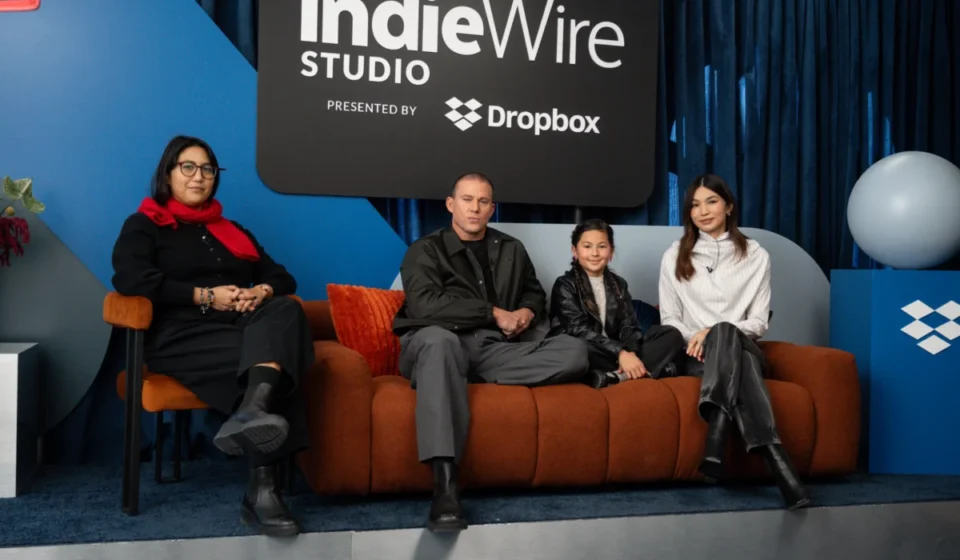
"I wrote my first draft in 2014, and it took a huge push to get it into the 2018 Sundance Lab," de Araujo recalls. The script caught the attention of Esther Chang, a high-profile agent representing Gemma Chan. While it is common in Hollywood for executives to offer polite interest in scripts from emerging filmmakers, the team behind Josephine actually followed through, setting the stage for a fortuitous collaboration.
Chan, who signed on to play the role of Claire—a ballet dancer and mother struggling to guide her daughter through the trauma of the court system—described an immediate, visceral connection to the material. "I had been waiting for a role like this for my entire career," Chan noted. "When I met with Beth and heard her vision, I was all in."
However, the industry proved a difficult hurdle. Despite the attachment of high-profile talent, the project stalled during the 2019 financing cycle. The subsequent COVID-19 pandemic and the industry-wide strikes that followed put the film on indefinite hold. De Araujo credits this delay with a necessary, if painful, shift in perspective: "I think the universe was telling me to do the smaller thing first. You’re always the risk when you are a first-time feature filmmaker."

This led her to write, shoot, and sell her gritty, low-budget breakout Soft & Quiet in just 11 months—a project that served as a calling card and ultimately provided the momentum needed to reignite Josephine.
Casting the Center: The "Kismet" of Mason Reeves
The most daunting hurdle for Josephine was finding the right lead. The film’s emotional integrity relied entirely on a child performer who could embody the titular character without being traumatized by the work. When previous casting attempts failed due to the project’s long hiatus, de Araujo found herself at a crossroads.
The search for the lead was unconventional. On a hunch, the director visited a farmer’s market in her own childhood neighborhood in San Francisco, feeling certain she would find her star. It was there that she spotted Mason Reeves. "She was just running by," de Araujo says. "Josephine is a tomboy, very physical—Mason had that energy. And she looked the part."

When the audition tape arrived, de Araujo was stunned. "She had never acted before. I still ask her mom, ‘What if you hadn’t gone to the market that day?’"
For Chan, who worked closely with the young newcomer, the partnership was profound. "She is wise beyond her years, yet completely grounded in the life of a normal kid," Chan said. "It was kismet." To ensure Reeves felt safe, de Araujo maintained a strict "protective bubble" on set. Reeves never read the full script, and the most intense aspects of the film’s central assault were carefully managed to ensure the young actress never felt exposed to genuine harm.
A Collaborative Environment: Protecting the Innocent
The production environment of Josephine was defined by a collective sense of responsibility. Because the film is set in the neighborhood where de Araujo grew up, the production utilized local landmarks and, in a serendipitous twist, even featured the Reeves family’s own dog.

To build the onscreen chemistry of the family unit, de Araujo orchestrated intentional bonding time. This included one-on-one time between Reeves and Channing Tatum, who was cast as the father, Damien. Tatum, a fan of de Araujo’s previous work, was drawn to the project’s emotional stakes. "He has such charisma and natural ease," Chan remarked of her co-star. "But I was even more blown away by his vulnerability and emotional accessibility."
The production’s commitment to the child’s well-being extended to craft services and scheduling. If Reeves wanted sushi for lunch, she got sushi. If she was tired, the production adjusted. This culture of care fostered a bond between the cast and crew that is palpable on screen. The final day of shooting for Reeves, which saw the entire crew standing in a circle to celebrate her, became an emotional touchstone for everyone involved.
Official Reception: A Sundance Smash
When Josephine premiered at the 2026 Sundance Film Festival, the response was nothing short of electric. The film’s screening at the Eccles Theater—the festival’s largest venue—left audiences visibly moved, with many observers noting the audible gasps and emotional reactions during the film’s most tense sequences.

The film’s success was formalized at the festival’s awards ceremony, where Josephine took home both the Grand Jury Prize and the Audience Award. This dual recognition confirmed what the cast and crew had felt for years: the story was not only essential but deeply resonant.
"Watching it with an audience was an amazing experience," said Chan. "I knew what was coming, but I was still riveted." For de Araujo, the accolades were secondary to the relief that the film had finally reached the world without compromising the safety or integrity of its young star.
Implications for Future Filmmaking
The success of Josephine carries significant weight in the current cinematic landscape. It proves that there is a hunger for stories that handle trauma with a "trauma-informed" approach, prioritizing the human beings involved in the production over the pursuit of art-house shock value.

Sumerian Pictures’ acquisition of the film, which included a commitment to a significant awards-season push, underscores the commercial viability of high-concept, deeply personal dramas. As the film prepares for its November 20th theatrical release, the conversation surrounding Josephine has shifted from the struggle of its production to the strength of its message.
Ultimately, Josephine is more than a story about a crime; it is a story about the people who survive it, the families who support them, and the communal effort required to transform a haunting memory into a beacon of hope. For Beth de Araujo, the 11-year wait was not a delay—it was the time required to gather the perfect cast, the right support, and the necessary wisdom to tell a story that could finally be shared with the world.