The Sound of Survival: Hays and Ryan Holladay Tapped to Score Zach Cregger’s Resident Evil Adaptation

The landscape of horror cinema is bracing for a tectonic shift as production ramps up on the highly anticipated live-action adaptation of the iconic Resident Evil franchise. In a move that signals a bold stylistic direction for the series, it has been confirmed that composer duo Hays Holladay and Ryan Holladay have been tapped to craft the film’s musical landscape. The pair, celebrated for their work on Roommates and Class Action Park, will reunite with director Zach Cregger to bring a fresh, visceral auditory experience to one of gaming’s most storied intellectual properties.
Main Facts: A Creative Convergence
The upcoming Resident Evil feature represents a high-profile collaboration between some of the most innovative voices in modern genre filmmaking. Directed by Zach Cregger—whose breakout hit Barbarian fundamentally redefined the tension-building expectations of modern horror—the film is currently in advanced stages of development.
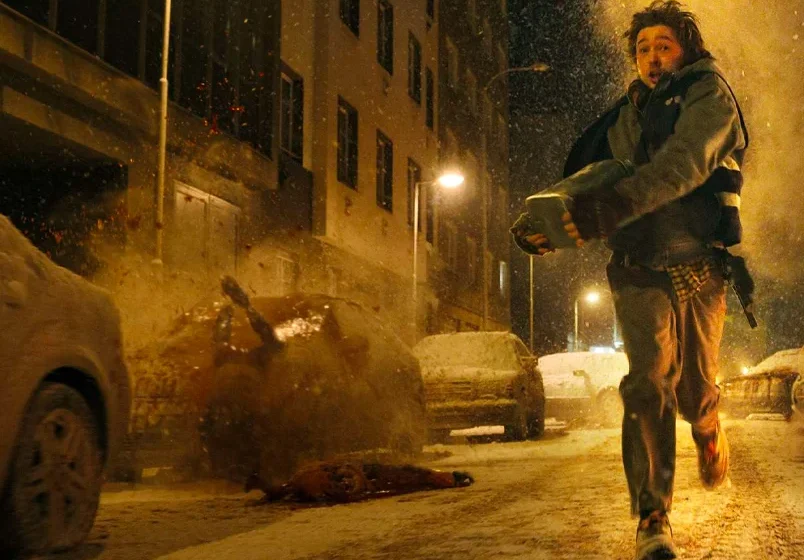
The narrative centers on a high-stakes, claustrophobic premise: a medical courier is thrust into a relentless, nocturnal race for survival as a seemingly routine delivery descends into absolute chaos. Joining the project in front of the camera is a formidable ensemble cast, including Austin Abrams, Zach Cherry, Kali Reis, and Paul Walter Hauser, each bringing a unique gravity to the film’s harrowing survival narrative.
The musical heavy lifting will be handled by the Holladay brothers, a duo whose ability to blend electronic textures with organic, unsettling soundscapes has made them a secret weapon in Cregger’s creative arsenal. Their involvement suggests that the new Resident Evil will lean heavily into the psychological dread and rhythmic anxiety that defined their collaborative work on Cregger’s upcoming project, Weapons.
Chronology: From Cult Hits to Blockbuster Horror
To understand the significance of this appointment, one must look at the professional trajectory of both the director and the composers.
- The Early Collaboration (2022): The creative synergy between Cregger and the Holladays began to crystallize during the production of Barbarian. While Cregger served as the primary architect of the film’s terrifying aesthetic, the Holladays contributed several pivotal cues that underscored the film’s subterranean dread. This project served as the proving ground for their collaborative dynamic.
- The Escalation (2025): The relationship deepened during the development of Weapons. In this instance, the Holladays didn’t just contribute to the score; they co-composed the entire musical identity of the film alongside Cregger himself. This deeper immersion into the director’s creative process established the shorthand necessary to tackle a massive franchise like Resident Evil.
- The Announcement (September 2026): With the official announcement and the release of the teaser trailer, Sony Pictures has set the stage for a nationwide theatrical release on September 18, 2026. The promotional cycle began in earnest, highlighting the film’s departure from previous iterations of the franchise, leaning into a more grounded, visceral survival-horror tone.
Supporting Data: The Production Powerhouse
The scale of this Resident Evil adaptation is underscored by the sheer weight of the production team behind it. This is not merely a genre exercise; it is a meticulously constructed blockbuster.
The production is helmed by Robert Kulzer of Constantin Film, a company with deep ties to the Resident Evil brand, having shepherded previous iterations of the franchise. Kulzer’s portfolio, which includes the atmospheric complexity of Agatha All Along and the scale of Monster Hunter, ensures that the project maintains a balance between big-budget spectacle and narrative substance.
Furthermore, the involvement of Roy Lee (It, A Minecraft Movie) and Miri Yoon (Don’t Worry Darling, The Mother) brings a pedigree of high-concept, commercially successful filmmaking. Perhaps most notably, the inclusion of Carter Swan and Asad Qizilbash, the creative force behind PlayStation Productions’ successful adaptations like The Last of Us and Gran Turismo, signals a strategic shift toward honoring the source material’s roots while pivoting toward prestige-level cinematic execution.
The budget, though undisclosed, is expected to be significant, given the heavy use of practical effects and the ambitious location shooting required to capture the "non-stop race" narrative arc described in the synopsis.
Official Responses and Creative Vision
While formal interviews remain limited during the production phase, the sentiment emanating from the Sony Pictures camp is one of "reinvigoration." Director Zach Cregger has reportedly pushed for a stripped-back, high-intensity aesthetic that favors tension over traditional jump-scares.
"The goal is to make the audience feel the exhaustion of the character," a source close to the production noted. "Hays and Ryan aren’t just writing a soundtrack; they are designing an environment. The music is intended to pulse like a heartbeat that is slowly running out of rhythm."
The Holladay brothers have often spoken in past interviews about their fascination with "sonic architecture." Their work is rarely traditional orchestral melodrama; instead, it involves modular synthesis and field recordings. By applying this methodology to Resident Evil, they aim to capture the industrial decay and sterile horror of the series’ iconic settings—the Raccoon City facilities and the surrounding urban sprawl.
Implications: A New Era for Game-to-Film Adaptations
The decision to hire the Holladay brothers is indicative of a broader trend in Hollywood: the move away from "stock" orchestral scores in favor of idiosyncratic, auteur-driven sound design.
1. The "Prestige Horror" Shift
For years, video game adaptations were viewed as second-tier commercial products. However, the success of The Last of Us has set a new benchmark. By hiring directors like Cregger and composers like the Holladays—creators known for their specific, uncompromising voices—Sony is positioning Resident Evil as a piece of prestige cinema. This move seeks to attract a demographic that values atmosphere and tension over simple brand recognition.
2. The Composer as Sound Designer
In contemporary cinema, the line between music and sound design is increasingly porous. The Holladay brothers are at the forefront of this movement. By integrating their work early in the post-production process, they ensure that the score functions as a narrative character. In a survival-horror film where silence is often as important as noise, their ability to manipulate silence and low-frequency textures will be critical to the film’s success.
3. Franchise Longevity
With Resident Evil having spanned nearly three decades of gaming history, the challenge for any filmmaker is to stay relevant. By moving away from the high-octane action motifs of the previous live-action films and moving toward a more claustrophobic, "one night in hell" narrative, the production team is essentially hitting the reset button. The musical score will be the glue that holds this transition together, signaling to the audience that this is a different, more mature iteration of the brand.
Conclusion: A Date with Destiny
As the September 18, 2026, release date approaches, the anticipation surrounding Resident Evil continues to mount. The collaboration between Zach Cregger and the Holladay brothers represents a convergence of talent that is rare in the blockbuster landscape.
While the plot remains shrouded in the mystery typical of Cregger’s work, the trajectory is clear: this is a film designed to rattle the nerves. With a powerhouse production team, a cast capable of delivering the emotional weight of a survival story, and a musical score poised to redefine the franchise’s sound, Resident Evil is shaping up to be one of the most significant horror events of the decade.
Audiences should prepare themselves. If the track record of those involved is any indication, the experience will not just be a viewing—it will be a visceral, sonic, and psychological endurance test. The race for survival begins in theaters nationwide, and if the early buzz is to be believed, it is a race that no viewer will soon forget.