The Creative Insurgency: Why Aisha Tyler and Kirsten Vangsness Are Betting on Indie Autonomy

Introduction: A Defiant Stance on the Red Carpet
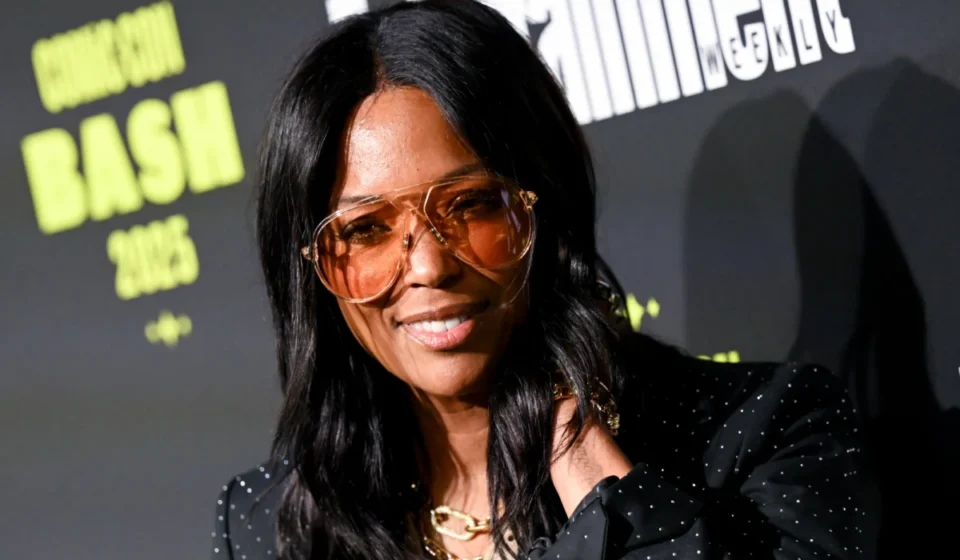
At the 2026 Emmys, amidst the polished glitz of the industry’s highest accolades, Criminal Minds: Evolution stars Aisha Tyler and Kirsten Vangsness delivered a message that felt less like a celebration of the status quo and more like a manifesto for a new era. While the evening was ostensibly about honoring the current state of television, the two veteran actors and creators used the platform to argue that the next great creative revolution in Hollywood will not be handed down by studio executives or greenlit by algorithms—it will be built by artists working entirely outside the traditional system.
For Tyler and Vangsness, the message is one of radical self-reliance. As the industry faces unprecedented consolidation, a volatile labor landscape, and the looming specter of generative AI, the pair is calling for a return to the roots of independent storytelling: intimate, human, and unapologetically political.
The Philosophy of "Making Your Own Things"
The Political Necessity of Independent Art
"We have to make our own things," Vangsness told IndieWire during the ceremony. Her perspective is colored by the reality of working within the machinery of a major streaming platform. While she expressed deep gratitude for her steady role on Criminal Minds: Evolution, she underscored a fundamental truth for the modern creator: "It’s nice to get paid for it, and I’m so happy to get paid for it. But I also feel like, as creatives, we have to [make our own things] because art ultimately is political."
Vangsness, who was notably seen wearing a badge referencing historian Timothy Snyder—a pointed critique of the current wave of media mergers—frames the act of creation as an act of resistance. In an environment where major studios prioritize safety and data-driven content, the act of producing independent work becomes a way to reclaim the narrative.
Refusing to Wait for Permission
Aisha Tyler, a multi-hyphenate director and producer with a track record spanning The Walking Dead, Evil, and Elsbeth, echoed this sentiment with a dose of blunt pragmatism. "I don’t have a choice. I have to make stuff," Tyler said. "I’m not waiting around for some guy in a gilded office to give me permission to make art."
Tyler’s career trajectory is the embodiment of this philosophy. Having moved from acting to directing and producing, she has become a vocal advocate for the "DIY" spirit. She advises artists paralyzed by the current industry instability to bypass the gatekeepers entirely. "I think people out there, if you’re feeling anxious about it, just make your stuff," she insisted. "Keep making your stuff."
Chronology of a Shifting Landscape
From the "Golden Age" to the Algorithmic Era
To understand the urgency behind Tyler and Vangsness’s comments, one must look at the recent history of Hollywood. The last decade has been defined by the "Streaming Wars," an era that initially promised a democratization of content but eventually devolved into a landscape of massive corporate mergers, budget slashing, and the rise of algorithmic content curation.
- 2017: Aisha Tyler makes her directorial debut with Axis, an indie film that signaled her intent to work outside the traditional studio pipeline.
- 2020-2023: The industry experiences extreme volatility due to the pandemic and labor strikes, leading to the current wave of consolidation.
- 2026: At the 78th Emmy Awards, the conversation among creators shifts from "getting a job" to "seizing the means of production."
During this period, the industry moved away from auteur-driven storytelling toward "content" creation. Tyler argues that this shift has created a vacuum where audiences are becoming increasingly starved for authentic human connection—a need she believes independent film is uniquely positioned to fill.

The "Intelligent Revolution" in Independent Film
Rejecting the Mimicry of AI
Perhaps the most striking point made by Tyler is her prediction of a "Third Independent Film Revolution," which she dubs the "Intelligent Revolution." In the face of rapid advancements in generative AI, Tyler believes the market will see a massive pivot toward work that explicitly emphasizes the "human element."
"I actually think that we’re about to embark on a third independent film revolution… which we need because people don’t want to watch robots mimic human experience," Tyler explained. "They want to see real experience with real humans."
This shift is already visible. Audiences are increasingly rejecting "giant corporate art" in favor of "rugged, independent, intimate stuff." For Tyler, this isn’t just a trend; it is a necessary corrective force. When asked about her own upcoming projects, including her third independent film and the psychological thriller I Hope We Can Still Be Friends, she noted that the process of making them is fundamentally different from working on a studio show. It is faster, more personal, and immune to the "I don’t get it" dismissals common in studio boardrooms.
Supporting Data: The Power of Community
The "Criminal Minds" Connection
The conversation also touched upon the power of creative communities that persist across decades. Vangsness provided an illustrative anecdote about the late, legendary actor Tim Curry. Recalling her time at a gym, she described how she personally campaigned to bring the actor into the Criminal Minds fold.
"I didn’t even work that day," Vangsness recalled. "I drove to work, and I busted open an editing bay… and I said, ‘Tim Curry wants to be on our show.’ Because I wanted to say I did it. I didn’t want casting to be able to claim it."
This story serves as a metaphor for the entire ethos of the duo: if you want something to happen, you make it happen yourself. Whether it is bringing a legendary guest star to a set or pushing for a specific vision in a script, the power lies with the individuals who refuse to wait for a formal invitation.
Representing the Path Forward
For Tyler, the motivation is also deeply personal. As one of the few Black women directing in television, she recognizes that her presence in the director’s chair is a functional tool for change. "I love directing, but I also do it because I had so few people to look up to," she said. "I hope that I can be a woman and a woman of color in the directing space that can inspire other people to step into it."
By creating her own opportunities, she is not just building a career; she is building a roadmap for the next generation of directors who are currently being locked out of the studio system.

Official Perspectives: The "Fancy Indentured Servitude"
The interview highlighted the duality of their careers. While Vangsness and Tyler are successful, working professionals within the industry, they are acutely aware of the constraints. Vangsness, with a touch of characteristic humor, described her current status as being in "fancy indentured servitude."
This phrase, while hyperbolic, captures the anxiety of the modern working actor. Even at the top of the call sheet, there is a lack of control over the final product. Their solution—shifting focus toward independent endeavors like Vangsness’s current touring play, Outdated—is a way to decouple personal fulfillment from corporate employment.
"The job doesn’t make you happy," Vangsness noted. "Your creative endeavors make you happy."
Implications: A New Blueprint for Creators
The Decline of the Gatekeeper
The implications of Tyler and Vangsness’s stance are significant. As the traditional studio system continues to consolidate, the barrier to entry for "big" projects is becoming higher, while the barrier to entry for "independent" projects has never been lower. Technology, which once threatened to replace creators, is now being framed by voices like Tyler as the very tool that will enable the next revolution.
A Call to Action
The final takeaway from their Emmys conversation is a clear directive for the industry at large. The "Gatekeeper Model"—where an artist spends years waiting for a "guy in a gilded office" to provide a budget—is dying. In its place is a model of radical autonomy.
- Trust Your Instincts: Even if executives don’t "get it," the audience often does.
- Focus on the Human: Avoid the "robot" pitfalls of algorithmic content.
- Build Your Own Table: Don’t wait for a seat to be offered; build the set, find the cast, and tell the story.
As the industry enters an uncertain future, the message from Tyler and Vangsness is a beacon of agency. They aren’t waiting for the studio system to stabilize or for the executives to change their minds. They are, quite simply, making their own things—and they are inviting everyone else to do the same.
In an era where "corporate art" feels increasingly detached from the human condition, the "Intelligent Revolution" promised by Tyler may be the only path forward. Whether or not it succeeds, the attempt itself is where the true creative energy of the industry currently resides. The red carpet at the 2026 Emmys was just the beginning; the real work is happening in the editing bays, on the stages, and in the independent studios where the next generation of storytellers is refusing to ask for permission.