The Shadow of Silence: Why ‘Nocturne’ is a Study in High-Caliber Acting Amidst Genre Fatigue

In the landscape of modern prestige television, the "sad-dad detective" archetype has become as common as the gray-toned color palette that defines it. The new Apple TV+ series Nocturne, which premieres on October 30, attempts to breathe new life into the well-worn tropes of the crime thriller. While it ultimately struggles to escape the gravitational pull of its own clichéd foundations, the series offers a masterclass in how top-tier acting can occasionally elevate a formulaic narrative into something intermittently compelling.
The Premise: A Familiar Descent into Darkness
Nocturne is a somber, brooding affair that leans heavily into the aesthetic established by predecessors like Mare of Easttown and Task. Set in the fictional, rain-slicked Fairhaven, Pennsylvania, the series centers on Jonah (played by Liev Schreiber), a retired, haunted detective living in a cabin that serves as a physical manifestation of his psychological baggage. His walls are adorned with a sprawling, obsessive "murder board"—a visual shorthand for the trauma that continues to dictate his existence.
The plot kicks into gear when Saga (Zazie Beetz), a surrogate daughter and FBI agent, arrives with news that the case that broke Jonah—the disappearance of two children—is active again. A body has been discovered, and the clock is ticking to find the second missing child. Despite Jonah’s fractured state and his preoccupation with building a treehouse for a family that is long gone, he is pulled back into the fray.
What follows is a ten-episode slow-burn that tracks the investigation. However, the showrunners, John Hlavin and Rowan Joffé, often rely on the familiar cadence of the "prestige crime thriller," stretching a premise that might have thrived as a two-hour film into a ten-hour slog. The narrative drip-feeds information about Jonah’s past, but the mystery itself frequently suffers from predictability and unearned narrative leaps.

A Chronology of the Viewing Experience
For the viewer, Nocturne is a series of highs and lows that can oscillate between genuine engagement and profound exasperation. The experience is best defined by three distinct moments that highlight the show’s inconsistent nature.
The first moment occurs early in the pilot, shortly after the onscreen text establishes the setting of Fairhaven, Pennsylvania. For those familiar with the recent proliferation of Delaware County-adjacent crime dramas, the "buzzer" sounds immediately. The show leans into the regional dialect with a gusto that is both distracting and, in a strange way, endearing. When Jonah asks, "What are yoo doing here?" the phonetic shift is a jarring reminder of the show’s commitment to—or perhaps obsession with—regional flavor.
The second moment of note is the introduction of the series’ antagonist, Jurek Walter (Stephen Graham). As the Hannibal Lecter-esque serial killer who manipulates events from behind bars, Graham brings a chilling, measured intensity to the role. His performance is a masterclass in economy; he rarely overplays his hand, preferring to use steady, calculated stares and whispered, sporadic vowel sounds to exert his influence.
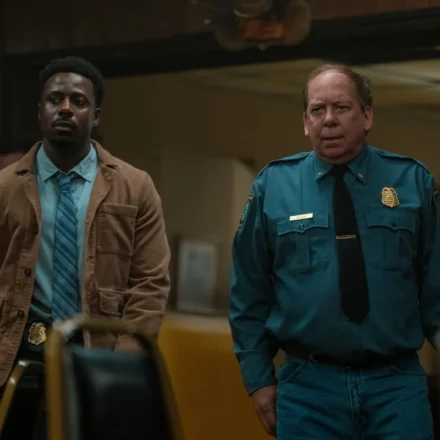
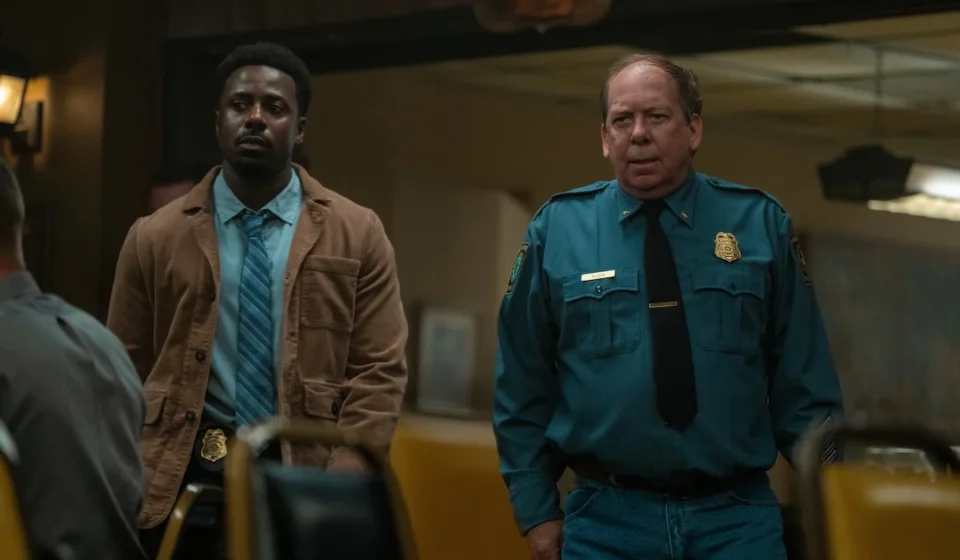
The final moment of delight arrives later in the season, when the series finally pairs Bill Camp (playing local police chief Dave Ellison) with Ken Leung (an FBI high-ranking official). This interaction, occurring in the seventh episode, serves as the perfect example of why casting directors like Avy Kaufman are the unsung heroes of television. The jurisdictional clash between Camp’s rugged, disheveled, and unamused chief and Leung’s sleek, condescending federal agent is electric. It is a scene that transcends the script’s basic premise, proving that great actors can find life in even the most tired of genre interactions.

Supporting Data and Production Context
Based on the Swedish novel The Sandman by Lars Kepler, Nocturne carries the weight of high-concept expectations. Apple TV+ has clearly invested in the production, evidenced by the atmospheric cinematography and a cast that reads like a "who’s who" of contemporary character acting.
- Cast & Crew: Beyond Schreiber, Beetz, and Graham, the presence of Bill Camp and Ken Leung provides the series with a necessary anchor.
- The "Silence of the Lambs" Dynamic: The series leans heavily into the relationship between the detective and the incarcerated killer. However, the interaction between Jonah and Jurek is surprisingly sparse across the first seven episodes, often feeling more like a check-the-box requirement of the genre than a truly electric collision of wills.
- Release Schedule: The show debuts on October 30 with two episodes, followed by weekly installments through the series finale on December 25.
Official Responses and Creative Direction
In interviews leading up to the release, the creative team has emphasized the psychological toll the case takes on Jonah. The decision to portray the investigation through the lens of a "haunted" detective is a deliberate choice intended to prioritize internal struggle over external procedural mechanics.
Critics have noted that while the show is visually stunning and undeniably well-acted, the writing occasionally relies on "convenient mistakes" to keep the plot moving. Characters often make intuitive leaps that feel unearned by the evidence at hand, a common pitfall in serial television that relies on mystery-box storytelling to fill ten hours of content.
The reliance on these "premium streaming trappings"—moody lighting, a somber score, and long, lingering shots—serves to mask the structural weaknesses of the script. When the show attempts to resolve its central mysteries, it often opts for the most obvious, clichéd path, which may leave astute viewers feeling underwhelmed.

Implications: Can Good Acting Save a Bad Show?
The central question posed by Nocturne is one that has plagued television criticism for years: Is it possible for an exceptional cast to transcend a derivative premise?
As James Poniewozik of The New York Times has famously suggested, you cannot turn a bad show into a good show simply by hiring good actors. Nocturne serves as a textbook example of this principle. It is, by all traditional metrics, a "C" grade production—it is competently made, beautifully shot, and anchored by performances that deserve better material.
However, for fans of the "grim cop vs. killer" genre, the series offers enough "better-than-average" moments to warrant a watch. When an actor like Ken Leung or Bill Camp steps on screen, the show suddenly finds a pulse. Their ability to inject nuance into a scene—to convey a lifetime of history in a single, silent glare—is what separates Nocturne from the glut of forgotten procedurals.
The implication for future productions is clear: while casting is a vital component of success, it cannot replace the necessity of a taut, original, and logically consistent script. Nocturne succeeds not because it is a revolutionary piece of television, but because it is populated by performers who know exactly how to get a scene on its feet and, more importantly, how to keep an audience from clicking "skip."

Ultimately, Nocturne is a show that is just slightly better than it has any right to be, thanks entirely to the talent in front of the camera. It is a cautionary tale of style over substance, yet it remains a testament to the power of the actor’s craft in the digital age.