Bridging Reality and Render: The Evolution of Clear Angle Studios in the Modern VFX Pipeline

In the high-stakes world of contemporary visual effects, the boundary between the physical set and the digital environment is thinning. As audiences demand increasingly photorealistic imagery, the industry has turned toward a new breed of service providers capable of translating real-world complexity into high-fidelity digital assets. Leading this charge is Clear Angle Studios, a company that has quietly transitioned from a specialized scanning firm into a cornerstone of the modern VFX production pipeline.
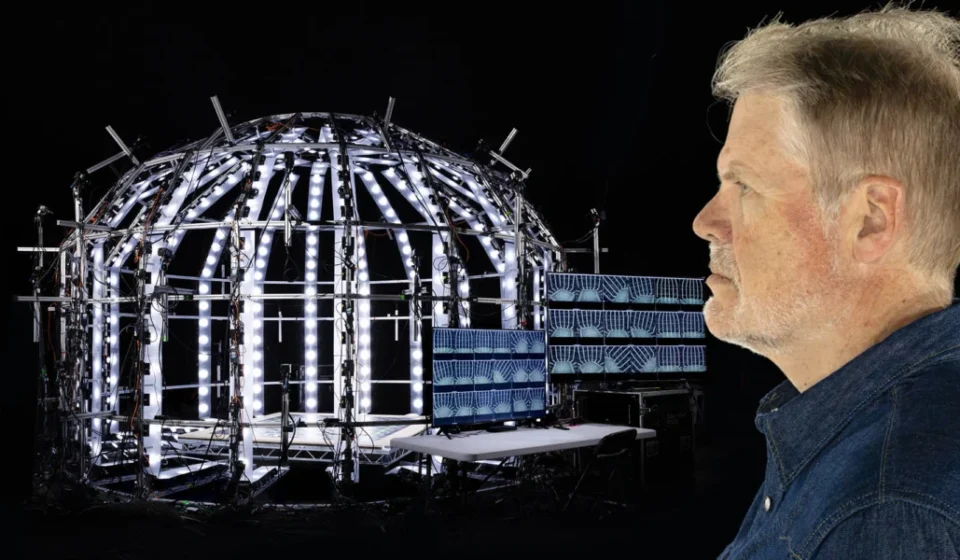
In a recent episode of the fxpodcast, Jamie Hearing, Digital Effects Supervisor at Clear Angle, offered a deep dive into the studio’s evolving methodology. Following a tour of their state-of-the-art Pinewood facility in the UK, the conversation highlighted how the firm has expanded its remit far beyond traditional 3D scanning, moving aggressively into Gaussian splatting, neural rendering, and large-scale environmental capture.
The Architecture of Capture: From Static Scans to Neural Rendering
At its core, Clear Angle Studios provides the foundational data upon which digital worlds are built. During the recent visit to the Pinewood studio, observers were shown the company’s signature full-body scanning arrays. These systems utilize 24-camera configurations coupled with sophisticated LED lighting to capture static human poses with millimeter-accurate geometry and texture. With 18 such rigs operating globally, the company has created a standardized capture ecosystem that ensures consistent data quality for major feature films and television productions.
However, as Jamie Hearing explained, the industry is currently undergoing a paradigm shift. The reliance on traditional, cleaned-up meshes is being challenged by the advent of radiance fields and Gaussian splatting.
The Neural Pivot
"We aren’t just building meshes anymore," Hearing noted during the podcast. "We are capturing the essence of the light and the object." Neural rendering allows Clear Angle to bypass the labor-intensive process of manual mesh retopology for complex subjects. By using machine learning to reproduce exactly what the cameras see, the studio can now accurately reconstruct visual phenomena that have historically plagued VFX artists—specifically hair, reflections, transparency, and sub-surface scattering. This transition represents a move away from "re-creating" an object to "re-presenting" it through neural networks, offering a level of realism previously unattainable in standard CG workflows.
Chronology of Innovation: Scaling the Workflow
Clear Angle’s evolution can be mapped through its proprietary hardware developments. The studio has consistently scaled its technology to meet the changing demands of its clientele:
- Phase 1: The Foundation of Scanning. Initially, the focus was on high-fidelity, static geometry. The early "Dorothy" head-capture rig set the standard for facial scans, enabling FACS (Facial Action Coding System) poses and 4D performance capture that allowed animators to replicate human expressions with unprecedented accuracy.
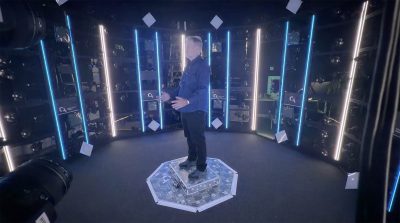
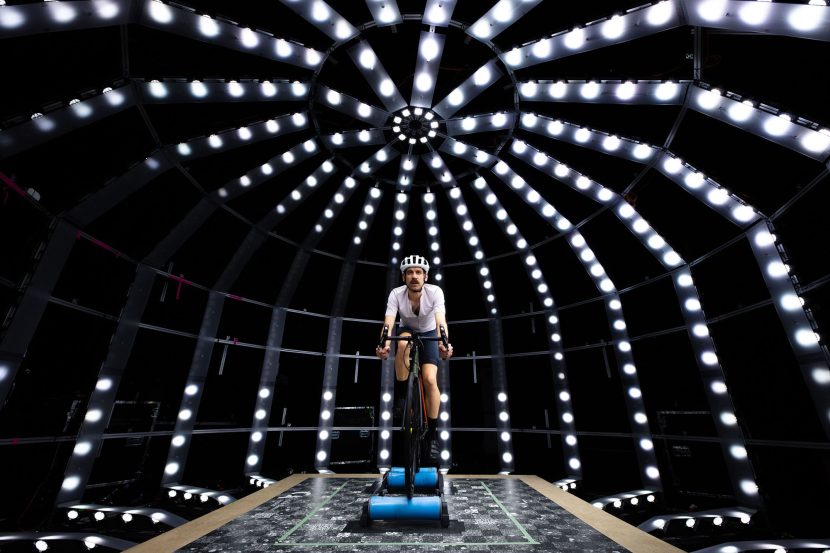
- Phase 2: The Volumetric Expansion. Recognizing the need for more complex movement, the studio developed the VCR (Volumetric Capture Rig). This modular system employs 40 machine vision cameras equipped with high-end Sony sensors. Unlike the static rigs, the VCR is designed for high-frame-rate, synchronized capture of full characters or ensembles, facilitating the creation of volumetric assets that can exist in dynamic environments.
- Phase 3: The Integration Era. Recently, Clear Angle integrated DI4D technology into its workflow. By utilizing TopoTrack technology, the studio can now ensure consistent topology and texture correspondence throughout an actor’s entire performance. This is critical for human movement, which is notoriously non-linear; the ability to track facial data over time ensures that the "soul" of the performance is preserved in the digital double.
Supporting Data: Why Fidelity Matters
The shift toward neural workflows is driven by the industry’s demand for "truth in data." According to Hearing, modern productions often struggle with the "last 10 percent" of a shot—the subtle details that make a character feel alive.
The data captured by Clear Angle acts as the ground truth for these neural pipelines. By providing clean, high-resolution training data, the studio allows VFX houses to train machine learning models that can infer lighting, skin pores, and micro-movements. This symbiotic relationship—where the scanner provides the input for the AI—has made Clear Angle an indispensable partner for studios aiming to achieve perfect digital human realism.
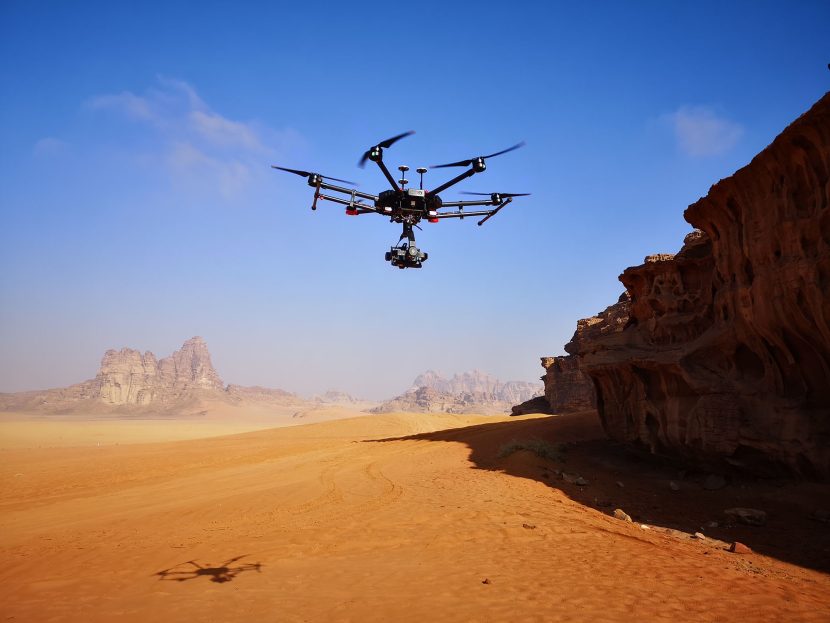
Beyond character work, the studio has applied this rigour to environments. In recent operations across Iceland, the company demonstrated the logistical complexity of modern capture. By synthesizing LiDAR, aerial drone surveys, and photogrammetry, they create "digital twins" of vast landscapes. The goal is to provide enough raw sensor fidelity that a VFX director can make post-production decisions—such as changing the time of day or the camera angle—without needing to return to the location.
Official Perspective: The Intersection of Art and Data
Jamie Hearing’s career trajectory serves as a microcosm for the evolution of the industry itself. His path from Bournemouth University to character work at DNEG, and finally into the world of capture supervision, highlights the multidisciplinary nature of modern VFX.
"You need an artistic eye to know what data is worth capturing," Hearing emphasized. During the podcast, he discussed how the challenge is no longer about quantity—digital storage is cheap—but about relevance. Capturing the right metadata and sensor data is the difference between a project that requires months of manual cleanup and one that flows seamlessly into the final render.
When asked about the future of the studio, Hearing suggests that Clear Angle is positioning itself as a "data partner" rather than a mere service provider. As productions lean further into machine-learning-driven workflows, the studio’s role is to act as the bridge between the physical set and the neural model.
Implications for the Future of VFX
The implications of Clear Angle’s current trajectory are significant for the broader entertainment industry. We are witnessing the decline of the traditional, purely manual CG pipeline in favor of a hybrid approach.
1. Reducing the "Uncanny Valley"
By integrating 4D capture and neural rendering, the risk of hitting the "uncanny valley"—where a digital character looks "almost" real but fails to convince—is significantly reduced. The consistency provided by DI4D and high-speed VCR rigs allows for the faithful reproduction of human emotion.
2. Streamlining Production Logistics
The ability to capture an environment once and use it for every shot—from wide establishment to extreme close-up—saves millions of dollars in production costs. This is particularly valuable for big-budget tentpole films where travel to remote locations like Iceland is a significant budget line item.
3. Training the Next Generation of AI
Perhaps the most intriguing implication is the role of the studio in the era of generative AI. By creating high-quality, controlled datasets, Clear Angle is essentially "teaching" the next generation of VFX tools how to behave. They are not just creating assets; they are creating the training material that will allow future AI models to generate convincing digital humans and environments with less manual intervention.
Conclusion
Clear Angle Studios has successfully transcended its origins as a scanning company to become an essential layer of the modern digital infrastructure. By sitting at the intersection of high-end photography, LiDAR engineering, and neural network research, they have managed to stay ahead of the curve in an industry defined by rapid technological obsolescence.
As the lines between physical reality and digital simulation continue to blur, companies like Clear Angle will become the architects of the new visual landscape. Whether it is through the precise capture of a human face or the photogrammetric mapping of an entire country, their work ensures that the digital world retains the chaotic, beautiful, and complex detail of the one we inhabit. The future of VFX is not just in the software that renders the final pixel, but in the precision and intelligence of the data that feeds it.