The Gothic Redemption: Johnny Depp and Ti West Reinterpret a Holiday Classic in ‘Ebenezer’

The cinematic landscape of the holiday season has long been dominated by the ghost of Charles Dickens. From the definitive 1951 Alastair Sim portrayal to the whimsical Muppets adaptation and Robert Zemeckis’s motion-capture experimentation, A Christmas Carol is a narrative so ingrained in the Western canon that any new iteration faces an uphill battle against "Scrooge fatigue." However, Paramount’s latest offering, Ebenezer, has managed to pierce through the seasonal noise, not necessarily through narrative reinvention, but through a potent combination of indie-horror pedigree and the high-profile return of one of Hollywood’s most controversial figures.
Directed by Ti West and starring Johnny Depp in the titular role, Ebenezer arrives with a marketing campaign that promises a radical origin story—"The name you know, the story you don’t"—only to deliver something far more interesting: a technically masterful, Gothically-charged, yet surprisingly faithful tribute to the source material.
Main Facts: A Convergence of Horror Royalty and Hollywood Returns
At its core, Ebenezer is a high-budget, studio-backed production that serves as a bridge between the niche world of "elevated horror" and the broad appeal of seasonal blockbusters. The film marks a significant pivot for director Ti West, who built his reputation on slow-burn indie hits like The House of the Devil and the technicolor carnage of the X trilogy (X, Pearl, and MaXXXine). In Ebenezer, West applies his meticulous eye for period detail and retro-horror aesthetics to the Victorian streets of London.
The most significant "fact" surrounding the film, however, is the casting of Johnny Depp. After an eight-year hiatus from major American studio productions following a highly publicized legal and personal saga, Depp’s portrayal of Ebenezer Scrooge marks his official re-entry into the Hollywood A-list. He is supported by an ensemble cast of British and American heavyweights, including Sir Ian McKellen as Jacob Marley, Rupert Grint as the long-suffering Bob Cratchit, and Andrea Riseborough in a transformative turn as the Ghost of Christmas Past.
Despite the "origin story" taglines, the film remains a period piece set largely within the traditional timeline of the novella, albeit with a prologue that provides a grimmer look at the partnership between Scrooge and Marley. The film carries a PG-13 rating, a deliberate choice that allows for West’s signature "Hammer Horror" visual style—characterized by shadows, decay, and unsettling practical effects—without alienating the broader family audience that drives holiday box office numbers.
Chronology: From the Death of Marley to the Dawn of Redemption
The narrative structure of Ebenezer begins with a departure from the traditional "Marley was dead, to begin with" opening. Instead, screenwriter Nathaniel Halpern crafts a chilling prologue that depicts the final, frosty hours of Jacob Marley (Ian McKellen). This sequence establishes the "chilly" tone the film maintains throughout, showing the cold-blooded business logic that governed the partnership and the literal cold that claimed Marley’s life on a Christmas Eve seven years prior to the main events.
The film then jumps forward to the "present" day of the narrative. We find Scrooge in his counting-house, a space designed by Eve Stewart to feel less like an office and more like a tomb. Here, the familiar beats of the story play out: the rejection of his nephew Fred’s (Sam Claflin) dinner invitation, the dismissal of charity seekers, and the begrudging granting of a holiday to Bob Cratchit (Rupert Grint).
The chronological heart of the film lies in the three visitations, which West treats as distinct stylistic movements:
- The Ghost of Christmas Past: Andrea Riseborough appears not as a flickering candle-like spirit, but as a "tulle-swaddled ghost bride" with a stuttering, eerie cadence. This segment explores the young Ebenezer (Arthur Conti) and his relationship with Belle (Ellie Bamber), providing the emotional scaffolding for his later cynicism.
- The Ghost of Christmas Present: Tramell Tillman delivers a performance of "surly energy," portraying a spirit whose physical form is literally cracking under the weight of the world’s current suffering. This section highlights the Cratchit family’s struggle, though the film takes a slight narrative liberty by framing Cratchit’s eventual professional rise in a more "capitalistic" light than previous versions.
- The Ghost of Christmas Yet to Come: This is where West’s horror roots are most visible. The future is a bleak, monochromatic nightmare that pushes the PG-13 boundaries with its "grisly" depictions of mortality and the erasure of a life unloved.
The film concludes with the traditional Christmas morning awakening, though critics have noted that Depp’s Scrooge retains a "cold, hard nugget" of his former self even in his reformation, suggesting that true change is a grueling process rather than a magical overnight switch.
Supporting Data: The Craftsmanship of "Dickensian Dread"
While the narrative follows a well-worn path, the technical execution of Ebenezer provides the "data" that justifies its existence. The film’s aesthetic is a deliberate homage to the 1960s and 70s British horror output from Hammer Film Productions.
- Cinematography: Checco Varese utilizes a "charred, coaly" palette. The lighting mimics the soot and fog of the Industrial Revolution, creating a sensory experience where the audience can almost "smell the sour rot" of the London sidewalks.
- Production Design: Academy Award nominee Eve Stewart (known for The King’s Speech and Les Misérables) creates a world of "blackened timber and mildew." Her sets are crooked and claustrophobic, reflecting Scrooge’s internal psychological state.
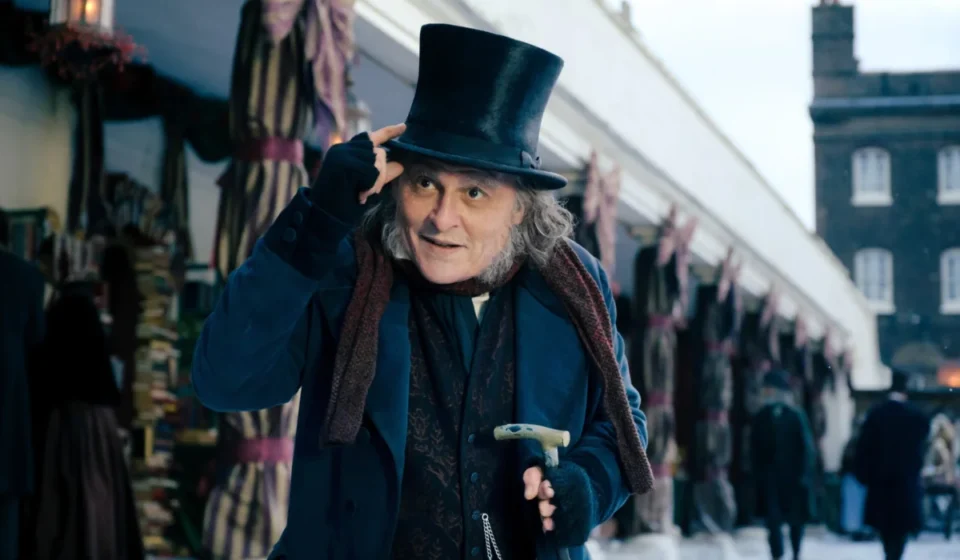
- The Depp Performance: Analysis of Depp’s performance suggests a "pantomime-style" approach. He is buried under significant prosthetics—peaky skin, a hunched frame, and craggly features. While some critics argue he doesn’t reach the "pained, soulful depths" of Alastair Sim, his vocal inflections and "ripe inspiration" in line readings provide a version of Scrooge that is both theatrical and menacing.
- Marketing Discrepancy: Industry data reveals a gap between the film’s marketing and its content. While trailers emphasized a "revisionist" take, the script by Nathaniel Halpern adheres to roughly 85% of the original Dickensian dialogue and plot points. This suggests a strategic move by Paramount to attract a younger, "edgier" demographic while relying on the safety of a classic IP.
Official Responses: Studio Strategy and Critical Reception
The official response from Paramount Pictures has been one of calculated confidence. By positioning Ebenezer as a "Ti West Film," the studio is tapping into the "director-as-superstar" trend that has served A24 and Neon so well. During the film’s press junket, the narrative has centered on "artistic reclamation"—both for West, moving into the big-budget arena, and for Depp, returning to the spotlight.
Critical reception has been polarized but generally respectful of the film’s craft. The Variety review, which served as a primary source for the film’s early buzz, characterized it as "too frightening for many children and too old hat for many adults," identifying a potential commercial vacuum. However, the review also lauded the film’s atmosphere, calling Eve Stewart the "clear MVP" for her immersive world-building.
Representatives for Johnny Depp have framed the role as a homecoming to the "flamboyantly transformative" characters that defined his career in the 1990s and 2000s. Meanwhile, horror enthusiasts have championed Ti West’s refusal to sanitize the ghost story, noting that Dickens originally wrote A Christmas Carol to be a "chiller" that would haunt his readers into social consciousness.
Implications: The Future of the "Deppaissance" and the Horror-Holiday Hybrid
The release of Ebenezer carries significant implications for the film industry at large.
First, it serves as a litmus test for Johnny Depp’s box office viability. If Ebenezer succeeds, it proves that the "A-list blacklist" is porous and that audiences are willing to separate a performer’s off-screen controversies from their on-screen transformations. The choice of Scrooge—a character who begins as a pariah and ends in redemption—is a meta-narrative that is likely not accidental.
Second, the film signals a new era for Ti West. Transitioning from the $1 million budgets of indie horror to a major Paramount production is a hurdle many directors fail to clear. West’s ability to maintain his "genre classicist" voice within the constraints of a PG-13 studio film suggests he may become a go-to director for studios looking to inject "prestige grit" into aging franchises.
Finally, Ebenezer reflects a broader trend in the "horror-ification" of classic literature. Following the success of projects like The Invisible Man or the upcoming "dark" takes on fairy tales, Ebenezer suggests that the path to reviving public domain stories lies in leaning into their darker, more unsettling roots. By emphasizing the "grisly" and the "Gothic," Paramount has set a template for how to market 19th-century stories to a 21st-century audience that is increasingly desensitized to traditional sentimentality.
In the end, Ebenezer may not replace the "gold-standard" adaptations of the past, but it stands as a testament to the enduring power of Dickens’s ghost story—a tale that, much like Scrooge himself, can be reborn in a new skin for a new generation, provided there is enough "atmosphere and craft" to keep the frost from setting in.