
The consensus among the weary festival-goers lining the Croisette this May was as predictable as the mistral winds: Cannes 2026 was a “ho-hum” edition. Critics, rushing to file their dispatches and catch early flights, bemoaned a perceived lack of singular masterpieces. Yet, this cynicism obscured a quiet, seismic shift taking place across the festival’s various screening rooms. Far from being a forgettable year, Cannes 2026 proved to be an era of “accumulative cinema”—films that favor the slow, muscular buildup of emotional truth over the white-knuckle, adrenaline-fueled jolts of previous years.
Main Facts: A Shift Toward Incremental Impact
While 2025 gave us the visceral, nerve-racking intensity of films like Sirat and It Was Just an Accident, the 2026 slate prioritized a different kind of endurance. This was a year of films that felt like they were instilling a sense of "dramatic muscle memory" into the audience. Works such as Ryusuke Hamaguchi’s All of a Sudden, Valeska Grisebach’s The Dreamed Adventure, and Marine Atlan’s La Gradiva did not hit with the force of a hammer; they worked by degrees, slowly expanding their emotional radius until the viewer was irrevocably encompassed by their narratives.
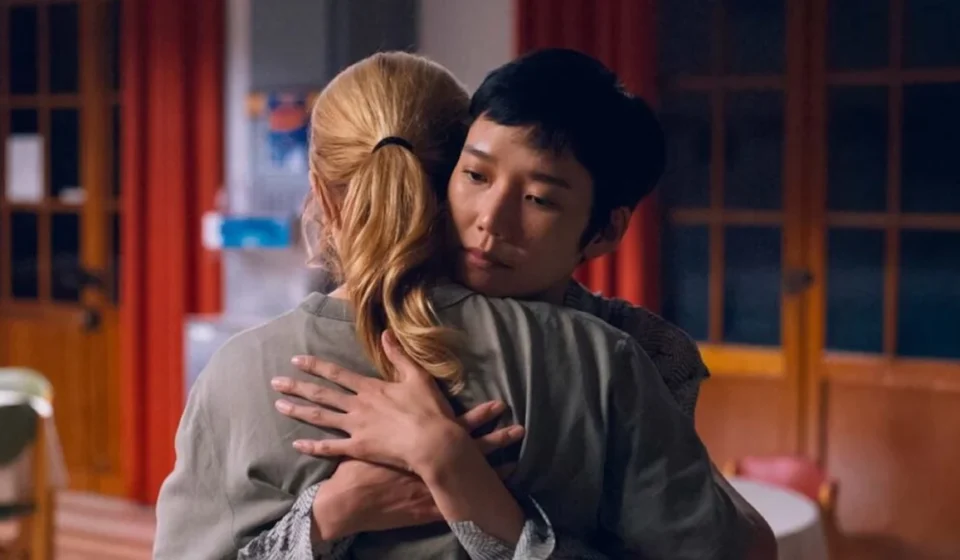
The festival’s top prize, the Palme d’Or, ultimately went to Cristian Mungiu’s Fjord, a polarizing, supersized exposé of the Norwegian child protective services. Mungiu’s win sparked significant debate, as critics wrestled with his increasingly reactionary undertones and his focus on the "nanny state" as a modern antagonist. In contrast, the true heartbeat of the festival was found in smaller, more intimate collaborations, such as the bond between Mari and Marie-Lou in All of a Sudden, which earned Virginie Efira and Tao Okamoto a joint Best Actress award.
Chronology of a Festival: From Anticipation to Revelation
The festival unfolded in a series of thematic waves, beginning with the exploration of connection in a declining world and moving toward rigorous, period-bound critiques of power.
- The Opening Phase: The buzz was dominated by All of a Sudden. Hamaguchi’s exploration of the friendship between a Japanese playwright and a French eldercare manager served as a microcosm for the festival’s preoccupation with the "global endgame." The presence of Japanese anthropologist Maho Isono at the premiere added a layer of profound reality, as her correspondence with the late philosopher Makiko Miyano served as the film’s narrative foundation.
- The Mid-Festival Pivot: As the festival progressed, the focus shifted to the structural weight of history. Pawel Pawlikowski’s Fatherland brought a fleet, elegant touch to the 1949 speaking tour of Thomas and Erika Mann, serving as a cautionary mirror for contemporary authoritarianism. This was followed by Emmanuel Marre’s A Man of His Time, a harrowing look at the moral rot of Vichy France, which utilized 16mm cinematography to collapse the distance between the viewer and the past.
- The Closing Acts: The final days were defined by bold debuts and genre-defying experiments. Marine Atlan’s La Gradiva emerged as perhaps the most critically lauded find of the festival, offering a whisker-sensitive look at teenage dynamics in Pompeii. Simultaneously, the festival concluded with a sharp, anti-authoritarian stance as Russian exile Andrei Zvyagintsev used his Grand Prix win for Minotaur to issue a direct, pointed challenge to Vladimir Putin.
Supporting Data: The Landscape of Competition and Distribution
The 2026 festival was marked by a fascinating interplay between traditional competition hierarchies and the emerging power of non-competition sections. The "Cannes hierarchy" was effectively challenged by the success of Critics’ Week entries like La Gradiva, which arrived with significant distribution momentum and high-profile critical backing.
The distribution landscape was equally diverse. NEON continued its aggressive acquisition strategy, bringing a bewilderingly wide range of titles to the table—from the monster-horror of Hope to the classical, family-centric tragedy of James Gray’s Paper Tiger. Meanwhile, the Camera d’Or for Best Debut Feature went to the Nigerian production Clarissa, a lush, post-colonial reinterpretation of Virginia Woolf’s Mrs. Dalloway.
Perhaps the most challenging entry was Arthur Harari’s The Unknown. Starring Léa Seydoux, the film was frequently mislabeled by critics as a "body-swap" movie. In reality, it was an uncompromising, singular work that used bodily displacement as a floating signifier for trauma and the queasy, inevitable solidarity that arises when one is estranged from their own self.

Official Responses and Industry Discourse
The discourse at Cannes 2026 was defined by a tension between the established "prestige" of the Competition and the vibrant, unpredictable energy of the Un Certain Regard and Fortnight sections.
Valeska Grisebach, speaking to an industry trade paper, encapsulated the festival’s mood regarding power dynamics when discussing The Dreamed Adventure. Addressing the film’s blunt treatment of gender relations in the post-Soviet borderlands, she remarked: "It was more interesting to address ideas about who is strong and who is weak… Who is, to speak frankly, fucking, and who is being fucked?" This unapologetic, direct approach to power echoed through other notable entries like Radu Jude’s update of Diary of a Chambermaid, which used the lens of modern labor migration to interrogate the double binds of parenthood and poverty.
The official response to Zvyagintsev’s closing-night speech was one of somber recognition. By explicitly urging the end of the Ukraine war and highlighting the disconnect between the Russian leadership and the reality on the ground, Zvyagintsev effectively reminded the audience that, regardless of the quality of the films, the festival remains a site of global political gravity.
Implications: A Year of "Compulsive Returns"
Looking back at the 2026 edition, the "meh year" narrative appears increasingly fragile. The true measure of a Cannes festival is rarely found in the consensus of the opening-week pundits; it is found in the films that linger in the psyche long after the lights have come up in the Lumière Theater.
The implications for the industry are clear: audiences and filmmakers are moving away from the "wham-bam" storytelling of the early 2020s toward a more patient, observational style. Whether it is the rhythmic, lived-in research of Grisebach’s The Dreamed Adventure or the haunting, ethereal exploration of grief in Sandra Wollner’s Everytime, the films of 2026 demand a different kind of engagement.
This year’s festival may not have provided a singular, unifying masterpiece that satisfies every critic’s checklist. However, it offered something arguably more valuable: a collection of works that define the contemporary moment—a time of anxiety, connection, and the slow-motion collision of history with the present. As we move into the latter half of the decade, the films showcased in 2026—from Ira Sachs’s AIDS-inflected The Man I Love to Dominga Sotomayor’s surreal La Perra—will undoubtedly be the ones that scholars, cinephiles, and audiences return to with the most frequency.
Cannes 2026 was not a failure of imagination; it was a festival that asked the audience to slow down, pay attention, and accept that the most profound impacts are often the ones that accumulate, layer by layer, until they change us entirely. The "ho-hum" sentiment was a distraction; the revolution was in the details.