From Reality to Ridicule: Courteney Cox’s ‘Evil Genius’ and the Dramatization of the Pizza Bomber Saga

The Toronto International Film Festival (TIFF) has long served as a prestigious launching pad for films seeking critical acclaim and awards-season momentum. However, the premiere of Courteney Cox’s latest directorial effort, Evil Genius, has sparked a complex conversation regarding the boundaries of true-crime dramatization and the shift in how audiences consume "stranger-than-fiction" narratives. Based on the notorious 2003 "pizza bomber" case in Erie, Pennsylvania, the film attempts to pivot from the somber investigative tone of previous documentaries into a realm of heightened, lurid dark comedy.
Main Facts: A Star-Studded Reimagining of a National Tragedy
Evil Genius marks Courteney Cox’s first return to the director’s chair for a feature-length film since her 2014 debut, Just Before I Go. For this project, Cox has assembled a high-profile cast to inhabit the roles of some of the most eccentric and disturbing figures in modern American criminal history.
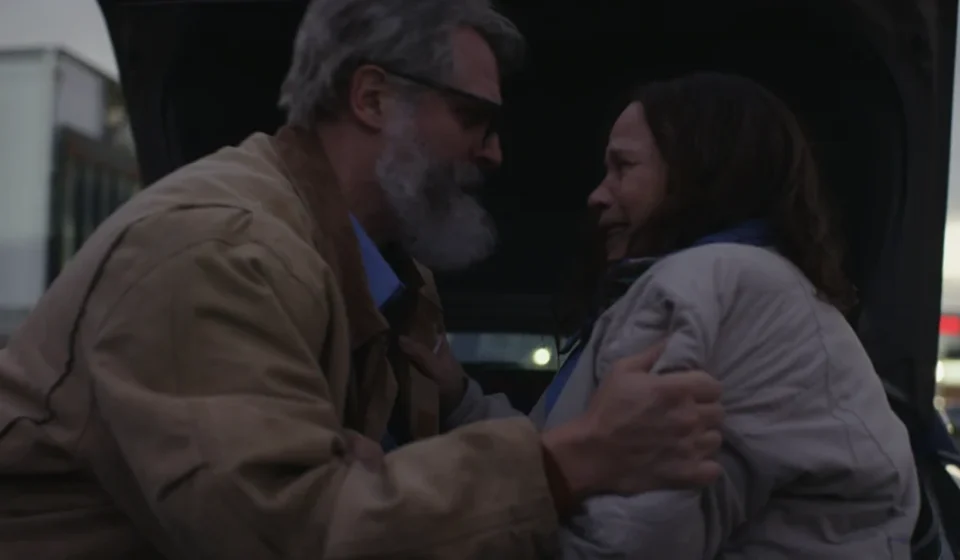
The film stars Academy Award winner Patricia Arquette as Marjorie Diehl-Armstrong, the brilliant but deeply disturbed woman identified by federal prosecutors as the mastermind behind the 2003 bank robbery and explosion. Opposite her is David Harbour, known for his work in Stranger Things, who portrays Bill Rothstein, Diehl-Armstrong’s one-time lover and a key co-conspirator. The role of Brian Wells, the ill-fated pizza delivery driver who became the face of the tragedy, is played by actor-filmmaker Tom McCarthy.
While the film shares its title with the 2018 Netflix documentary series that revitalized public interest in the case, Cox’s iteration is a dramatized "comedy of errors." It focuses less on the procedural "how-to" of the FBI investigation and more on the toxic, dysfunctional interpersonal dynamics between the conspirators. Written by Courtenay Miles—a writer known for her sharp work on Netflix’s Mindhunter—the film attempts to find a satirical edge in a story defined by weaponized criminal incompetence.
Chronology: From the Freezer to the PNC Bank
The narrative structure of Cox’s Evil Genius departs from the traditional linear investigation, opting instead to "loopily join the dots," as critics have noted. To understand the film’s trajectory, one must look at the timeline of the real-life events it seeks to dramatize:
The Prelude: A Body in the Freezer
The film begins not with the bank robbery, but with a secondary, equally macabre crime. Bill Rothstein (Harbour) calls the Erie police to report a dead body hidden in a freezer in his garage. The body is that of James Roden, the boyfriend of Marjorie Diehl-Armstrong (Arquette). This event serves as the catalyst that eventually pulls the thread on a much larger, more convoluted plot.
August 28, 2003: The "Pizza Bomber" Incident
The film’s central set-piece—and its ultimate climax—is the death of Brian Wells. Wells, a 46-year-old delivery driver, arrived at a PNC Bank outside Erie with a cane-shaped shotgun and a massive metal collar locked around his neck. He handed the teller a note demanding $250,000, claiming he was a hostage being forced to complete a "scavenger hunt" to find the keys to unlock the bomb.
After leaving the bank with only $8,702, Wells was apprehended by police in a nearby parking lot. As television cameras rolled and officers stood back, the device began to beep. Wells pleaded for help, insisting he was an innocent victim. Moments later, the device detonated, killing him instantly.
The Investigation and Aftermath
The film condenses a years-long FBI investigation into a 97-minute runtime. It follows the "frenetically pinballing" efforts of the conspirators to stay ahead of the law, highlighting the sheer absurdity of their plan. The real investigation eventually revealed a web of social outcasts and petty criminals, led by Diehl-Armstrong, who allegedly sought the money to pay a hitman to kill her father so she could claim her inheritance.
Supporting Data: Technical Execution and Creative Choices
The film’s aesthetic and technical choices have become a focal point for critics and audiences alike. Cox and her creative team intentionally leaned into an "unlovely" style to match the sordid nature of the story.
Cinematography and Sound
Lensed by Eigil Bryld, the film utilizes a harsh, "pitiless gray" visual palette. The framing is often rough and claustrophobic, designed to reflect the decaying mental states of the characters and the bleak industrial backdrop of Erie.
The sound design is equally aggressive. The dialogue is frequently punctuated or even submerged by a "blunt" soundtrack featuring rock legends. Needle drops ranging from the eerie classic rock of Blue Öyster Cult to the experimental melancholy of Radiohead are used to emphasize the "ragged farce" of the criminal enterprise.
Performance Dynamics
The weight of the film rests largely on Patricia Arquette. Her performance as Marjorie Diehl-Armstrong is described as "unmodulated" and "to-the-rafters," presenting Marjorie as a "stridently one-note" figure of terminal misanthropy. To provide a glimpse into the character’s origins, the film utilizes flashbacks featuring Arquette’s real-life daughter, Harlow Jane, as a younger Marjorie. These scenes attempt to show an intelligent, ingenuous woman before her descent into mental illness and criminality, though critics suggest the "connective tissue" between these eras remains thin.
In contrast, David Harbour provides a "quietly shambling" performance as Rothstein. His portrayal emphasizes the "hapless milquetoast" nature of a man who was simultaneously a skilled handyman and a psychological captive to Diehl-Armstrong’s whims.
Official Responses and Critical Reception
The reception following the TIFF gala premiere has been polarized, reflecting the difficulty of balancing comedy with a real-life tragedy that resulted in a horrific public death.
The "Small Room" Critique
Several industry analysts noted that while the film enjoyed a gala premiere, its scale felt "a little small for the room." There is a growing sentiment that this iteration of Evil Genius—much like the documentary before it—is better suited for streaming platforms than for a wide theatrical release. The familiarity of the story, which has been "binged from the comfort of the couch" by millions already, makes the prospect of a theatrical "rehash" a difficult sell.
The Ethics of Irony
Critics have questioned the "lurid, mocking glee" with which the film approaches its subjects. By framing the events as a comedy of errors, the film "punches down" on the characters’ criminal incompetence. The title itself is used "snidely and ironically," highlighting that these were not masterminds, but rather individuals who failed at every turn. While some find this approach a refreshing take on the often self-serious true-crime genre, others argue it lacks the empathy required to handle a case involving a victim as vulnerable as Brian Wells.
Implications: The Evolution of True Crime as Entertainment
The production of Courteney Cox’s Evil Genius signals several broader trends in the media landscape:
1. The "Dramatization Loop"
We are entering an era where successful documentary intellectual property (IP) is immediately being recycled into scripted features. This creates a "dramatization loop" where audiences are asked to consume the same tragic events multiple times through different stylistic lenses. The challenge for filmmakers is to provide a "new reveal" or a fresh perspective that the documentary couldn’t offer. In the case of Cox’s film, that fresh perspective is satire—a risky choice when the "pizza bomber" incident remains a traumatic memory for many.
2. The Star Power Draw
Despite criticisms of the film’s tone, the involvement of Patricia Arquette and David Harbour ensures it will remain a significant point of interest. Arquette’s "attention-grabbing characterization" is already being discussed as "Emmy catnip," suggesting that even if a film struggles as a cohesive narrative, a singular powerhouse performance can sustain its relevance in the streaming ecosystem.
3. The Shift in Directorial Vision
For Courteney Cox, Evil Genius represents a pivot toward darker, more complex material. Moving away from the broader comedy of her earlier work, she is attempting to establish herself as a director capable of handling "ugly" stories. Whether this specific tonal experiment succeeds or not, it indicates a desire among veteran actors-turned-directors to tackle the gritty, the absurd, and the uncomfortable.
4. Audience Fatigue vs. Fascination
The film’s reliance on "rubberneckers" and public fascination with the 20-year-old case highlights a tension in modern viewership. While there is a "built-in audience" for true crime, there is also a growing "mileage" issue—how long can audiences stay engaged with the same facts before the "mocking glee" of a dramatization begins to feel redundant?
In conclusion, Courteney Cox’s Evil Genius is a provocative, if abrasive, addition to the true-crime canon. It swaps the forensic detail of the Netflix documentary for a character study of "toxic amour fou" and criminal ineptitude. As it moves from the festival circuit to its eventual home on screens, it will likely serve as a litmus test for how much irony audiences are willing to accept in their consumption of real-world horror.