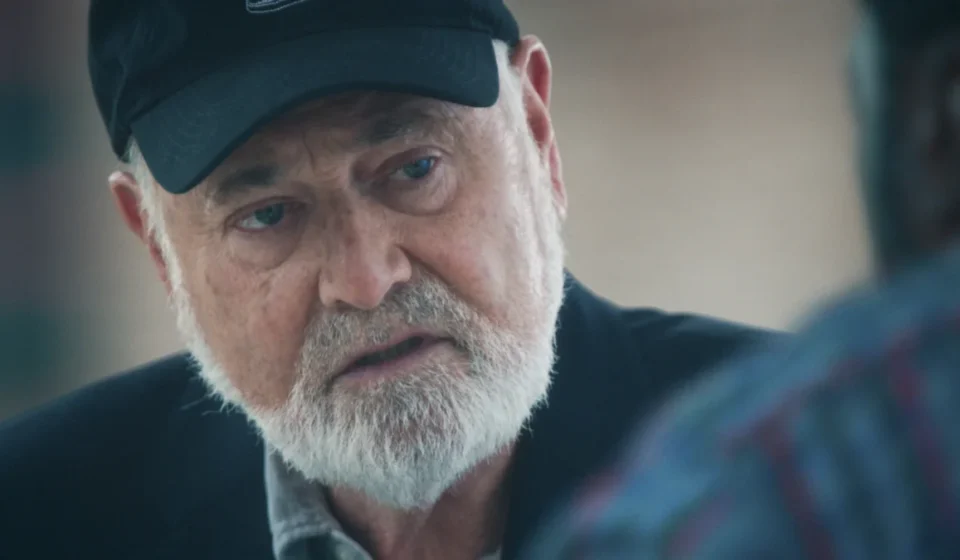

The television landscape was forever altered by the announcement of this year’s Emmy nominations, but among the celebrations of contemporary hits, one entry stands out with profound poignancy. Rob Reiner, the iconic filmmaker and actor whose career spanned generations, has been posthumously nominated for an Emmy Award for his guest role in the fourth season of FX’s critically acclaimed culinary drama, The Bear.
This recognition arrives in the wake of a tragic conclusion to a life defined by creative brilliance. Reiner’s nomination serves as a bittersweet coda to a storied trajectory that began in the living rooms of 1970s America and concluded with a final, pointed creative statement on the landscape of modern political satire.
The Nomination: A Return to His Roots
Reiner is currently competing in the "Outstanding Guest Actor in a Comedy Series" category for his nuanced performance as Albert Schnurr. In the episode, Schnurr—a seasoned restaurant and business consultant—provides a grounding, authoritative presence as he guides the character Ebraheim (played by Edwin Lee Gibson) through the complex, often treacherous waters of franchising.
The performance was vintage Reiner: understated, professional, and imbued with the natural charisma that first made him a household name. For many industry observers, the nomination feels like a homecoming. It marks Reiner’s first Emmy nomination for acting since 1978, the year he secured the award for Best Supporting Actor for his indelible portrayal of Michael “Meathead” Stivic in the groundbreaking CBS sitcom All in the Family.
Between 1972 and 1978, Reiner was a fixture at the Emmys, earning five nominations for his work on All in the Family and securing two wins. His return to the category nearly five decades later is a testament to the enduring quality of his craft, proving that even as his career evolved into one of the most successful directing tenures in Hollywood history, his instincts as a performer remained razor-sharp.
A Career in Context: From "Meathead" to Master Auteur
To understand the significance of this nomination, one must appreciate the sheer breadth of Reiner’s impact on American culture. Born into the heart of the comedy industry, Reiner did not just witness the evolution of entertainment; he directed it.
The Television Era
His breakout role as "Meathead" on All in the Family was more than just a comedic performance; it was a societal mirror. Reiner’s character, the progressive foil to Carroll O’Connor’s Archie Bunker, provided the necessary friction to address the racial, social, and political tensions of the Nixon era. His ability to anchor such heavy thematic material with humor and empathy established him as a premier talent in the medium.
The Directorial Legacy
Following his success in television, Reiner pivoted to film, where he would assemble a resume that few directors in history could rival. His filmography reads like a syllabus for American cinema:
- This Is Spinal Tap (1984): Invented the mockumentary genre and remains the gold standard for satire.
- The Princess Bride (1987): A cultural touchstone that transcended genre, blending fantasy, romance, and meta-comedy into a perfect film.
- When Harry Met Sally… (1989): Redefined the romantic comedy, setting a standard for dialogue and character chemistry that is still chased by filmmakers today.
These films were not merely successful; they were transformative. Reiner possessed a rare ability to balance sentimental warmth with intellectual rigor, a duality that made his work accessible to the masses while earning the respect of his peers.
The Final Year: A Busy Creative Schedule
Even in the twilight of his life, Reiner showed no signs of slowing down. In 2024, he received two additional Emmy nominations for his work on the Albert Brooks documentary, Defending My Life, earning recognition for both directing and producing.
This prolific output highlights a man who was deeply committed to his craft until his final days. Whether documenting the life of a fellow comedic titan or stepping back in front of the camera to play a consultant on The Bear, Reiner remained engaged with the medium that defined his existence.
The Tragic Circumstances
The news of his nomination is inextricably linked to the tragic events of December 14, when Rob Reiner and his wife, Michele, were found stabbed to death in their Los Angeles residence. The subsequent investigation into their deaths resulted in their son, Nick Reiner, being charged with two counts of first-degree murder.
The shock of this loss reverberated throughout the entertainment industry, leaving colleagues, fans, and friends to grapple with the senselessness of a tragedy that cut short the lives of two prominent figures. The posthumous nomination has served as a flashpoint for a public mourning process, forcing the industry to reconcile the celebration of his work with the devastation of his loss.
The "Last Laugh": A Final Political Statement
Perhaps the most striking aspect of Reiner’s final months was his return to acting for a project that felt deeply personal. In a cameo for Larry David’s historical sketch comedy series, Life, Larry and the Pursuit of Unhappiness (HBO), Reiner appeared as George Washington.
The sketch, which aired on July 3, was a sharp, biting satire of modern American politics, specifically targeting Donald Trump. In the scene, Reiner—clean-shaven and appearing as the stoic, principled first president—delivers a speech about the necessity of transferring power and refusing to seek a third term.
Director Jeff Schaffer, who worked closely with Reiner on the project, noted in an interview with Variety that the cameo was filmed just one month before Reiner’s death. "It was important to him," Schaffer shared. "He wanted to take one last swing. It was the last laugh." Given Reiner’s history as an outspoken critic of the former president, the performance was seen as a final, deliberate act of political expression, a synthesis of his lifelong passion for activism and his mastery of comedic timing.
Implications and Industry Legacy
The Emmy nomination for The Bear is more than a sentimental gesture; it is an acknowledgment of a performer who was, until the very end, at the top of his game. It underscores the fluidity of the modern television landscape, where legends can seamlessly transition into the gritty, hyper-realistic worlds of contemporary dramas.
For the Television Academy, the nomination presents a unique position. It elevates the discussion around posthumous honors and ensures that Reiner’s final contribution to the medium is preserved in the history books. As the industry looks toward the upcoming awards ceremony, the presence of Reiner’s name on the ballot serves as a solemn reminder of his influence.
His legacy is not merely one of accolades—though he has many—but one of profound human connection. From the dinner tables of All in the Family to the kitchens of The Bear, Rob Reiner spent his life teaching audiences how to look at the world with a bit more empathy, a lot more humor, and a constant, unwavering commitment to the truth. As he is honored posthumously, the industry remembers a man who never stopped working, never stopped speaking his mind, and never stopped making us laugh.