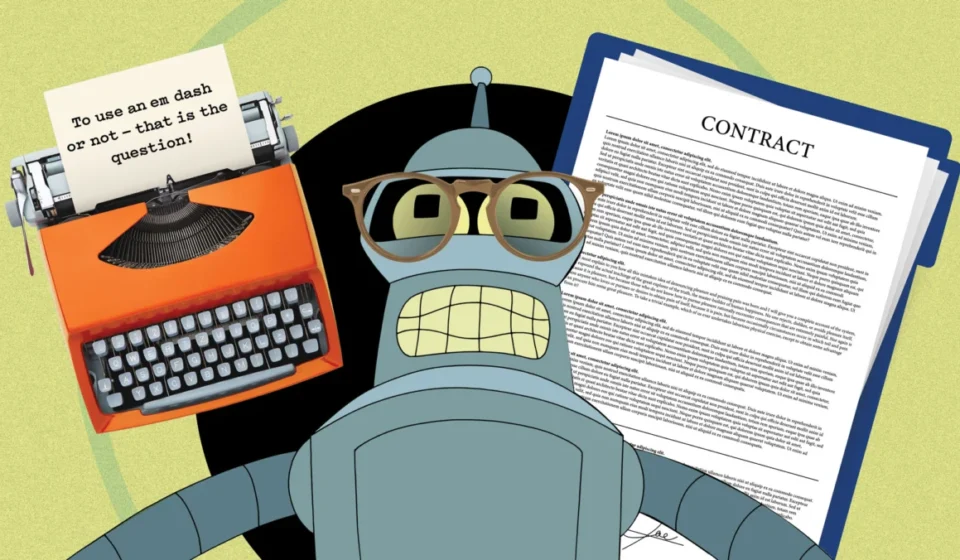
The Ghost in the Manuscript: Why the Publishing Industry is Warring Over AI-Generated Prose

The literary world is currently grappling with a high-stakes identity crisis. As artificial intelligence tools become increasingly sophisticated, the barrier between human-crafted storytelling and machine-generated content has begun to blur—often with explosive, bank-breaking consequences. The latest flashpoint in this technological tug-of-war centers on a thriller titled Call Me, I’ll Hide the Body, a manuscript that sparked a fierce bidding war among 14 major publishers before collapsing under the weight of a singular, damning accusation: that its author relied on AI to pen the narrative.
While the prose remains unread by most, the industry’s reaction to the revelation suggests that we have entered a new era of literary scrutiny where the "purity" of the writing process is becoming just as valuable—and as contentious—as the plot itself.
The Rise and Fall of Call Me, I’ll Hide the Body
The trajectory of Call Me, I’ll Hide the Body began with all the hallmarks of a breakout success. The premise was catnip for the industry: a gritty, cinematic thriller centered on a professional "cleaner"—reminiscent of Harvey Keitel’s Winston Wolf in Pulp Fiction—who finds himself entangled in the dangerous web of a Texas drug cartel.
The market response was immediate and overwhelming. When the manuscript hit the auction block last month, it drew interest from 14 different publishing houses. The eventual winner, Minotaur, a division of Macmillan, reportedly tabled an offer of $2.4 million, a sum reflecting both the commercial hunger for high-octane thrillers and the confidence of editors who believed they had found the next big thing.
However, the deal proved as fragile as it was lucrative. Almost as soon as the terms were announced, rumors began to circulate regarding the book’s origins. Accusations that the author, 25-year-old Nigerian writer Jerry Falade, had utilized AI tools to generate the text triggered an immediate industry fallout. The deal dissolved with unprecedented speed, leaving the publishing community to wonder how a project with such massive backing could evaporate overnight.
A Growing Pattern: The 2024 AI "Scandals"
The collapse of the Falade deal is not an isolated incident; it is the third major AI-related controversy to strike the publishing industry this year, signaling a systemic anxiety regarding the future of authorship.
The Shy Girl Incident
In March, Hachette pulled Mia Ballard’s Shy Girl from the shelves after internal AI detectors flagged 78 percent of the manuscript as computer-generated. Ballard’s defense was that a freelance editor, hired to assist with the project, had surreptitiously inserted AI-generated passages without her knowledge. The incident highlighted the vulnerability of authors who rely on third-party editorial assistance, leaving publishers in the difficult position of policing not just their authors, but the entire supply chain of the creative process.
The Daggermouth Dilemma
The controversy surrounding Daggermouth, a viral dystopian thriller, presented a different challenge. After Simon & Schuster secured the rights in a seven-figure deal, detectors flagged 60 percent of the book as machine-written. Unlike the other cases, however, the book was released in late July. The author, H.M. Wolfe, vehemently denied the allegations, and the publisher ultimately chose to stand by the work. This split in institutional response—pulling a book versus standing by an author—illustrates the lack of a standardized protocol for dealing with these allegations.
The Human Cost: Jerry Falade’s Perspective
The specifics of the Falade case, first brought to light by Jeff Sneider’s The InSneider, underscore the devastation these accusations can wreak on a young career. Despite Falade’s consistent denial of AI usage, the industry’s verdict was swift and unforgiving. When Publishers Lunch reported a 97 percent AI-likelihood score from their detection software, the walls closed in.
"Within six hours, I had been dropped by my agency, deals were paused and press releases were being issued," Falade stated in an interview with The Guardian. Beyond the book deal, the fallout effectively detonated a film rights auction that was being organized by UTA’s Jason Richman, representing a total loss of potential career-defining opportunities. For a 25-year-old writer, the speed of the professional excommunication suggests that in the current climate, the mere appearance of AI usage is sufficient for a "guilty" verdict.
The Great Debate: Does the Reader Care?
As the industry rushes to condemn, a more fundamental question remains largely unaddressed: What, exactly, is the crime?
From a legal standpoint, the concerns are tangible. Current intellectual property law in the United States does not protect works generated by non-human entities. If a publisher buys a book that is 90 percent AI-written, they may be purchasing a product that cannot be copyrighted, leaving their investment vulnerable to piracy or unauthorized reproduction.
However, from the reader’s perspective, the issue is murkier. If a book is compelling enough to trigger a 14-publisher bidding war and capture the interest of Hollywood, does the reader care about the "purity" of the pen? Historically, readers have been less concerned with the mechanics of creation and more focused on the emotional resonance of the final product. Yet, there is a clear consumer expectation that the "author" is a human being with a unique lived experience. When that connection is perceived to be severed by an algorithm, the feeling of betrayal is palpable.
The Flaw in the System: The Reliability of Detectors
The most uncomfortable aspect of this controversy is the reliance on the very tools that are meant to police it. AI detection software is famously inconsistent, often struggling to differentiate between machine patterns and the stylistic quirks of human writers.
A significant study led by researchers at Stanford University found that AI detectors are prone to a high rate of false positives, particularly when assessing the work of non-native English speakers. The study found that such writers were falsely flagged as "AI-generated" more than 60 percent of the time. This introduces an element of systemic bias; if a writer’s prose is highly structured or follows traditional academic templates—often taught to non-native speakers—they are more likely to be penalized by these algorithms.
The absurdity of this technological reliance was highlighted by a recent experiment: when a human-written piece of commentary from The Hollywood Reporter was fed into a randomly selected online AI detector, the software incorrectly claimed that 96 percent of the text was AI-generated. This "glitchiness" suggests that the publishing industry may be burning bridges based on the outputs of software that is fundamentally unreliable.
Implications for the Future of Publishing
The publishing industry is now at a crossroads. As generative AI becomes a standard tool for everything from grammar checking to brainstorming, the line between "human" and "AI-assisted" will continue to fade.
- Contractual Clarity: Publishers are expected to introduce more rigorous clauses in author contracts, specifically regarding the disclosure of AI-assisted tools.
- The Human "Provenance" Movement: Much like the farm-to-table movement in food, we may see the rise of "human-certified" literature, where authors provide drafts, notes, and evidence of the creative process to prove human authorship.
- The Legal Vacuum: Until the courts or Congress provide clear guidance on the copyright status of AI-assisted works, publishers will likely remain risk-averse, treating any suspected AI usage as a liability.
Ultimately, the case of Call Me, I’ll Hide the Body is a cautionary tale about the intersection of hype and panic. While the industry is right to protect the integrity of the creative arts, it must also grapple with the reality that its current tools for detection are not yet sophisticated enough to support the career-ending decisions being made in their name. Until there is a more nuanced way to define and prove authorship, the ghost in the machine will continue to haunt the halls of publishing.
In other developments, the architect of the "Operation Varsity Blues" scandal, Rick Singer, has returned to the headlines, reportedly continuing his efforts to assist students with college admissions, while historians have recently unearthed lost letters belonging to Ian Fleming, the creator of James Bond.