The New Gatekeepers: How Letterboxd Is Upending the Traditional Film Distribution Model

For decades, the film festival circuit—Sundance, Cannes, Berlin, and Toronto—functioned as the undisputed "main gate" for independent cinema. It was a clear, albeit arduous, pipeline: filmmakers would premiere their work, secure a sales agent, and hope for a bidding war that would lead to a theatrical or streaming release. However, as the post-COVID landscape fundamentally altered audience habits and corporate risk tolerance, that road has become increasingly obstructed.
For many independent directors, the festival circuit no longer guarantees a home for their work. Instead, a new, unconventional player has emerged in the digital ecosystem: Letterboxd. Through its "Unreleased Gems" shelf, the movie-logging app has transformed from a niche social network for cinephiles into a powerful engine for film discovery and, ultimately, commercial distribution.
A Stagnant Marketplace: The Crisis of Traditional Festivals
The modern festival landscape is currently defined by a "wait-and-see" mentality among traditional buyers. Data from the 2026 Sundance Film Festival illustrates the severity of this shift: out of more than 90 films and episodic series presented, a mere dozen arrived with pre-existing distribution. The remaining 80-plus projects were left to navigate a cooling market, with many failing to secure buyers until months after the festival’s conclusion.
This follows a notoriously quiet 2025 market, where deals were so sparse that the very necessity of the traditional festival model came into question. "Festivals are not what they were in the mid-90s and 2000s," says filmmaker Chris Merola, whose project Lemonade Blessing spent months navigating the circuit without a bite. "The post-COVID landscape accelerated viewing and purchasing patterns into the digital sphere. Festivals have not been able to fully recover."
Merola’s experience highlights the financial strain on indie creators. Between hiring publicists and covering the exorbitant costs of festival attendance, many filmmakers are effectively paying for the privilege of being ignored by distributors who are increasingly risk-averse. "Every deal they pass on costs them nothing," Merola notes. "Every deal they say yes to, they own if it flops. The smart move for them is to sit still and let their library bring in money."
The Rise of "Unreleased Gems": A Digital Lifeboat
Enter Letterboxd’s "Unreleased Gems," a corner of the company’s Video Store designed to give high-potential, orphaned festival films a second life. In the less than a year since the Video Store’s inception, the platform has cultivated a reputation for identifying films that the traditional market initially overlooked.
According to Courtney Mayhew, Head of Video Store Content, approximately half of the titles featured on the Unreleased Gems shelf have gone on to secure wider distribution. While not a universal guarantee, this track record has turned the shelf into a must-watch list for scouts, agents, and distributors alike.

For filmmakers, the appeal of the Video Store goes beyond mere exposure. It offers a transparent, revenue-sharing model that stands in stark contrast to the predatory "debt" structures common in traditional distribution, where marketing and printing costs are often recouped from the filmmaker’s share. "If I take a normal distributor, they’re going to charge me for print and advertising as a debt," Merola explains. "With Letterboxd, it’s revenue sharing. They didn’t charge me anything."
Chronology of a Disruption: The Case of It Ends
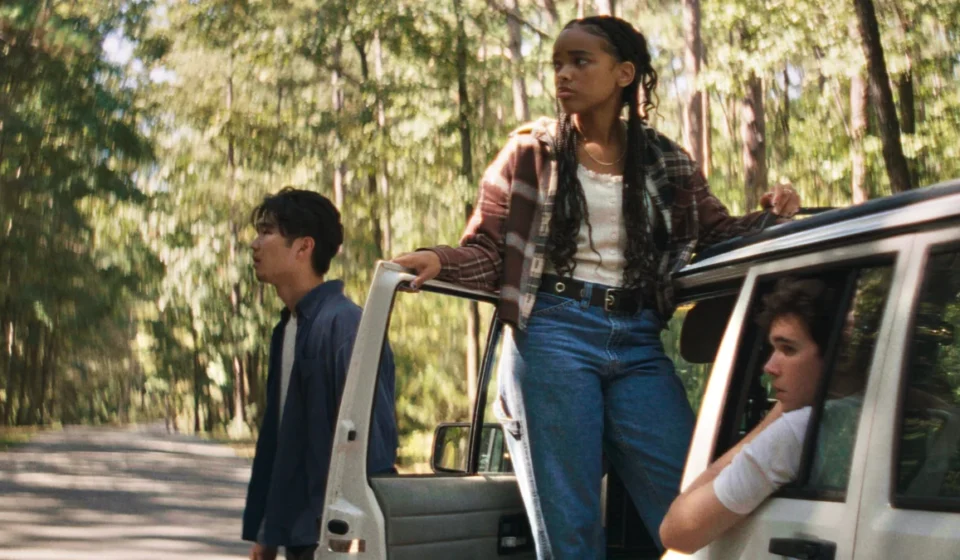
The success of Alexander Ullom’s film It Ends serves as the definitive case study for the power of this new model. Despite months on the festival circuit, the film failed to generate a significant offer. Ullom noted that during that period, he rarely heard of a minimum guarantee exceeding $50,000 from even the most established players.
The tide turned when Ullom, acting with guerrilla-marketing ingenuity, managed to infiltrate a Jurassic World: Rebirth promotional event. By positioning himself as an influencer, he caught the attention of horror creator Nicolas Curcio, whose subsequent social media endorsement generated nearly a million views. This digital momentum caught the eye of Letterboxd’s leadership, leading to the film’s inclusion on the Unreleased Gems shelf.
The result was near-instantaneous validation. Within eight days of appearing on the platform, Neon acquired the film. The data behind this acquisition was undeniable: between its addition to the shelf and the eventual deal, the number of Letterboxd members logging the film as "watched" quadrupled. This provided distributors with empirical evidence of audience demand—a metric that is difficult to ignore even in a cautious market.
Supporting Data: The Power of Community Metrics
What makes the Letterboxd model so effective is its reliance on "organic" data. Mayhew and George Linehan-Mitchell, Head of Strategy, emphasize that they do not select films based on internal, black-box algorithms. Instead, they look for genuine viewer chatter, list appearances, and off-platform momentum.
The platform’s growth to over 30 million users globally has created a high-density environment where niche films can quickly find a passionate base. According to figures provided by the company, the "watchlist" volume for titles on the Unreleased Gems shelf jumps an average of 40 times. For a skeptical distributor, these figures represent a de-risked asset. It isn’t just a "good" film; it’s a film with a proven, albeit small, audience.
Official Responses and Strategic Philosophy
Despite the clear commercial success stories, Letterboxd remains cautious about framing itself as a replacement for traditional distribution. "We would never presume whether these filmmakers want to have a traditional distribution," Mayhew stated.

The company’s philosophy is centered on the value of advocacy. Even if a film doesn’t land a major theatrical deal, finding a core group of "ambassadors"—viewers who champion the film and evangelize it to their own networks—is viewed as a victory in its own right.
This approach is reflected in the upcoming slate of additions to the Unreleased Gems shelf. The next three titles include:
- Downbeat: A narrative about a musician’s attempt to rebuild his life through street performance.
- The Weed Eaters: A New Zealand-based horror-comedy centered on an accidental murder spree.
- I Only Rest in the Storm: A critically acclaimed Cannes prize-winner from director Pedro Pinho that examines colonial history.
By curating such a diverse mix of titles, Letterboxd is effectively building a "tasting menu" for global cinema, ensuring they serve different audience demographics rather than pushing a singular aesthetic.
The Long-Term Implications for the Film Industry
The success of the Unreleased Gems model suggests a shift in the power dynamics of independent film. For decades, the bottleneck of distribution was controlled by a small circle of festival programmers and boutique studio executives. By democratizing access to audience data and lowering the barriers to discovery, Letterboxd is forcing traditional players to rethink their criteria for success.
The implications are twofold. First, it empowers filmmakers like Merola and Ullom to take control of their own narratives, utilizing social proof to demand better terms from distributors. Second, it serves as a wake-up call to the festival system: if festivals fail to act as efficient marketplaces, they will continue to lose their relevance to digital platforms that can mobilize audiences in real-time.
As the industry moves toward a more fragmented, digital-first future, the "Letterboxd effect" is likely to expand. The platform has effectively bridged the gap between the "high art" of the festival circuit and the "social discovery" of modern digital culture. For independent filmmakers, the message is clear: while the traditional gates may be closing, the walls are becoming increasingly porous. In this new landscape, the audience is no longer just the final destination—they are the primary catalyst for the deal itself.