Bridging the Dynamic Range Gap: Beeble’s SwitchHDR Redefines AI-Driven Reconstruction for Modern Pipelines

In the high-stakes world of professional post-production, the push for High Dynamic Range (HDR) mastering has created an unintended crisis: a massive disparity between the vast, legacy archive of Standard Dynamic Range (SDR) footage and the increasingly demanding requirements of modern, HDR-compliant deliverables. While various algorithmic approaches have long promised to bridge this gap, most have fallen short, often producing artifacts—such as banding, noise amplification, and "plasticky" shadow textures—that render them unusable for high-end cinematic workflows.
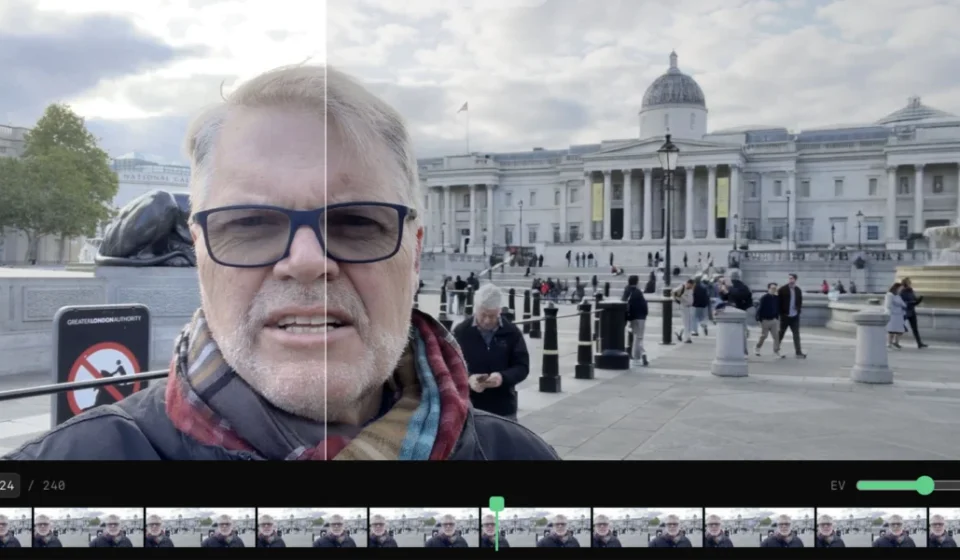
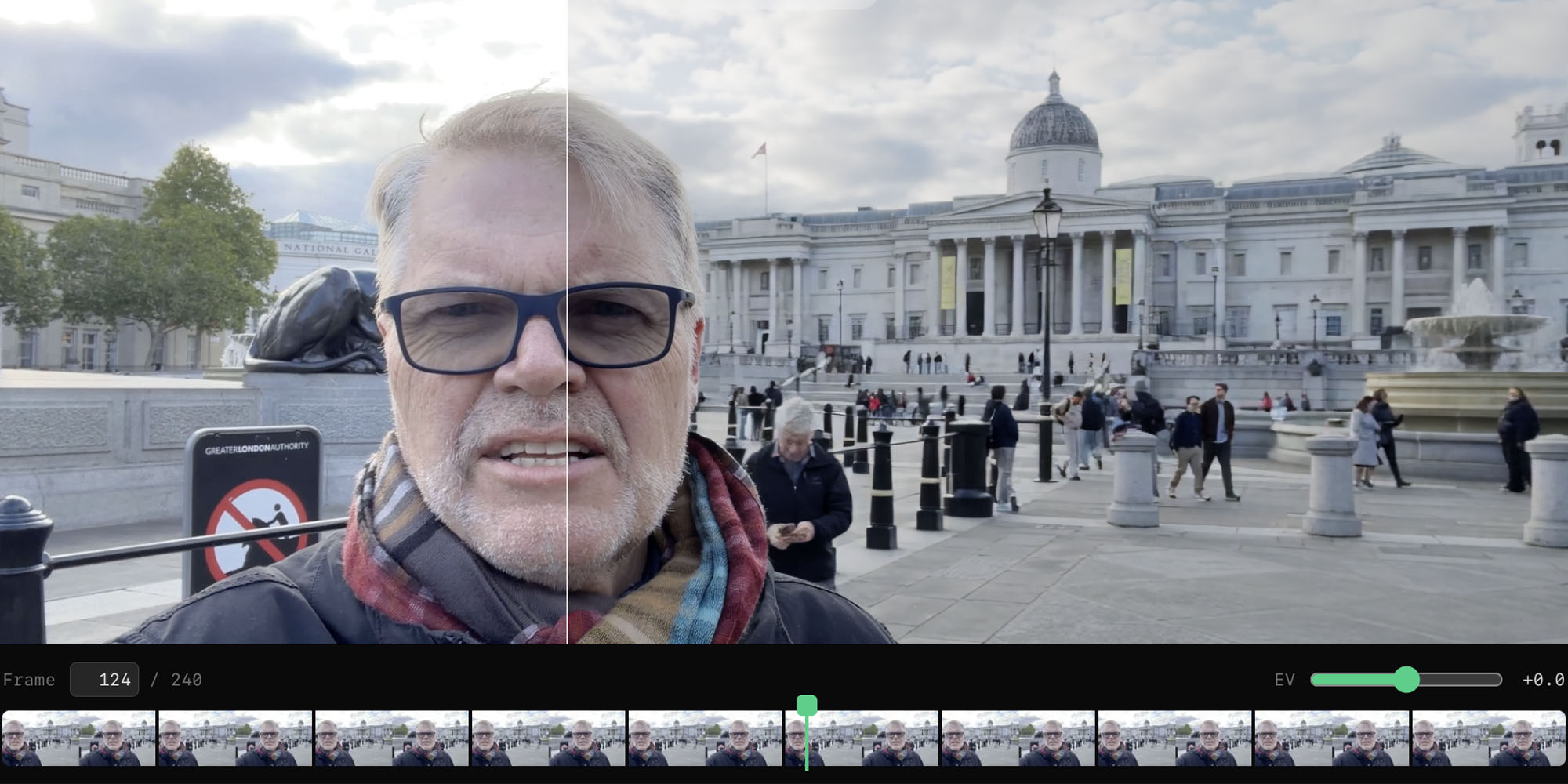
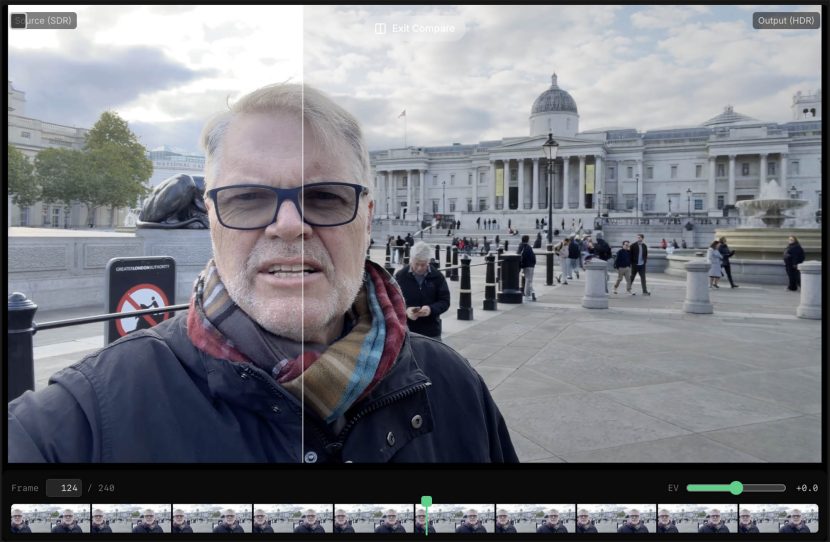
Enter Beeble, a Seoul-based AI developer, which has officially launched SwitchHDR. Unlike traditional "stretching" tools that merely remap existing pixel values, SwitchHDR is an AI model engineered to reconstruct HDR imagery from conventional SDR sources. By outputting scene-linear 16-bit EXR sequences, the tool is positioned as a sophisticated utility for colorists, VFX artists, and restoration specialists who require a workflow-compatible solution to integrate archival or limited-range footage into contemporary HDR masters.
The Core Innovation: Training on Real Radiance
The fundamental problem with previous SDR-to-HDR conversion tools is their reliance on the very signals they aim to expand. When a camera captures an image in SDR, highlight detail is often permanently "clipped," and shadow information is frequently compressed into noise. A mathematical expansion of these values cannot "find" detail that was never recorded.
Beeble’s distinction lies in its training methodology. Rather than being trained primarily on SDR datasets, SwitchHDR has been trained on authentic HDR footage. By analyzing the structural characteristics of high-radiance scenes, the model acts less like a simple filter and more like an informed engine of reconstruction. It infers plausible HDR data where information is missing, effectively "re-lighting" the image in a way that aligns with the visual language of native HDR cinematography.
Chronology: From Relighting to Holistic AI Pipelines
The launch of SwitchHDR represents a significant milestone in Beeble’s trajectory. Founded in 2022 by CEO Hoon Kim, the company initially gained industry attention with "SwitchLight," a groundbreaking tool that allowed for AI-driven relighting of footage.
- June 2023: fxguide first profiled Beeble, focusing on their innovative single-model approach to relighting. At that time, the company was a nascent player, but one with a clear vision: solving concrete, granular production problems through machine learning.
- 2024–2025: The company rapidly expanded its toolset, moving from simple relighting to more complex, mask-guided video-to-video manipulation (SwitchX) and PBR (Physically Based Rendering) workflows.
- July 2026: The official unveiling of SwitchHDR at a moment where the industry is struggling to manage legacy assets in modern finishing suites. The release coincides with the further development of "Canvas," a node-based interface that allows users to chain Beeble’s models alongside third-party AI tools.
This evolution highlights a shift from "AI as a curiosity" to "AI as a production-hardened utility." Beeble has consistently avoided the "magic button" approach, choosing instead to build tools that fit into the standard software stacks of major studios.
Technical Implementation: The Production-Grade Standard
For the professional VFX artist, the technical output is just as important as the visual result. SwitchHDR outputs in 16-bit EXR sequences using the ACES2065-1 color space and AP0 primaries. This is a critical decision by Beeble’s engineering team. By utilizing the Academy Color Encoding System (ACES), the tool ensures that the reconstructed HDR data is not just "looking" right on a display, but is mathematically prepared for integration into complex compositing pipelines.
The Role of Artist Control
Perhaps the most "production-ready" feature of SwitchHDR is its rejection of the "black-box" paradigm. Beeble has integrated:
- Luminance Masking: Users can isolate specific highlight or shadow regions, ensuring the AI only operates where necessary.
- Text-Guided Reconstruction: Artists can influence the behavior of the model through text prompts, allowing them to dictate the "look" of the reconstruction.
- Selective Application: The AI can be applied to specific areas of a frame, while the remaining image is passed through without alteration, maintaining the integrity of the original source where reconstruction isn’t required.
This control allows a director or colorist to make creative decisions—such as intentionally leaving a window "blown out" rather than forcing detail where the narrative doesn’t call for it. It shifts the AI from a decision-maker to an assistant, preserving the filmmaker’s creative intent.
Official Perspectives: Hoon Kim on the Philosophy of Tools
In discussions regarding the launch, Hoon Kim emphasized that the development process was dictated by the realities of the edit suite rather than the desires of a marketing department.
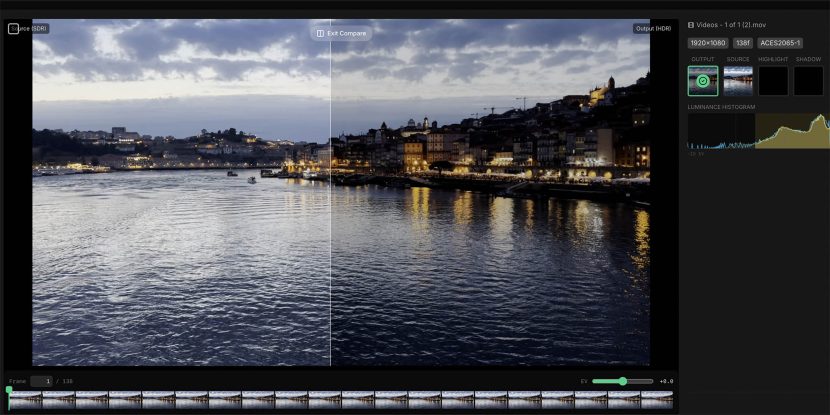
"From day one, we built SwitchHDR around what post-production actually requires, not what makes a good demo," Kim stated. "We prioritize temporal consistency across full sequences and give artists explicit control. Where real detail survives, we recover it. Where it’s fully clipped, the artist decides how it gets rebuilt. That distinction is what makes it production-grade."
Kim also acknowledged the challenges inherent in the current state of AI. "Most of the world’s video exists in SDR, yet today’s productions increasingly expect HDR-quality assets. SwitchHDR bridges that gap by estimating a scene-linear HDR representation, giving filmmakers a practical way to integrate SDR footage into modern HDR pipelines while maintaining total creative control."
Implications for the Industry
The release of SwitchHDR has several profound implications for the future of film and television:
1. The Archival Renaissance
Studios and archival institutions are sitting on thousands of hours of content that is currently incompatible with modern HDR streaming mandates. Tools like SwitchHDR offer a path to "remastering" this content without the prohibitive costs of full-scale manual restoration. By using an AI-assisted workflow, restoration houses can achieve a modern look while significantly reducing labor hours.
2. The VFX Pipeline Integration
VFX artists often struggle when mixing stock footage or archival plates with high-dynamic-range 3D renders. Because the plates lack the radiance of the renders, the compositing process often feels "flat." By converting these plates into scene-linear EXRs, SwitchHDR allows for a more unified lighting environment, making it significantly easier to achieve photorealistic results in the composite.
3. The Future of Node-Based AI
With the development of "Canvas," Beeble is signaling a future where AI is not an external application, but a node within a larger ecosystem. If a compositor can pipe a video sequence through a "denoise" node, a "SwitchHDR" node, and then into a "Relighting" node, the workflow efficiency gains become exponential.
Limitations and Future Outlook
Despite its prowess, SwitchHDR is not a panacea. Testing has indicated that temporal consistency—a classic hurdle for AI video models—can still encounter minor issues when faced with extremely complex, high-frequency textures or rapid, erratic camera movement.
However, when compared to the current landscape of SDR-to-HDR tools, Beeble is clearly leading the pack. The company’s growth from a single-model relighting startup to a provider of a cohesive suite of production-grade tools is indicative of the rapid maturation of AI in professional post-production.
As Beeble continues to refine its models and expand the "Canvas" interface, the industry is likely to see a shift in how we think about "legacy" media. No longer will an SDR source be a permanent barrier to HDR finishing; instead, it will simply be a starting point in an AI-assisted reconstruction pipeline.
For the filmmaker in the trenches of a deadline, the message from Beeble is clear: the technology is no longer about replacing the artist’s eye, but about providing the technical scaffolding to elevate existing assets into the high-dynamic-range era of cinema.