The Long, Tortuous Road to the Screen: How ‘Coyote vs. Acme’ Escaped the Vault

The journey of Coyote vs. Acme is not merely the story of a film production; it is a modern Hollywood parable about the collision between artistic integrity and corporate austerity. For two years, the live-action/animated hybrid—a spirited, meta-textual courtroom comedy—existed as a phantom, a finished project locked away in the high-security digital vaults of Warner Bros. Discovery. Following a high-profile shelving for tax write-off purposes, the film’s eventual resurrection by Ketchup Entertainment serves as both a victory for cinephiles and a scathing commentary on the very corporate culture the film lampoons.
A Chronology of a Corporate Casualty
The story of Coyote vs. Acme began with high aspirations. Directed by Dave Green (Earth to Echo, Teenage Mutant Ninja Turtles: Out of the Shadows) and produced with the pedigree of a major studio release, the film was shot between March and May 2022 in the vibrant desert landscapes of Albuquerque, New Mexico. The premise, inspired by a 1990 New Yorker piece by Ian Frazier, offered a fresh take on the Looney Tunes mythos: Wile E. Coyote, tired of his perpetual failures, sues the Acme Corporation for their defective products.
However, the film’s trajectory shifted sharply in 2023. As part of a broader corporate restructuring led by CEO David Zaslav, Warner Bros. made the controversial decision to shelve the project, citing tax write-off benefits—a move that had previously claimed the unreleased Batgirl film. For the cast and crew, the news was devastating. The film was effectively declared a "dead asset," a financial loss to be claimed on a ledger rather than a piece of entertainment to be shared with an audience.
The backlash was swift and unprecedented. Fans, filmmakers, and industry insiders mobilized online, creating a grassroots movement to "Save Coyote vs. Acme." Faced with public outcry and mounting pressure from the creative community, Warner Bros. eventually reversed its decision, allowing the production team to shop the film to other distributors. It was not until March 2025 that Ketchup Entertainment stepped in to acquire the rights, finally providing a path for the film to reach the screen after years of agonizing uncertainty.

The Craft of Chaos: Bringing the Coyote to Life
Coyote vs. Acme occupies a unique space in the Looney Tunes canon. While it shares DNA with Space Jam and Looney Tunes: Back in Action, it aims for a more sophisticated, cynical tone that mirrors the original Chuck Jones and Tex Avery shorts.
"All of them were just so funny to me because they were violent and they were irreverent," director Dave Green explained in an interview with IndieWire. "They weren’t saccharine; they were sarcastic and subversive and weird. That was always the fabric of what Looney Tunes was to me as a kid."
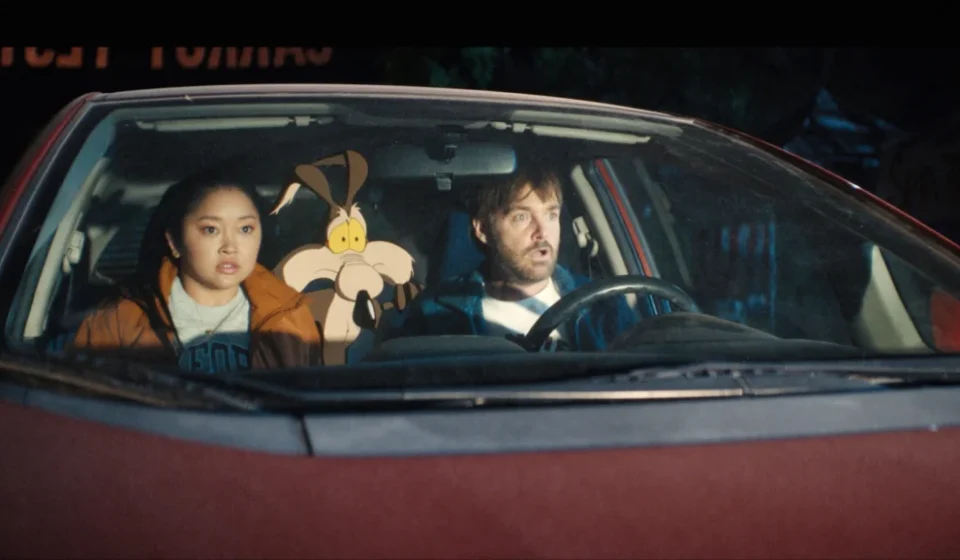
To capture this energy, Green and his team utilized a blend of traditional 2D animation and modern 3D techniques. The production partnered with the visual effects house DNEG to bridge the gap, ensuring that the integration of the animated characters into the live-action world felt tactile and grounded. To assist the actors—including Will Forte, who plays the beleaguered personal injury attorney Kevin Avery, and Lana Condor, his ambitious niece Paige—the production employed legendary puppeteer David Barclay.
Barclay, whose resume includes The Dark Crystal and Who Framed Roger Rabbit, built a life-size Wile E. Coyote puppet. This allowed the actors to have a physical presence to play off of during the shoot. Green noted that they often shot scenes twice: once with rigid choreography and again with the puppet to capture spontaneous reactions. The result is a seamless, energetic performance that honors the slapstick heritage of the franchise while pushing the narrative into new, legal-thriller territory.

The Satire of the Late-Capitalist Landscape
Beyond the gags and the visual spectacle, Coyote vs. Acme functions as a poignant satire of corporate greed. The film portrays the Acme Corporation not just as a manufacturer of faulty anvils and rocket skates, but as a bloated, soul-crushing conglomerate.
The script, penned by Samy Burch, draws parallels between Wile E. Coyote’s relentless, futile struggle against a system designed to keep him in a state of perpetual failure and the plight of the average person navigating a modern economy that prioritizes quarterly profits over human—or, in this case, cartoon—well-being.
"I think the themes that we were talking about when we were making the movie have only become more relevant since we’ve made the movie," Green reflected. "I watched the movie after all of the news broke, and I could not believe the kind of surreal meta-whirlpool that the movie had become. It felt like a hall of mirrors, where it almost felt like we had shot the movie after the news had broken."
Implications for the Industry
The story of Coyote vs. Acme is a stark reminder of the shifting power dynamics in Hollywood. The initial move to discard the film for a tax break highlighted a trend where completed art is treated as a disposable commodity. The fact that the film was eventually saved by a smaller distributor like Ketchup Entertainment, rather than its original parent company, speaks volumes about the disconnect between major studio executives and the audience’s desire for content.

Industry analysts suggest that the "Coyote saga" has changed how creators approach development at major studios. The incident has sparked a wider conversation about the ethics of "shelving" and the rights of artists when their work is caught in the crossfire of corporate mergers and fiscal consolidation. With news of further industry-wide layoffs and mergers—such as the recent ripples between Paramount and Warner Bros.—the themes explored in Coyote vs. Acme feel increasingly prescient.
A Miracle on Screen
For Dave Green, the journey from production to release has been a "gargantuan task," one that tested his patience and his faith in the industry. "It is a miracle that we are sitting together, getting to talk about the movie today," he told IndieWire.
The film serves as a testament to the resilience of the creative team. When asked about his state of mind during the dark years of the film’s burial, Green admitted to finding a "place of acceptance." He had come to terms with the idea that the film might only exist as a secret treasure, held in the hearts of those who made it. The news of its acquisition by Ketchup Entertainment, arriving just 24 hours before the public, left him in a state of "total shock" that he says he still feels today.
Looking Ahead: The Legacy of the Lawsuit
As Coyote vs. Acme prepares for its theatrical debut on August 28, it carries with it more than just the legacy of the Looney Tunes. It carries the weight of a industry that is currently questioning its own values.

Whether the film is viewed as a lighthearted romp or a sharp critique of the very studio that abandoned it, its release is an undeniable win for the preservation of creative work. It stands as a defiant monument to the idea that a movie is more than just a line item on a balance sheet. For Wile E. Coyote, the hunt for the Roadrunner is an endless cycle of failure; for the team behind Coyote vs. Acme, the hunt for a release was a rare, hard-won victory against the odds.
As the credits roll this August, audiences will be watching a film that survived the most dangerous antagonist in Hollywood: the corporate boardroom. And in that, the film’s meta-commentary finds its ultimate, most resonant expression. The Coyote may never catch the Roadrunner, but in this instance, the creators caught their white whale—and they are bringing it to the big screen.