Chasing the Ghost of James Baldwin: Yashaddai Owens’ ‘Jimmy’ and the New Wave of Impressionistic Biopics

In a 2024 interview with The Guardian, actor and Broadway icon Billy Porter posed a rhetorical question that resonated deeply within the halls of Black queer cinema: “If not me, who?” Porter was discussing his ambitious plans to direct and star in a high-profile biopic of the legendary Black queer author and activist James Baldwin. “Who’s going to tell it better than the Black gay man who embodies that in today’s age?” Porter’s assertion highlighted a glaring historical void: despite Baldwin’s monumental influence on American literature and civil rights, the film industry has been glacially slow to center him as a protagonist. While white authors of far less cultural significance have seen their lives dramatized repeatedly, Baldwin’s cinematic legacy has largely been relegated to documentaries and adaptations of his fiction.
However, a new challenger to the traditional biopic narrative has emerged. Nearly two years after its quiet world premiere at the Telluride Film Festival, the directorial debut of photographer Yashaddai Owens, titled simply Jimmy, is finally receiving a U.S. release. Far from the star-studded, conventional drama Porter likely envisions, Jimmy is a haunting, 68-minute experimental work that eschews traditional storytelling in favor of "ambient portraiture." It is a film that does not seek to explain Baldwin, but rather to inhabit the sensory experience of his exile.
Main Facts: A Defiance of Narrative Convention
Jimmy is a film that occupies no clear cinematic lane. It is ostensibly a narrative feature, yet it lacks the traditional pillars of the genre: there is no plot to speak of, and for the vast majority of its runtime, there is no dialogue. Instead, Owens utilizes actor Benny O. Arthur to play a version of Baldwin—referred to affectionately by the titular shorthand—as he wanders through the landscapes of Turkey and France.
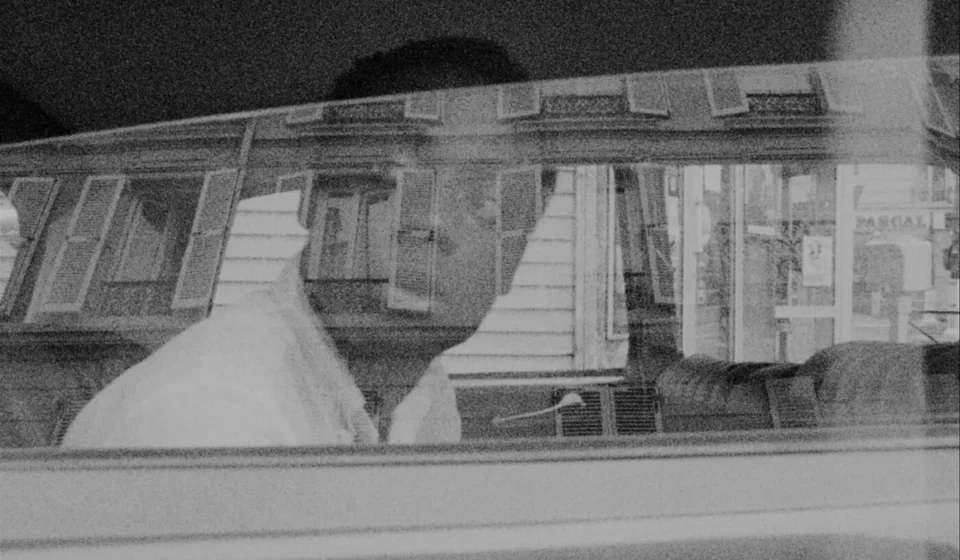
The film is shot entirely in monochrome on a 16mm Bolex camera. This technical choice is central to the film’s identity. The 16mm grain, combined with Owens’ background as a photographer, creates a "shimmery" aesthetic where the subject often feels like a ghost haunting the frame. Interestingly, Owens makes no attempt to hide the 21st-century world surrounding his mid-century subject. Modern cars, contemporary fashion, and current urban architecture serve as the backdrop for Baldwin’s "wanderings." This creates a temporal friction, suggesting that Baldwin’s spirit—and the issues of alienation and "othering" he wrote about—remains trapped in a perpetual present.
The film’s primary strength lies in its refusal to be a "star vehicle." While Benny O. Arthur bears a striking physical resemblance to Baldwin—enhanced by the bleached-out, ink-blotted texture of the film stock—his performance is largely physical. He communicates Baldwin’s internal state through a quick, alert stride and a "lone-wolf" body language that suggests both a fierce independence and a vulnerable, hungry search for connection.
Chronology: From Telluride to the Global Stage
The journey of Jimmy from conception to its current release reflects the "restless" nature of its subject.
- The Intellectual Genesis: The film draws its emotional core from Baldwin’s later years, specifically his time in exile. Following the assassinations of Medgar Evers, Malcolm X, and Martin Luther King Jr., Baldwin found himself in a state of profound psychic exhaustion, leading to his frequent retreats to Istanbul and his eventual settling in Saint-Paul-de-Vence, France.
- 2022 Telluride Premiere: The film first surfaced at the Telluride Film Festival in 2022. At the time, it was noted for its brevity and its radical departure from the "Great Man" biopic tropes.
- The Festival Circuit: Following Telluride, the film moved through niche experimental and independent circuits, garnering praise for its score and cinematography while leaving traditional audiences puzzled by its lack of exposition.
- 2024 U.S. Release: The film’s release in 2024 coincides with a renewed global interest in Baldwin, spurred by the success of Raoul Peck’s 2016 documentary I Am Not Your Negro and Barry Jenkins’ 2018 adaptation of If Beale Street Could Talk.
This chronology suggests that Jimmy is arriving at a moment when audiences are finally prepared for a more abstract interpretation of Black intellectual life—one that values the "vibe" and "aura" of a person as much as their historical milestones.
Supporting Data: The Technical and Auditory Fabric
To understand Jimmy, one must look at the technical data that distinguishes it from a standard production.
The Visual Palette
Owens’ use of the Bolex 16mm camera is a deliberate act of "lo-fi" resistance. In an era of 8K digital clarity, the "ink-blotted" grain of Jimmy serves to obscure as much as it reveals. This mirrors Baldwin’s own experience of being a Black man in the West—simultaneously hyper-visible and yet completely unseen. The film’s "walking tour" structure allows the camera to assume Baldwin’s gaze for the first ten minutes, immersing the viewer in the chattering streets of Istanbul. This POV approach forces the audience to see the world through the eyes of a man who is constantly observing but rarely belonging.
The Auditory Landscape
If the film is "shorn of dialogue," it is certainly not silent. The auditory experience is dominated by Paco Andreo’s "marvelous jazz score." The score utilizes jittery, changeable bebop rhythms that act as a surrogate for Baldwin’s internal monologue. In the absence of speech, the music provides the "scritch" of nervous energy and the "cascading" flow of creative thought. It is only toward the end of the film that the music yields to the sound of a pencil on paper—a pivotal moment that signifies Baldwin finding his voice through the act of writing.
The Literary Anchor
The film concludes with a reading from Baldwin’s 1972 book No Name in the Street. This choice is significant. Unlike his earlier, more optimistic essays, No Name in the Street is a work of embittered context. By using this specific text, Owens anchors his "lustrous European tour" in the harsh reality of why Baldwin fled in the first place: "My history in the West had… placed me in such mortal danger that I had fled."
Official Responses and Critical Context
The reception of Jimmy has been polarized, reflecting the divide between traditional narrative cinema and experimental art.
The "Porter School" of Thought: Critics who favor a more conventional approach argue that Baldwin’s life is too important to be reduced to a 68-minute "impression." For these viewers, Billy Porter’s upcoming project represents the "correct" way to honor Baldwin—through dialogue, historical accuracy, and a clear exploration of his sexuality and activism. They argue that Jimmy risks being a mere "travelogue" that says little about the man’s actual contributions.
The "Owens School" of Thought: Conversely, proponents of Owens’ work argue that Baldwin has already been "documented" to death. They suggest that Jimmy captures something that a traditional biopic cannot: the feeling of being a "stranger in the village." By showing Baldwin as a shadow or a reflection on a Parisian window, Owens captures the "othering" and alienation that defined the author’s life in exile.
Yashaddai Owens himself has characterized the film as a "creative collaboration" between himself and Benny O. Arthur, rather than a definitive historical record. This admission has led some critics to view the film as a "nonfiction record" of two modern artists attempting to commune with a ghost.
Implications: The Future of the Biopic
The release of Jimmy carries several significant implications for the future of biographical filmmaking and the representation of Black intellectuals.
1. The Deconstruction of the "Great Man" Myth
Jimmy suggests that we are moving away from the need for "cradle-to-grave" biopics. By focusing on a specific mood and a specific period of exile, Owens proves that a film can be more effective by being "glancingly a character study" rather than an exhaustive encyclopedia. This opens the door for more poetic, less linear explorations of historical figures.
2. The Intersection of Modernity and History
The choice to film Baldwin against a modern backdrop implies that the "mortal danger" Baldwin fled from has not disappeared; it has simply changed its attire. By placing a mid-century figure in 21st-century Istanbul and Paris, Owens makes a powerful statement about the persistence of racism and the enduring necessity of the "Black expatriate" experience.
3. A New Visual Language for Black Queer Identity
For too long, the cinematic representation of Black queer men has been limited to trauma-centric narratives or hyper-sexualized depictions. Jimmy offers a third way: the depiction of the Black queer intellectual as a "flâneur"—a passionate observer of the world who owns his independent status. The film’s brief glimpses of Baldwin’s flirtations with other men in Paris’s Algerian quarter are handled with a lightness and normalcy that feels revolutionary in its lack of melodrama.
4. The Challenge to Hollywood
As Billy Porter prepares his own Baldwin project, Jimmy serves as a reminder that "telling the story better" doesn’t always mean telling it louder or with more dialogue. It means finding a visual and auditory language that matches the complexity of the subject.
In the final analysis, Jimmy is a film about the "scritch of pencil on paper." It is a film about the moment an observer becomes a creator. While it may not provide the biographical data of a Wikipedia entry, it provides something far more elusive: the general aura of a man who, even in the beauty of France and Turkey, was always looking back at the fire at home. As Baldwin’s voice finally rings out in the film’s closing minutes, the "sensory terms" Owens has built throughout the movie coalesce into a bracing confrontation with reality. Jimmy is not an escape; it is a homecoming to the uncomfortable truths Baldwin spent his life trying to articulate.