Bridging the Gap Between Pencil and Pixel: The Technical Mastery Behind Coyote vs. Acme

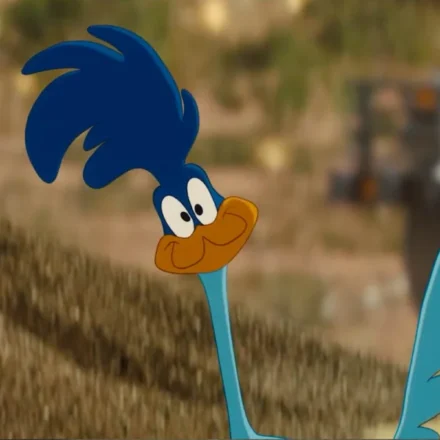
In the landscape of modern hybrid cinema, few challenges are as daunting as reconciling the laws of physics with the anarchic, elastic logic of the Looney Tunes. When DNEG was tasked with bringing the iconic Wile E. Coyote and the ACME corporation into a live-action world for the film Coyote vs. Acme, the studio didn’t just need to animate a character; they needed to translate a cultural language of visual comedy into a three-dimensional, photorealistic space.
In a recent fxpodcast, Visual Effects Supervisor Alexander Seaman and Animation Director Keith Roberts detailed the exhaustive, multi-layered process of crafting a film that respects the legacy of Chuck Jones while embracing the technological frontier of 2026. Directed by Dave Green and overseen by Production VFX Supervisor George Murphy, the production represents a masterclass in hybrid filmmaking, where the "physics of the impossible" were meticulously engineered rather than left to chance.
The Foundation: A Shared Philosophy of Comedy
The success of Coyote vs. Acme was rooted in the team’s genuine, childhood-born affection for the source material. Seaman, who famously dressed as Roger Rabbit for a childhood birthday party, viewed the project as a homecoming. Similarly, Roberts was involved from the film’s inception, motivated by the desire to leverage DNEG’s full range of capabilities to solve a fundamental problem: how to make a 2D-inspired cartoon feel "present" in a photographed world without sacrificing its identity.
The team quickly realized that standard CG practices—often focused on photorealism and fluid, organic movement—would be the enemy of the project. To achieve the specific "Warner Bros." aesthetic, they had to intentionally unlearn conventional CG workflows.
Chronology: From Sketchvis to Final Render
The production followed a rigorous, iterative pipeline designed to prioritize the "gag" above all else.

1. The Sketchvis Phase
Before any 3D assets were rendered, the team employed a "sketchvis" process. Artists drew directly over live-action plates to test ideas, timing, and framing. At its peak, this team consisted of roughly ten artists, though a core group of four handled the bulk of the film. This approach allowed Director Dave Green to evaluate multiple comedic iterations in a single week, ensuring the performance was locked before the heavy lifting of 3D modeling began.
2. The Puppet and Performance
To ensure the live-action actors could react to a tangible presence, puppeteer Dave Barclay provided an onset Wile E. Coyote. This allowed for authentic eye-lines and reactive timing. The puppet itself was a marvel of modularity, with removable ears, noses, and arms, allowing the team to scale back the physical interference with the camera while retaining the essential "presence" of the character. Once the take was captured, Seaman’s team removed the puppet and puppeteer, leaving the timing intact to be augmented by the final CG character.
3. The Technical Rigging and Rendering
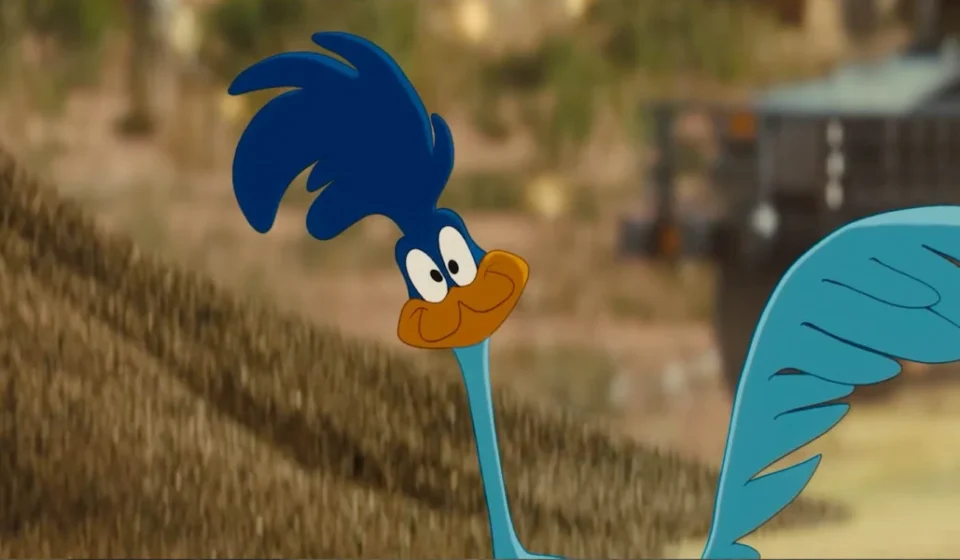
Once the performance was set, the animation team moved into a pipeline specifically designed for extreme, non-linear manipulation. DNEG utilized custom "toon shaders" in Clarisse, initially rendering flat, silhouette-focused images to ensure the performance "read" clearly before applying lighting.
The most significant technical hurdle was the outline generation. Using Houdini, the team created a system to generate character outlines that could be adjusted based on camera distance, movement, and perspective. This ensured that a paw reaching toward the lens didn’t distort incorrectly, maintaining a consistent, hand-drawn look across every frame.
Supporting Data: The Physics of the "Piano Drop"
The film’s approach to physical comedy is best exemplified by the classic "falling piano" gag. To create the sequence, the team first established the timing of the piano’s descent and Wile E.’s reaction. Only after this animation was locked did they address the environmental physics.

The car beneath the piano was a practical stunt vehicle, which was subsequently augmented and retimed in post-production to match the "abrupt, violent" timing of a classic cartoon. By blending a practical special effect with deliberate, non-linear animation, the team achieved a visual collision between two disparate realities.
The Science of "Ones and Twos"
A critical discovery during the production involved frame timing. While traditional animation often uses "twos" (holding a pose for two frames) to achieve that signature cartoon jitter, Roberts found that this didn’t always work when the character interacted with human actors. In those instances, Wile E. was animated on "ones" (updating every frame) to ensure fluidity against the live-action photography. The final film utilizes a sophisticated blend of these two techniques, chosen specifically to emphasize the nature of the interaction.
Official Responses and Creative Direction
Production VFX Supervisor George Murphy and Director Dave Green emphasized that the primary goal was to preserve the "economy of posing" pioneered by Chuck Jones. "Their comedy was all about clean timing and the spare quality of the animation," Roberts noted.
This philosophy dictated every aspect of the lighting. Rather than using complex, physically accurate global illumination, the team opted for restrained, "flat" key lighting. Much of the final look was achieved in Nuke using rotoscoping and simplified light treatments, which allowed the artists to place highlights exactly where they were needed—such as the tip of Wile E.’s nose—without the clutter of realistic surface shading.
Implications: A New Standard for Hybrid Cinema
The implications of the Coyote vs. Acme pipeline are significant for the future of animation. By integrating Unreal Engine for pre-visualization and blocking, the team was able to maintain flexibility throughout the production. Even the desert environments—designed to feel "realistic, but somewhere you could never actually go"—were treated as malleable digital spaces that could shift to accommodate the evolving animation.

The technical choices made by Seaman and Roberts prove that the most compelling visual effects are not those that strive for total realism, but those that find the perfect "uncanny valley" between the real and the imagined. By treating the lens, the light, and the physics as tools of the storyteller rather than absolute constraints, DNEG has set a new benchmark for how legacy characters can thrive in a modern, live-action environment.
As the industry continues to experiment with the boundaries of digital character integration, Coyote vs. Acme serves as a poignant reminder that while technology can simulate reality, it takes a human touch—and the ghost of a pencil-and-paper aesthetic—to make that simulation funny. For those interested in the granular details of how these shots were built, the full fxpodcast interview provides a deep dive into the hundreds of hours of trial and error that went into every blink, smirk, and anvil drop.