The Intimate Lens: Revisiting ‘Unzipped’ and the Ethical Tightrope of Documenting a Lover

In the landscape of documentary filmmaking, the line between observer and participant is often thin. When that line is blurred by romance, the result can either be a compromised exercise in hagiography or, in the rarest of cases, a masterpiece of unfiltered, vèrité intimacy. Douglas Keeve’s 1995 documentary Unzipped stands firmly in the latter category. As the film returns to theaters this weekend in a stunning 4K restoration courtesy of Janus Films, it serves as a time capsule of a bygone New York fashion era, as well as a poignant artifact of a relationship between a filmmaker and his muse.
The Genesis of an Icon: 1994 in Paris
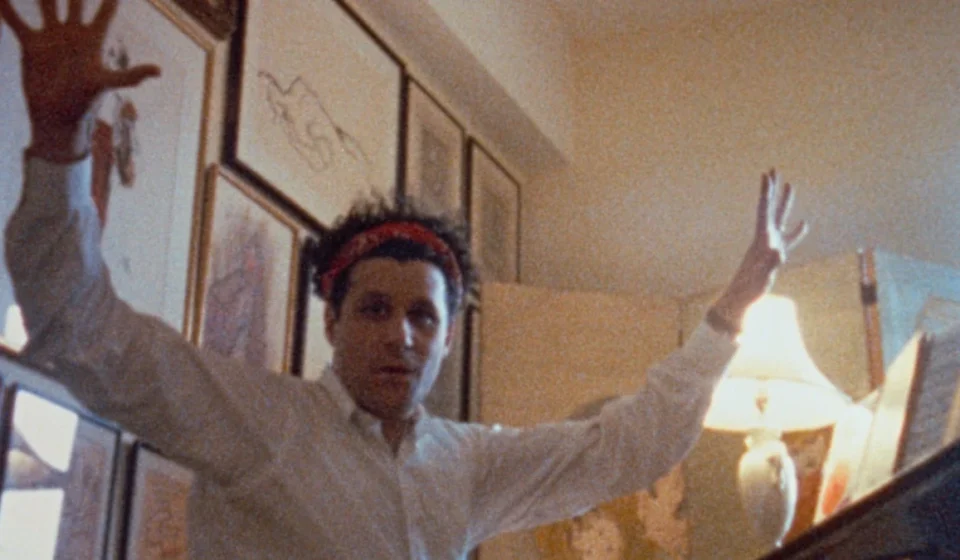
To understand the significance of Unzipped, one must return to the high-stakes theater of 1994 Paris Fashion Week. At the time, the Isaac Mizrahi fashion house was a burgeoning powerhouse, bolstered by a significant financial stake from Chanel. Mizrahi himself was a whirlwind of creative energy—a designer known as much for his Eraserhead-esque shock of hair and flamboyant personality as for his "sensibly chic" haute couture.
The documentary captures Mizrahi as he mounts his collection, which drew eccentric inspiration from the 1922 film Nanook of the North. The film is not merely a chronicle of garments; it is a character study of a man navigating the crushing pressures of the industry. It captures the frantic, often volatile, and always brilliant creative process that defined the early 90s, featuring a legendary lineup of supermodels—Naomi Campbell, Christy Turlington, Linda Evangelista, Cindy Crawford, and Kate Moss—who move through the film with a mix of professional savvy and raw human emotion.
A Chronology of Collaboration and Collision
The production of Unzipped was inextricably linked to the personal life of its director. Douglas Keeve was not just an observer; he was Isaac Mizrahi’s partner. This proximity allowed for access that few documentarians could dream of, yet it created a complex interpersonal dynamic.

- The Early Days (1993–1994): As production began, the relationship was in its prime. Keeve, a photographer and filmmaker, found himself in the unique position of capturing his partner’s most vulnerable and triumphant professional moments.
- The Production Grind: As the deadline for the Paris show loomed, the pressure on Mizrahi trickled down into the film’s narrative. Keeve recalls this time as one of immense professional dedication, balanced against the fragility of their domestic life.
- Sundance and Separation (1995): The film premiered at the 1995 Sundance Film Festival, where it was met with critical acclaim and an audience award. However, the period immediately following the premiere marked the dissolution of the couple’s romantic relationship.
- The Restoration (2024–2025): Three decades later, the Sundance Institute and the UCLA Film & Television Archive spearheaded a 4K restoration. Keeve, now older and wiser, collaborated with his former partner to oversee the technical revival of the work.
The Ethical Tightrope: Documenting a Subject You Love
The central question that has followed Unzipped for thirty years is whether the film caused the breakup. Keeve is remarkably candid about this, dismissing the idea that the camera was the catalyst for their split.
"Did the movie break us up? I’m not sure I know how to answer that because relationships are so complicated," Keeve explained in an interview with IndieWire. "Isaac is complicated, I’m complicated. So you have two complicateds, plus a complicated world. Our lives were so different, and in some ways I couldn’t quite keep up with his."
Keeve describes the external pressures of the fashion world—the endless cocktails, the after-hours parties, and the relentless pace—as the true wedges in their romance. "Isaac goes to two cocktails at dinner and an after-hours party in one night, every night. And I just couldn’t do that. I had my own working life."
Yet, he admits that the film acts as a "love letter" to Mizrahi. Despite the moments where the camera catches Mizrahi at his most volatile—such as his frustration over a competitor’s design—the film never seeks to tear him down. Instead, it frames his "benign volatility" as a byproduct of his artistic certainty.

The Supporting Players: Models and Matriarchs
Unzipped is as much about the supporting cast as it is about its lead. The film features a series of iconic interactions, most notably with Linda Evangelista. In one of the documentary’s most discussed segments, Evangelista is shown having a "hissy fit" backstage.
Keeve offers a professional’s perspective on these moments: "There are a lot of people who say that Linda is the greatest fashion model who ever lived… Linda in the show, where she’s having a hissy fit, and then another hissy fit, and then another hissy fit, to me, I can see that she knows exactly what to do. She’s turning it on for the camera."
Furthermore, the film gains significant emotional texture from the presence of Mizrahi’s mother, Sarah. Their relationship is presented as the archetypal "fraught but deep" Jewish mother-son dynamic. Keeve notes that he was fond of her, acknowledging that while their bond was intense, it was a cornerstone of Mizrahi’s identity.
Implications of the 4K Restoration
The technical restoration of the film has allowed for a re-evaluation of its visual language. While many viewers remember the film for its narrative, the new 4K print highlights the stark, beautiful contrast of the black-and-white cinematography.

For Keeve, the restoration process was less about technical perfection and more about emotional preservation. "When I’m watching the movie, I’m not really looking at the technical part of the film about how the diamond has been polished even more. I’m really seeing those moments and feeling those feelings."
The re-release also arrives at a time of renewed interest in the 1990s. Younger audiences, recently captivated by the nostalgia surrounding figures like John F. Kennedy Jr. and Carolyn Bessette, are finding in Unzipped a visceral, unvarnished look at a decade defined by analog grit, Parliament cigarettes, and high-fashion ambition.
Conclusion: The Endurance of Truth
Unzipped remains a vital piece of documentary history precisely because it does not hide the bias of its director. It is a film made by someone who was "in love with just who he is." By choosing not to censor his subject—and by not showing Mizrahi the footage during the editing process—Keeve created a work that felt lived-in and real.
The fact that the two have remained "frenemies" who can stand on a stage together today to promote the restoration is a testament to the enduring respect they hold for one another. The camera did not destroy them; it merely captured the transient nature of a moment in time, preserving a portrait of a man, a muse, and a world that no longer exists in quite the same way. As the film hits screens at the Film Forum in New York and expands to Los Angeles this October, it stands as a reminder that the most honest documentaries are often those that are the most deeply, and dangerously, personal.