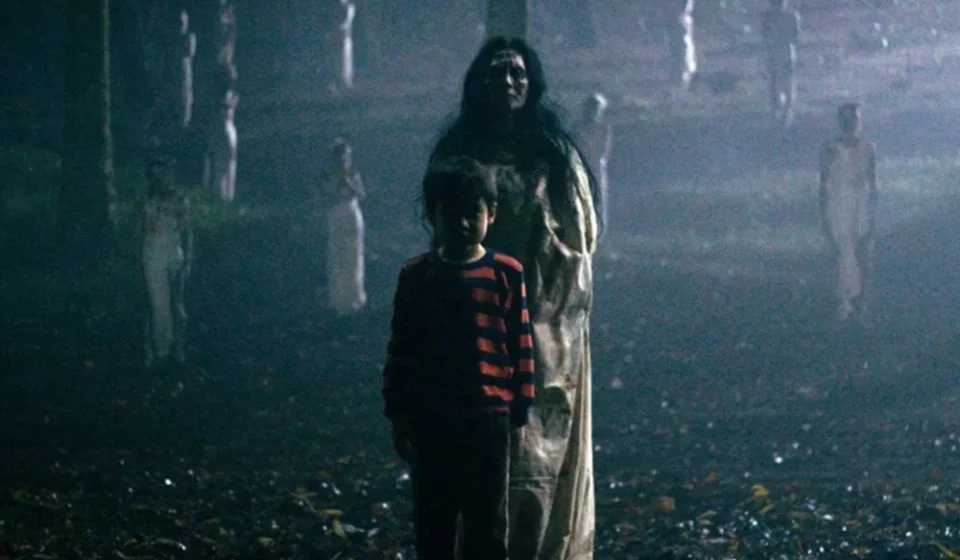
The Genesis of Terror: Joko Anwar Unveils the Ambitious Prequel ‘Satan’s Slaves: Origin’

The Indonesian horror landscape, already significantly shaped by the visionary work of writer-director Joko Anwar, is poised for its most audacious expansion yet. Following the massive international success of his Satan’s Slaves (2017) and its 2022 sequel, Satan’s Slaves 2: Communion, Anwar has officially pulled back the curtain on the franchise’s next chapter: Satan’s Slaves: Origin (originally titled Pengabdi Setan 3: Origin).
This prequel promises not merely to add another layer of jump scares to the series, but to deconstruct the very mythology that has haunted audiences for nearly a decade. By traversing continents, centuries, and a linguistic tapestry of seven distinct tongues, Anwar is positioning this project as the definitive "origin story" of the demonic pact that has defined the series’ narrative core.
Main Facts: A Global Expansion of the Cult
As reported by Variety, Satan’s Slaves: Origin is currently in pre-production, with a target theatrical release slated for 2027 in Indonesia. The production is a collaborative effort spearheaded by Rapi Films, with co-production support from Come and See Pictures, Sky Media, and Legacy Pictures.
Unlike the previous installments, which were largely grounded in the claustrophobic, domestic dread of a 1980s Indonesian household, Origin is set to be a sprawling historical epic. The film seeks to connect the dots of a supernatural contagion that has transcended time and geography. By moving the camera away from the family-centric drama of the first two films, Anwar is pivoting toward a high-concept exploration of the occult, focusing on the specific "curse" that has plagued bloodlines across centuries.
Chronology: From the Dancing Plague to the Javanese Coast
Perhaps the most striking aspect of the upcoming film is its ambitious temporal and geographic scope. According to early narrative details, the film operates on a dual-timeline structure that bridges the gap between European history and Indonesian folklore.
The story reportedly ignites in 16th-century Strasbourg, France. Anwar draws inspiration from the real-world "Dancing Plague of 1518," an incident of mass hysteria that remains one of history’s most enigmatic phenomena. By framing this historical event as the potential catalyst for the demonic infection seen in his modern films, Anwar is grounding his supernatural mythology in tangible, documented human trauma.
From the cobblestone streets of 16th-century Europe, the narrative leaps forward to the 17th century, landing on a remote, haunted lighthouse situated on the southern coast of Java. This shift represents a transition from the chaotic, communal horror of the Strasbourg plague to the isolated, atmospheric terror that has become a signature of Anwar’s directing style. This structural choice suggests a "vector of transmission," implying that the curse is not a static haunting, but a migrating entity that has evolved alongside human civilization.
Supporting Data: An Unprecedented Production Scale
To capture the gravity of this multi-continental tale, the production team has committed to a level of linguistic and cultural authenticity rarely seen in Southeast Asian horror. Satan’s Slaves: Origin will be filmed in seven distinct languages: Indonesian, Alsatian, Portuguese, Javanese, Dutch, Turkish, and Latin.
This polyglot approach serves as more than a stylistic flourish; it is a narrative necessity. By incorporating languages that reflect the colonial and trade history of the 16th and 17th centuries, Anwar is crafting a cinematic universe that feels historically grounded. The use of Latin, for instance, implies the inclusion of ecclesiastical or ritualistic elements, while the inclusion of Dutch and Portuguese speaks to the era of maritime exploration and the "importation" of occult practices into the Indonesian archipelago.
The scale of this production marks a significant evolution in Joko Anwar’s career. Having already cemented his status as the "King of Indonesian Horror," he is now leveraging his increased industry clout to push the boundaries of what is possible within the regional horror genre. With a production timeline spanning multiple years and a global scope, Origin is undeniably the most expensive and technically complex endeavor the director has ever undertaken.

Official Responses: The Architect of Fear Speaks
In a recent statement regarding the project’s direction, Joko Anwar expressed a sense of creative completion. "This film is everything I didn’t know I was building toward," he noted. "It is the one that finally answers where the curse came from, why it never stopped, and what it’s really after."
Anwar’s rhetoric highlights a clear strategy for the film’s reception: satisfying the hardcore fanbase while providing an entry point for newcomers. "Longtime fans are going to get the answers they’ve waited years for," he promised. "Newcomers are going to get the ride of their lives."
By framing the film as a definitive answer to the series’ lingering mysteries, Anwar is signaling to his audience that Origin will function as a "key" that unlocks the previous films. This narrative promise is a powerful marketing tool, transforming the film from a mere prequel into an essential viewing experience for anyone invested in the Satan’s Slaves canon.
Implications: The Evolution of Indonesian Horror
The announcement of Satan’s Slaves: Origin carries significant implications for the global horror market.
1. The Exportability of Regional Folklore
Joko Anwar has consistently demonstrated that local Indonesian ghost stories possess universal appeal. By bridging the Gap between European mass hysteria and Javanese mysticism, he is actively internationalizing the lore of the Satan’s Slaves universe. This project confirms that regional horror, when produced with high-budget production values and compelling, multi-layered narratives, can compete on the global stage alongside Hollywood franchises.
2. The Franchise Model
With the third entry, Satan’s Slaves is effectively evolving into a franchise in the Western sense—similar to The Conjuring universe or the Insidious series. The decision to produce a prequel that expands the "mythology" rather than simply repeating the "scare formula" is a sophisticated move that encourages repeat viewings and deeper fan engagement.
3. Historical Horror as a Trend
Anwar’s focus on the 16th and 17th centuries signals a broader trend in horror cinema: the turn toward historical period pieces to provide context for modern evil. By mining historical events like the Strasbourg Dancing Plague, the film taps into a vein of "elevated horror" that treats historical anxiety as a conduit for supernatural terror. This approach adds an intellectual layer to the genre, elevating it from jump-scare entertainment to a broader commentary on how past atrocities manifest as present-day ghosts.
4. Setting the Bar for 2027
With a 2027 release date, the film has ample time for meticulous post-production and marketing. The extended window suggests a high degree of confidence from the production houses involved. As the industry watches the development of this project, the success of Origin will likely serve as a benchmark for future Southeast Asian horror investments. If Anwar succeeds in synthesizing these disparate historical settings into a coherent, terrifying whole, it will further solidify Indonesia’s position as a primary hub for genre-defining horror cinema.
Conclusion: A Legacy of Darkness
As we look toward the 2027 release of Satan’s Slaves: Origin, the anticipation surrounding the project is palpable. Joko Anwar has spent nearly a decade perfecting the art of the slow-burn, domestic haunting. Now, he is expanding that darkness to cover the globe.
The shift from the intimate terrors of the Mawarni family to the grand, historical scope of an ancient curse is a bold gamble. However, given Anwar’s track record, it is a gamble that seems likely to pay off. By weaving together the threads of mass hysteria in Europe and the coastal legends of Java, Satan’s Slaves: Origin is poised to redefine the franchise, transforming a localized ghost story into a sprawling, multi-generational saga of human corruption and demonic intent. For horror aficionados, the wait for 2027 will be long—but if the initial details are any indication, the answers to the curse will be well worth the wait.